
Dale Hackbart
American football player
About Dale Hackbart
Born 1938. Dale Hackbart is an American baseball player, american football player and basketball player.
Dale Leonard Hackbart (born July 21, 1938) is an American former professional football player who was a defensive back and special teams player for 12 seasons in the National Football League (NFL) for the Green Bay Packers, Washington Redskins, Minnesota Vikings, St. Louis Cardinals, and Denver Broncos from 1960 to 1973. He also played in the Canadian Football League (CFL) for the Winnipeg Blue Bombers in 1965.
Hackbart's career ended shortly after suffering a serious neck injury in the first game of the 1973 season, which he asserted was the result of a reckless blow to the back of his neck by another player well after play had come to a stop. Hackbart brought a civil tort lawsuit in a United States district court seeking money damages, which was dismissed by a trial court, but reinstated on appeal. This opened the possibility for an athlete in any sport to bring a civil lawsuit against an opponent for reckless conduct in an athletic competition that injures that player.
Hackbart was diagnosed with breast cancer in late December 1998, and was successfully treated. He became a spokesman for the Susan G. Komen Breast Cancer Foundation, especially in making men aware that they could be subject to the disease as well as women, and the need for early detection and treatment to survive.
Early life Hackbart was born on July 21, 1938, in Madison, Wisconsin. He attended Madison East High School, which participated in the Big Eight Conference. Hackbart was a two-way player on East's football team, playing quarterback and safety. As a 6 ft 3 in (1.91 m) 179 lb (81.2 kg) senior in 1955, the Associated Press (AP) named Hackbart Wisconsin's top high school quarterback.
Hackbart was also a star player on East's basketball team. He was the leading scorer in the Big Eight Conference during his senior year (1955–56). Arguably his finest high school basketball performance was during a January 1956 game when he scored 38 points in a 68–65 Madison East victory, while also being a dominant rebounder, controlling the offense as a passer, and contributing steals on defense.
College career Hackbart attended the University of Wisconsin. He was also a key player for the Badgers on defense. As a sophomore in 1957, he played behind Sidney Williams at quarterback. He completed 12 of 31 passing attempts for 161 yards; and was the team's second leading rusher with 319 yards, averaging 6.1 yards per carry. He also had a team leading six rushing touchdowns (tied for sixth best in the Big Ten). The Badgers finished the season 6–3, and were ranked 19th nationally by the Associated Press.
Hackbart was the Badgers' primary quarterback in 1958. He had 46 pass completion in 99 attempts for 641 yards, and four passing touchdowns, along with three interceptions. He also rushed for 391 yards in 101 carries, with nine rushing touchdowns. He was fourth in the Big Ten in passing yards and touchdowns, and third in rushing touchdowns and total yards. Both the Associated Press and United Press International named him second-team All-Big Ten. The 1958 Badgers were 7–1–1, and finished the season ranked seventh nationally by the AP.
In 1959, Hackbart was troubled with a leg injury during the season. He was the starting quarterback that season, completing 40 of 83 passes for 589 yards and two passing touchdowns. He also rushed for 365 yards on 98 carries. Hackbart's six rushing touchdowns led the Big Ten that year. In 1959, Hackbart led the Big Ten in total offense; was selected second-team All-Big Ten by the Associated Press and was recognized as first-team All-Big Ten that year by the Big Ten; and was a first-team Academic All-American.
The Badgers were 7–3 and won their first sole Big Ten championship in since 1912. The AP ranked them sixth nationally at the end of the season. After that game, the Badgers' head coach Milt Bruhn identified Hackbart as the only Badger who played a good game.
Hackbart was also an outfielder on the Badgers' baseball team. He had a .273 batting average as a junior (1959), and led the Big Ten in stolen bases (13). Hackbart had bonus offers from Major League Baseball teams after his junior year, but he chose to return for his senior year to compete for the Badgers' football team. After an excellent start to the 1960 spring baseball season, he suffered an ankle injury and ended with a .317 batting average as a senior. He later obtained a Master's Degree from the University of Wisconsin.
Professional career
Football draft The Green Bay Packers selected Hackbart in the fifth round of the 1960 NFL draft, 51st overall. He also was selected by the Minneapolis-St. Paul franchise of the new American Football League (AFL) with its first territorial pick in the 1960 AFL draft; the league's first draft, held in November 1959. That franchise withdrew from the AFL less than two months later, and instead joined the NFL as an expansion team in 1960 as the Minnesota Vikings.
In the spring of 1960, Hackbart was also pursued by future Pro Football Hall of Fame head coach Bud Grant of the Winnipeg Blue Bombers to join his team in the Canadian Football League. Hackbart chose to sign with Vince Lombardi and the Green Bay Packers, rather than Grant and the Blue Bombers; but his contract with the Packers included a clause that it would be deemed void if he chose to play professional baseball. He played with Grand Forks in 1960, principally as a first baseman. He had a .252 batting average in 290 at bats, with six home runs, eight triples, 13 doubles, 36 runs batted in and 36 runs scored, along with a .717 OPS (on-base plus slugging). When the Chiefs played in Winnipeg, Bud Grant met with Hackbart. Grant eventually convinced Hackbart to play for the Blue Bombers. When Lombardi learned about this, he sent the Packers' personnel director Jack Vainisi to meet with Hackbart. Vainisi met with Hackbart in a restaurant. He presented Hackbart with a contract and said Hackbart had to sign with the Packers because Hackbart had a contract with the Packers and was obligated to sign with him. He was a reserve defensive back in 1960, starting one game. Before the 1961 season, Lombardi saw Hackbart as possibly having the potential to help the team more in the defensive backfield that season. In the second game of the 1961 season against the San Francisco 49ers, Hackbart was playing on special teams. After the Packers' Willie Wood returned a punt for a touchdown, one of the officials told Packers' defensive coach Phil Bengston he could have called a penalty on Hackbart that would have negated the touchdown, and Bengston began berating Hackbart. Hackbart used foul language towards Bengston in response. The next day, they looked at game film and saw that Hackbart had not committed the alleged penalty. Bengston apologized to Hackbart and Hackbart apologized for using untoward language at Bengston. After practice that day, Hackbart was soon deflated and depressed when Lombardi called Hackbart into his office and said "I just traded you to the Washington Redskins. Can you make it?". Five days later Hackbart was Washington's starting right cornerback against the New York Giants. He intercepted a Charlie Conerly pass and returned it 48 yards for a touchdown. In a November game against the Dallas Cowboys, now starting at safety, Hackbart intercepted a pass and returned it 33 yards for a touchdown. He was later ejected from that game for fighting. Hackbart started nine games for Washington that season, at cornerback and strong safety, with six interceptions in total. During the season, Hackbart said he was happy to have been traded to Washington because it gave him the opportunity to be a starter.
The Packers won the 1961 NFL championship in December 1961, by which time Hackbart had been on Washington for months. On October 2, 2011, the Packers held a halftime ceremony at Lambeau Field in Green Bay, Wisconsin honoring the 50th anniversary of the 1961 championship team. Hackbart was among the 18 players the Packers included as among the alumni of that championship team to be honored.
In 1962, Hackbart started nine games for Washington, playing mostly at free safety. He had three interceptions and four fumble recoveries in 1962. Washington used Hackbart to blitz from his safety position that season, and he had 1.5 quarterback sacks. He helped secure an October win over the Philadelphia Eagles, 27–21, when he intercepted a Sonny Jurgensen pass in the endzone late in the fourth quarter. On special teams, Hackbart blocked a Lou Groza field goal attempt in a September 23 game against the Cleveland Browns, in a 17–16 win for Washington. In a September 30 victory over the St. Louis Cardinals, 24–14, Hackbart had an interception, two fumble recoveries, and a four-yard tackle for loss against Joe Childress stopping the Cardinals' offense on a fourth down and one yard play.
Hackbart started 13 games in 1963, playing both safety positions. He had one interception and two quarterback sacks. Hackbart suffered a separated shoulder during an intrasquad game in the 1964 preseason, and missed the entire 1964 season. He was replaced by future Hall of Fame safety Paul Krause and Tom Walters in the team's exhibition games that year. Washington waived Hackbart before the start of the 1964 season, and he was replaced by Krause at free safety during the 1964 season.
Winnipeg Blue Bombers and Minnesota Vikings Hackbart tried out with the Minnesota Vikings as a free agent in 1965, but did not make the team. The Vikings were coached by Norm Van Brocklin at that time. He went on to play six games at defensive back with the Blue Bombers in 1965; with the team still being coached by Bud Grant. Hackbart joined the Vikings' taxi squad at the end of the 1965 season.
Hackbart tried out again for the Vikings in 1966. returning one interception 41 yards for a touchdown in a November game against the Detroit Lions. Hackbart was an honorable mention at safety on United Press International's 1966 NFL All-Star Team.
In 1967, Bud Grant took over as the Vikings' head coach from Van Brocklin. At the time Grant came on, Hackbart was the only Viking with whom he was personally familiar. In 1967, Hackbart started 13 games at free safety with two interceptions and one quarterback sack. He once again returned an interception for a touchdown, a 21-yard return in an October game against the Cardinals. This was the fourth and final interception return for a touchdown in Hackbart's career. who had replaced Hackbart once before, in 1964. Krause went on to become the Vikings' starting free safety from 1968 to 1977. Hackbart became known as a "sticker" on the Vikings' kickoff and punt coverage special teams, because of his hard hitting, "crunching tackles" and dynamic style of heading to meet the other teams' punt or kickoff returners. The Vikings also used Hackbart as an extra defensive back or linebacker on obvious passing downs. He played in that defensive role for the Vikings in Super Bowl IV, a 23–7 loss to the Kansas City Chiefs. The Vikings waived Hackbart before the start of the 1971 season, but kept him on their taxi squad. Hackbart started six games for the Cardinals as a defensive back over the next two seasons (1971 and 1972), sometimes filling in for an injured Larry Wilson at safety; while continuing to play special teams. He had two interceptions during that time.
In July 1973, the Cardinals traded Hackbart to the Denver Broncos for a future draft choice. He played in only three games that season, starting two. Hackbart started the season's first game at free safety against the Cincinnati Bengals. He is reported to have suffered an undiagnosed neck fracture after the Bengal's 6 ft 2 in (1.88 m) 245 lb (111 kg) fullback Boobie Clark, playing in his first NFL game, hit Hackbart in the back of the neck in the aftermath of an interception return. Hackbart stayed in that game and played in two more games. Hackbart's play deteriorated in the ensuing two weeks due to the injury, and the Broncos waived him after the third game of the season. No other team signed him. Only after seeking medical treatment subsequent to his waiver did Hackbart learn that he had a fractured neck. Hackbart was inducted into the University of Wisconsin Athletics Hall of Fame in 1996. In 1983, he was inducted into the Madison Pen and Mike Club-Bowman Sports Foundation Hall of Fame. He received the Big Ten Medal of Honor in 1960.
Boobie Clark litigation In 1975, Hackbart initiated a lawsuit seeking money damages against Clark and the Bengals for Clark's alleged negligence and recklessness in the manner in which he hit Hackbart during the 1973 game, resulting in injury to Hackbart. Judge Richard Matsch of the United States District Court for the District of Colorado found that Clark had acted out of anger and frustration in intentionally striking Hackbart, but did not have a specific intent to injure Hackbart. The appellate court found that there was no basis in the law for the establishing a principle that the general roughness of an activity can entirely preclude the possibility of finding that a person can be compensated with money damages for a tortious intentional act occurring during that rough activity. The United States Supreme Court denied certiorari, thus allowing Hackbart's lawsuit to proceed. The 10th Circuit's legal opinion has been used in law schools in teaching tort law, and has been the subject of academic scholarship. Hackbart's case was remanded for further proceedings, and was later resolved outside of court in 1981, via a financial settlement in an undisclosed amount.
On the facts underlying Hackbart's lawsuit, it has been reported that Hackbart was kneeling near the sideline on one knee, watching the opposite side of the field where an interception return and end of the play were taking place. Five seconds after the play had been ended by the officials, while Hackbart was still kneeling in repose, Clark hit Hackbart in the back of the neck with his forearm. It also has been reported that Clark subsequently admitted he hit Hackbart in the back of the neck out of frustration and anger because the Bengals' were losing the game.
In late 1998, Hackbart was diagnosed with breast cancer. He was originally told he had a 40 percent chance of survival. Because the disease is less common in men, it often is detected too late for effective treatment, but Hackbart's cancer was detected before the disease had progressed into the rest of his body. He underwent a radical mastectomy and subsequent drug treatment (tamoxifen), and his prognosis improved to an 80 percent chance of survival. Hackbart became a spokesman in the Denver area for the Susan G. Komen Breast Cancer Foundation, and also spoke publicly about his cancer story in his hometown of Madison. At the time he worked for the Bridgestone–Firestone company as a national mine manager. Beverly Hackbart died in early 2000 of a heart attack while hiking in New Mexico.
Don’t just read it —
keep it.
Full-length biographies made to live with: read them, listen on the way to work, watch them tonight.
- E-book
- Audio
- Video
Instant download · yours to keep · every purchase keeps this site free
Important facts
People in Dale Hackbart's life
Named in this biography and alive at the same time
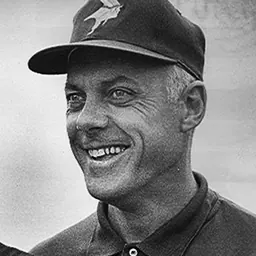






Related people
Same field, nearest in time
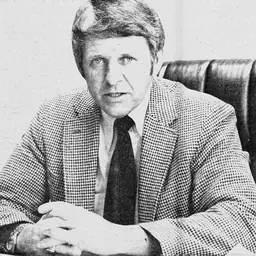
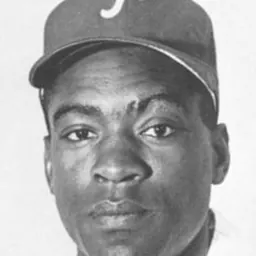
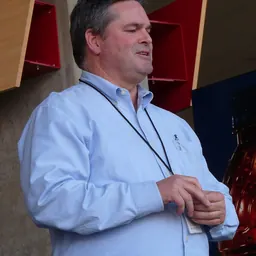

Contemporaries
People whose lives overlapped Dale Hackbart's




Frequently asked questions
Who is Dale Hackbart?
American football player
When was Dale Hackbart born?
Dale Hackbart was born on 21 July 1938 in Madison.
What is Dale Hackbart's occupation?
Dale Hackbart is a baseball player, american football player and basketball player.
What nationality is Dale Hackbart?
Dale Hackbart is American.
Sources & further reading
Cite this page
APA: Biography.guide. (2026). Dale Hackbart. https://biography.guide/dale-hackbart/
MLA: "Dale Hackbart." Biography.guide, https://biography.guide/dale-hackbart/.
Chicago: "Dale Hackbart." Biography.guide. https://biography.guide/dale-hackbart/.
Data last updated: 2026-09-20 · Spot an error? Report a correction.
Page generated 2026-09-27 05:20 UTC