
About Dakolé Daïssala
Lived 1943 – 2022 (aged 79). Dakolé Daïssala was a Cameroonian politician and minister.
Dakole Daïssala (15 April 1943 – 9 August 2022) was a Cameroonian politician and the President of the Movement for the Defence of the Republic (MDR), a political party based in Cameroon's Far North Region. He served in the government of Cameroon as Minister of State for Posts and Telecommunications from 1992 to 1997; subsequently he was a Deputy in the National Assembly from 1997 to 2002 and then Minister of Transport from 2004 to 2007. He served in the Senate from 2013 until his death.
Political career Daïssala was a Kirdi and was born in Goundye (Kaélé) in the Far North Province, on 15 April 1943. In 1967, he became first deputy prefect in Ngaoundéré; subsequently, he was Deputy Director of General Administration at the Ministry of Finance from 1969 to 1970 and Director of Transport from 1970 to 1973. He served as Deputy Director-General of the Cameroon Urban Transport Authority (Société de Transports Urbains du Cameroun, SOTUC) from 1973 to 1975, and then as Director-General of SOTUC from 1975 until 1984. without ever being tried or even charged, The MDR won six seats in the National Assembly in the March 1992 parliamentary election (all of them in the Far North Province on 9 April 1992;
Daïssala was a member of the Consultative Constitutional Council in 1995, prior to the adoption of the new constitution in January 1996. He was elected to the National Assembly from the Mayo-Kani South constituency of Far North Province in the 1997 parliamentary election and was the only MDR candidate to win a seat, serving in the National Assembly from 1997 to 2002. After more than five years as Minister of State for Posts and Telecommunications, Daïssala was excluded from the government that was appointed on 7 December 1997.
In May 1998, Daïssala was barred from leaving the country to travel to France for a private visit and his passport was withdrawn.
On 13 January 2001, Daïssala and various other party leaders participated in an unauthorised protest in Yaoundé against the National Election Observatory, believing that it would not be an impartial body. The protest was dispersed by security forces, and Daïssala, along with the other party leaders, was detained for five hours. Following the June 2002 parliamentary election, Daïssala and four other notable northern politicians released a statement in July, in which they alleged electoral fraud and announced the formation of a "resistance front". They warned that the RDPC was moving the country back to single-party rule and called on politicians "to transcend any divergence, selfishness and personal ambition in order to create a movement capable of saving Cameroon from collapse". He also joined other northern politicians in signing a September 2002 memo decrying the government's alleged marginalization and neglect of the north and urging that more attention be paid to addressing the north's problems.
Daïssala supported President Biya in the October 2004 presidential election, and subsequently, after seven years out of the government, he was appointed as Minister of Transport in the government named on 8 December 2004.
Daïssala ran again for a parliamentary seat in the July 2007 parliamentary election, saying that he believed that a minister in the government should stand for election; he also said that if the MDR ever obtained a parliamentary majority, it would immediately pass a law requiring ministers to stand as parliamentary candidates. However, the MDR failed to win any National Assembly seats in the 2007 election, The MDR list in Mayo-Kani South narrowly lost with 48.67% of the vote against 51.33% for the RDPC list. Although Daïssala said that he was willing to stay in the government despite his electoral defeat, he had been criticized for inactivity following the crash and failing to visit the crash site. When the Bureau of the Senate was elected on 12 June 2013, Daïssala received the post of Secretary.
Don’t just read it —
keep it.
Full-length biographies made to live with: read them, listen on the way to work, watch them tonight.
- E-book
- Audio
- Video
Instant download · yours to keep · every purchase keeps this site free
Important facts
Related people
Same field, nearest in time



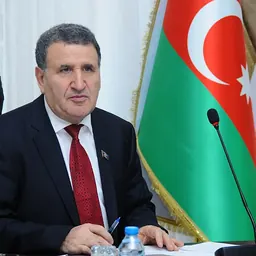


Contemporaries
People whose lives overlapped Dakolé Daïssala's


Frequently asked questions
Who was Dakolé Daïssala?
Cameroonian politician
When was Dakolé Daïssala born?
Dakolé Daïssala was born on 15 April 1943 in Goundaye.
When did Dakolé Daïssala die?
Dakolé Daïssala died on 9 August 2022 in Yaoundé.
What was Dakolé Daïssala's occupation?
Dakolé Daïssala was a politician and minister.
What nationality was Dakolé Daïssala?
Dakolé Daïssala was Cameroonian.
Sources & further reading
Cite this page
APA: Biography.guide. (2026). Dakolé Daïssala. https://biography.guide/dakole-daissala/
MLA: "Dakolé Daïssala." Biography.guide, https://biography.guide/dakole-daissala/.
Chicago: "Dakolé Daïssala." Biography.guide. https://biography.guide/dakole-daissala/.
Data last updated: 2026-09-20 · Spot an error? Report a correction.
Page generated 2026-09-27 05:19 UTC