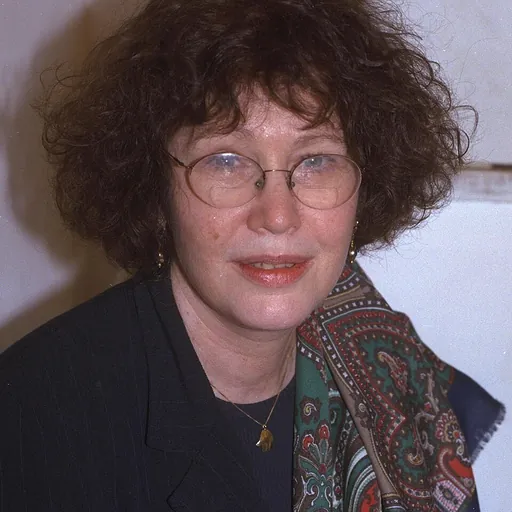
About Dahlia Ravikovitch
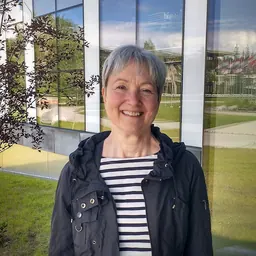
Lived 1936 – 2005 (aged 68). Dahlia Ravikovitch was an Israeli linguist, poet, translator, peace activist, novelist and journalist.
Dahlia Ravikovitch (; November 17, 1936 – August 21, 2005) was an Israeli poet, translator and recipient of the Israel Prize for Poetry in 1998. It was in those formative years in Haifa that she wrote her very first poem, "Painting", which contrasted the blue of the seaside landscape to the yellow and grey of her inner world.
Ravikovitch married at 18, but divorced after 3 months. Her subsequent marriages also ended in divorce. She has one son, Ido Kalir. After completing her service in the Israel Defense Forces, she studied at the Hebrew University of Jerusalem. She worked as a journalist and high school teacher. She translated works of W. B. Yeats, T. S. Eliot and Edgar Allan Poe, and the book Mary Poppins into Hebrew.
Her earlier poetry shows her command of formal technique without sacrificing the sensitivity of her always distinct voice. Although never totally abandoning traditional poetic devices, she developed a more prosaic style in the latter decades of her work. Her popular poem published in 1987, "The End of a Fall" (also called "The Reason for Falling") is from this period. Like many of Ravikovitch's poems, it may strike the reader as, at once, poignant, metaphysical, disturbing, and even political: "If a man falls from a plane in the middle of the night / only God can lift him up...". In her book Haifa: City of Steps literary critic Nili Gold has argued that Haifa and its landscape are crucial to understanding Ravikovitch's early poetry, most notably "Painting" and "Day Unto Day Uttereth Speech".
In all, Ravikovitch published ten volumes of poetry in her native Hebrew. In addition to poetry, she contributed prose works (including three collections of short stories) and children's literature, and translated poetry into Hebrew. Many of her poems were set to music. Her best known poem is Booba Memukenet .
Her poems are taught in schools and universities. Scholars at the University of Pennsylvania in Philadelphia sponsored a "Memorial in Piano, Poetry, and Song" in her honor on March 21, 2006; one of the performers at this event was the late Moroccan poet and performer, Fatema Chebchoub. Several of Ravikovitch's poems were turned into popular songs. Her poetry has been translated into 23 languages.
Awards In 1987, Ravikovitch was a co-recipient (jointly with Moshe Dor) of the Bialik Prize for literature. In 1998, she was awarded the Israel Prize for poetry. In 2005, she won the Prime Minister's Prize. Other awards include the Brenner Prize and the Shlonsky Prize.
Books in English translation Dress Of Fire (1978) The Window (1989) Hovering at a Low Altitude: The Collected Poetry of Dahlia Ravikovitch (2009)
Don’t just read it —
keep it.
Full-length biographies made to live with: read them, listen on the way to work, watch them tonight.
- E-book
- Audio
- Video
Instant download · yours to keep · every purchase keeps this site free
Important facts
People in Dahlia Ravikovitch's life
Named in this biography and alive at the same time

Related people
Same field, nearest in time




Contemporaries
People whose lives overlapped Dahlia Ravikovitch's






Frequently asked questions
Who was Dahlia Ravikovitch?
Israeli poet (1936-2005)
When was Dahlia Ravikovitch born?
Dahlia Ravikovitch was born on 17 November 1936 in Ramat Gan.
When did Dahlia Ravikovitch die?
Dahlia Ravikovitch died on 21 August 2005 in Tel Aviv.
What was Dahlia Ravikovitch's occupation?
Dahlia Ravikovitch was a linguist, poet, translator, peace activist, novelist and journalist.
What nationality was Dahlia Ravikovitch?
Dahlia Ravikovitch was Israeli.
Sources & further reading
· Wikipedia: Dahlia Ravikovitch
Cite this page
APA: Biography.guide. (2026). Dahlia Ravikovitch. https://biography.guide/dahlia-ravikovitch/
MLA: "Dahlia Ravikovitch." Biography.guide, https://biography.guide/dahlia-ravikovitch/.
Chicago: "Dahlia Ravikovitch." Biography.guide. https://biography.guide/dahlia-ravikovitch/.
Data last updated: 2026-09-21 · Spot an error? Report a correction.
Portrait: Wikimedia Commons · author & licence
Page generated 2026-09-27 05:00 UTC