
About Dagmar Barnouw
Lived 1936 – 2008 (aged 72). Dagmar Barnouw was a German writer, cultural critic, historian, cultural historian, literary scholar and germanist.
Dagmar Barnouw (née Heyse, 22 March 1936 – 14 May 2008) was a German cultural historian. From 1988 until her death, she served as professor of German and comparative literature at the College of Letters, Arts and Sciences at the University of Southern California (USC).
The author of 11 books and 150 articles, Barnouw's work included Weimar Intellectuals and the Threat of Modernity (1988); Germany 1945: Views of War and Violence (1997); and The War in the Empty Air: Victims, Perpetrators, and Postwar Germans (2005).
Early life and education Born in Berlin-Wilmersdorf, Barnouw's family became refugees during World War II after Dresden was bombed. The family was eventually resettled in Ulm in Baden-Württemberg. and became a full professor there in 1988. Germanic-studies scholar William Rasch referred to three of her books—Visible Spaces, Germany 1945, and The War in the Empty Air—as her "Arendt trilogy"; the polemics reminded him of Hannah Arendt.
That the Holocaust and Auschwitz were regarded as "unique" was understandable in the early post-war years, she wrote, but in the longer term the unquestioned view of World War II as the "good, clean war" and the "absolutely just war" has continued to further Allied interests, particularly American interests. She argued for a reappraisal. The war was fought as if there were "no limits to the destruction of humans". The "empty air" of her book title represents "the spaces of annihilation peopled with millions and millions of the anonymous dead".
Her book Germany 1945: Views of War and Violence (1997) won a Golden Light Award as Photographic Book of the Year, and a Best Critical Photographic Study award from the Maine Photographic Workshop. Their son, Benjamin Barnouw, was born in 1967 and became the deputy attorney-general of California.
Chapters "A Time for Ruins", in Wilfried Wilms and William Rasch (ed.). German Postwar Films: Life and Love in the Ruins. Palgrave Macmillan, 2008. "The German War", in Marina MacKay (ed.). The Cambridge Companion to the Literature of World War II. Cambridge: Cambridge University Press, 2009, 98–110.
Don’t just read it —
keep it.
Full-length biographies made to live with: read them, listen on the way to work, watch them tonight.
- E-book
- Audio
- Video
Instant download · yours to keep · every purchase keeps this site free
Important facts
People in Dagmar Barnouw's life
Named in this biography and alive at the same time
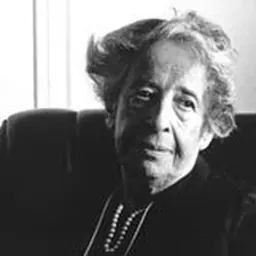
Related people
Same field, nearest in time


Contemporaries
People whose lives overlapped Dagmar Barnouw's






Frequently asked questions
Who was Dagmar Barnouw?
German cultural historian (1936-2008)
When was Dagmar Barnouw born?
Dagmar Barnouw was born on 22 March 1936 in Wilmersdorf.
When did Dagmar Barnouw die?
Dagmar Barnouw died on 14 May 2008 in San Diego.
What was Dagmar Barnouw's occupation?
Dagmar Barnouw was a writer, cultural critic, historian, cultural historian, literary scholar and germanist.
What nationality was Dagmar Barnouw?
Dagmar Barnouw was German.
Sources & further reading
Cite this page
APA: Biography.guide. (2026). Dagmar Barnouw. https://biography.guide/dagmar-barnouw/
MLA: "Dagmar Barnouw." Biography.guide, https://biography.guide/dagmar-barnouw/.
Chicago: "Dagmar Barnouw." Biography.guide. https://biography.guide/dagmar-barnouw/.
Data last updated: 2026-09-20 · Spot an error? Report a correction.
Page generated 2026-09-27 04:58 UTC