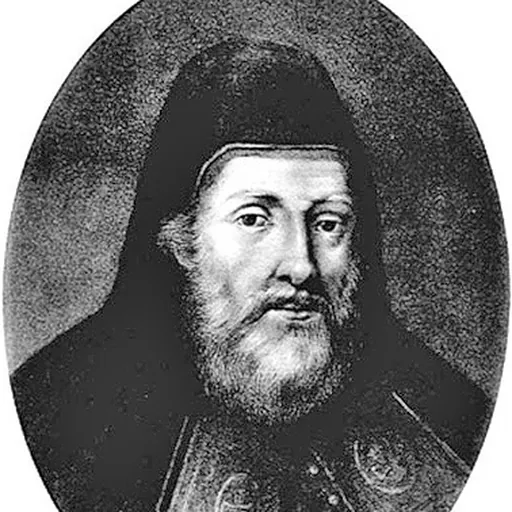
About Cyril Terlecki
Lived 1540 – 1607 (aged 66–67). Cyril Terlecki was a Polish catholic priest and catholic bishop.
Bishop Cyril S. Terlecki (; ; ; died May 1607) was a religious and political figure and one of the initiators of the conclusion of the Union of Brest in 1596. He served as a bishop of the Eparchy of Lutsk–Ostroh as both an Eastern Orthodox and Ruthenian Uniate Church.
Life Cyril came from a noble family whose roots were out of Przemysl Land. The members of this family held high ecclesiastical positions in the first half of the 15th century. In the 1560s, he was the archpriest of the church of St. Dmitry in Pinsk. In 1572, the then-Bishop of Turov-Pinsk, Brest, Andrew Rusin, died. In 1575, Terlecki, who at that time was a widower and could accept monastic tonsure, began campaigning to become bishop of the Turov-Pinsk Diocese and, during the interregnum, received a diploma in the Turov-Pinsk diocese. Terlecki supported Prince Konstanty Wasyl Ostrogski, who had land holdings in Pinsk county. After becoming bishop, Terlecki demanded the rights and privileges of the clergy, collected documents from the historical past of his predecessor, and compiled the diocesan archives. Furthermore, he paid special attention to strengthening the economic situation of the church. Around this time, he sponsored the building of the Church of the Holy Spirit in Pinsk and cared for the poor. In 1585, the bishop of Lutsko Ostrozhsky, John-Borzobahatyy Krasenskyy, died, and in May of that year, King Stefan Batory appointed Terlecki his successor. In August 1589, Ecumenical Patriarch Jeremias II appointed Terlecki as Exarch – the first for a Ukrainian bishop.
Church career 1575 – 1585 – Turov-Pinsk Orthodox bishop 1585 – 1595 – Lutsk-Ostrog Orthodox bishop 1596 – 1607 – Lutsk-Ostrog Uniate Bishop
Union
The decline of the Eastern Orthodox Church in the lands of the Commonwealth led Terlecki and other bishops to seek a rapprochement with the Catholic Church. In June 1590, the congress of bishops in Belha, Terlecki, together with other bishops, first raised the issue of the necessity of the Orthodox and Catholic churches. In 1594, at the Congress in the Zocalo, Terlecki instructed to negotiate the conclusion of a future union. In June 1595, members of the Council of Brest agreed on texts of the appeals to the Polish King Sigismund III Vasa and the Pope Clement VIII and decided to send a delegation consisting of Terlecki and Ipatii Potii to Rome. In 1596, Terlecki participated in the Council of Brest, which solemnly proclaimed the ecclesiastical union of the Metropolis of Kyiv and the Roman Catholic Church. In 1598, King Sigismund III Vasa bestowed the title of archimandrite upon him. Following his death, he was buried at the Cathedral of Lutsk.
Don’t just read it —
keep it.
Full-length biographies made to live with: read them, listen on the way to work, watch them tonight.
- E-book
- Audio
- Video
Instant download · yours to keep · every purchase keeps this site free
Important facts
People in Cyril Terlecki's life
Named in this biography and alive at the same time
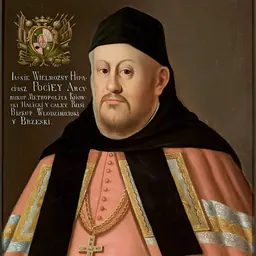
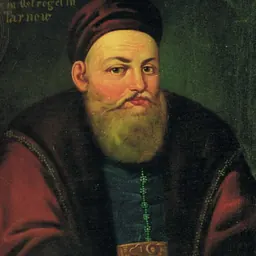
Related people
Same field, nearest in time



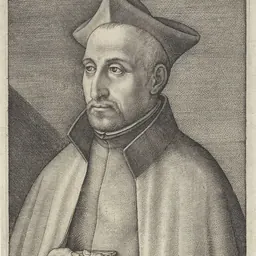
Contemporaries
People whose lives overlapped Cyril Terlecki's



Frequently asked questions
Who was Cyril Terlecki?
Catholic bishop
When was Cyril Terlecki born?
Cyril Terlecki was born in 1540 in Pinsk.
When did Cyril Terlecki die?
Cyril Terlecki died on 21 May 1607.
What was Cyril Terlecki's occupation?
Cyril Terlecki was a catholic priest and catholic bishop.
What nationality was Cyril Terlecki?
Cyril Terlecki was Polish.
Sources & further reading
Cite this page
APA: Biography.guide. (2026). Cyril Terlecki. https://biography.guide/cyril-terlecki/
MLA: "Cyril Terlecki." Biography.guide, https://biography.guide/cyril-terlecki/.
Chicago: "Cyril Terlecki." Biography.guide. https://biography.guide/cyril-terlecki/.
Data last updated: 2026-09-20 · Spot an error? Report a correction.
Portrait: Wikimedia Commons · author & licence
Page generated 2026-09-27 04:58 UTC