
About Cynthia Whitchurch
Cynthia Whitchurch was a researcher and geneticist.
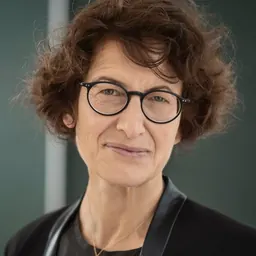
Cynthia B. Whitchurch is an Australian microbiologist. Whitchurch is the research director of the Biofilm Biology cluster at the Singapore Centre For Environmental Life Sciences Engineering (SCELSE) and a professor at the School Of Biological Sciences at Nanyang Technological University (NTU), Singapore. She was previously a research group leader at the Quadram Institute on the Norwich Research Park in the United Kingdom and the founding director of the Microbial Imaging Facility and a Research Group Leader in the Institute of Infection, Immunity and Innovation (The ithree institute) at the University of Technology Sydney (UTS) in New South Wales.
Whitchurch studies bacteria and the ways in which their behavior coordinates to form biofilms, an area with importance for the treatment of infection and the use of antibiotics. Whitchurch became a fellow of the Australian Academy of Science in 2019, in recognition of her discovery that DNA plays a novel role in nature that is unrelated to its roles in genetic functioning. She then continued with postdoctoral training at the University of Queensland from 1995 to 2001. In 2001 Whitchurch undertook further training at the University of California, San Francisco, returning to Australia in 2004.
Career In 2004, Whitchurch established her own research group in the Department of Microbiology at Monash University. University of Technology Sydney then recruited Whitchurch in 2008, where she led a research team that is part of the Institute of Infection, Immunity and Innovation (The ithree institute). In 2019, Whitchurch moved from Australia to join the Quadram Institute in the United Kingdom.
In 2024, Whitchurch joined SCELSE as the research director for the Biofilm Biology cluster. At NTU, she is a professor at the School of Biological Sciences and leads a research team investigating how bacteria produce and utilize extracellular DNA and other biofilm matrix components, as well as how bacteria colonize host tissues and transition into cell-wall-deficient lifestyles to tolerate antibiotics. This research will further the mechanistic understanding of biofilm development, host colonization, and antimicrobial resistance.
Her team employs a range of techniques, including molecular biology, large-scale mutant library screens, high-throughput drug library screens, infection models, biofilm models, tissue and organoid culture, fluorescence microscopy, super-resolution microscopy, live-cell imaging, histology, and fluorescence in situ hybridization.
Research Whitchurch contributed to the discovery of novel roles for DNA unrelated to its genetic function, including the discovery in 2002 that extracellular DNA (eDNA) is required for building multicellular bacterial communities known as biofilms. Whitchurch's discovery that extracellular DNA (eDNA) is essential to and promotes the self-organization of biofilms is credited with creating a paradigm shift in the understanding of biofilm biology.
Her team at SCELSE employs a range of techniques including molecular biology, large-scale mutant library screens, high-throughput drug library screens, infection models, biofilm models, tissue and organoid culture, fluorescence microscopy, super-resolution microscopy, live-cell imaging, histology, and fluorescence in situ hybridization to carry out their research.
Round cells are viable until explosive cell lysis of P. aeruginosa In 2016, Whitchurch, Lynne Turnbull and other researchers from Australia, Japan and Switzerland discovered that the bacterium P. aeruginosa can actively explode, widely distributing its contents when it dies. Its protein, DNA, and virulence factors then become available to other bacterium and support the formation of increasingly dangerous biofilms. A particular gene appears to support both this explosive cell lysis and the formation of biofilms. This suggests possibilities for treatment.
"The normal bacteria look like little rods or pills," says Whitchurch. "One day, as we looked under the microscope, we saw one of the cells turn from a hard, structured rod into a round, soft ball. Within a few more seconds, it then violently exploded - it's amazing how quickly it happens and is likely the reason it hasn't been observed before." In 2009 she was awarded an NHMRC Senior Research Fellowship.
In 2017 Whitchurch was awarded the David Syme Research Prize, an award recognizing "the best original research in biology, physics, chemistry or geology, produced in Australia during the preceding two years". She was the first woman in more than 30 years to receive the prize.
In 2019 Whitchurch was elected to the Australian Academy of Science.
Media Whitchurch's research on biofilms was featured by the Australian Broadcasting Corporation in 2002 and 2013 and The Australian in 2019.
Don’t just read it —
keep it.
Full-length biographies made to live with: read them, listen on the way to work, watch them tonight.
- E-book
- Audio
- Video
Instant download · yours to keep · every purchase keeps this site free
Important facts
Related people
Same field, nearest in time





Frequently asked questions
Who was Cynthia Whitchurch?
DNA researcher, particularly extracellular DNA (eDNA)
What was Cynthia Whitchurch's occupation?
Cynthia Whitchurch was a researcher and geneticist.
Sources & further reading
· Wikipedia: Cynthia Whitchurch
Cite this page
APA: Biography.guide. (2026). Cynthia Whitchurch. https://biography.guide/cynthia-whitchurch/
MLA: "Cynthia Whitchurch." Biography.guide, https://biography.guide/cynthia-whitchurch/.
Chicago: "Cynthia Whitchurch." Biography.guide. https://biography.guide/cynthia-whitchurch/.
Data last updated: 2026-09-20 · Spot an error? Report a correction.
Page generated 2026-09-27 05:21 UTC