
About Cynthia W. Shelmerdine
Born 2000. Cynthia W. Shelmerdine is an American archaeologist.
Cynthia Wright Shelmerdine is an American classicist and archaeologist, known for her researches into Mycenaean culture and history. She is Robert M. Armstrong Centennial professor emerita at the University of Texas, Austin.
Education and career Cynthia Shelmerdine grew up in Cambridge, Massachusetts, where she attended Shady Hill School. She obtained a bachelor's degree in Greek from Bryn Mawr College in 1970 followed by a B.A. (1972) in Classics from the University of Cambridge. She received a doctorate in classical philology from Harvard University in 1977. Her dissertation, guided by Emily Vermeule, was titled Late Helladic IIIA2-IIIB Pottery from Nichoria and the Bronze Age History of Messenia.
From 1977 through to her retirement in 2008, she was a member of the Classics faculty at the University of Texas at Austin. Since 2008, she has been Robert M. Armstrong Centennial professor emerita at the same institution. In 1988 she was the Gertrude Smith Professor at the American School of Classical Studies at Athens directing the Summer Session. In 2011, she was a Peter Warren Visiting Professor at Bristol University.
Between 1972 and 1975, she participated in the excavations at Nichoria and was responsible for its Late Helladic pottery. She was also a co-director at the Pylos Regional Archaeological Project from 1991 to 1996.
Pylos Shelmerdine's The Perfume Industry of Mycenaean Pylos (1985) investigated industrial production in Mycenae, The fragrances there were made mainly from olive oil, were considered luxury items, and produced under palatial control in a centralised fashion (unlike bronze work, which was decentralised). Every stage of the production process was documented by scribes; indeed, different products appeared to have their own specialist scribes writing the relevant tablets. Shelmerdine documented the ingredients used in several perfumes; these included henna, coriander, myrrh, honey, and "po-ni-ki-jo".
Shelmerdine considered the influence of Mycenaean perfumery on later Greek myth, especially Homeric myths. Mycenaean perfumed oils were exported to Saqqara for use among the Egyptian nobility, but later on took on the role of "ambrosial" clothing for the gods in Homeric hymns.
In the same book, Shelmerdine also documented the earliest known "drugs" in Greek history.
Iklaina Shelmerdine worked on the excavations at Iklaina, a secondary site within the Pylos region, as a pottery specialist. Iklaina is surmised to be an independent entity that was subsumed by the Pylian state. Shelmerdine investigated changes in cooking vessels in the period before and after this incorporation. Looking at tripods, griddles and spit supports, she showed that Iklaina's inhabitants underwent some changes in their cooking habits: they decreased their use of tripods, the diversity of cooking pots decreased, becoming more standardised after Iklaina lost its autonomy. She suggested that cooking of meats by private individuals was replaced by banquets organised by palatial elites who arranged the provision of meat.
It had previously been thought that only palatial centres of the Mycenaean culture held records. In 2010, her reading of fired tablets containing writing in Linear B at this location was a surprise. The mechanisms of Mycenaean administration had to be reinterpreted in light of this finding. The clay tablet dated to between 1490 and 1390 BCE, and had not originally been meant to be preserved. Thrown in a rubbish pile, a fire hardened it, thereby preserving it. There was writing on one side, including a number and some indecipherable characters, as well as the names of various men with numbers on the other side. Moreover, it raised the question of the extent of literacy in Mycenaean society, as well as how widespread was record-keeping at the lower echelons of Mycenaean bureaucracy.
The finding of other Linear B tablets at Iklaina, detailing the administration of textile production, also tends to weaken the thesis that Mycenaean administration was centralised. As palatial centres show little evidence of textile production, Shelmerdine suggested that the chain of textile manufacture was under a more or less distributed control. Some producers may have had no interaction at all with the palatial centres, while others might have been fully dependent.
Selected works Articles
Books
Don’t just read it —
keep it.
Full-length biographies made to live with: read them, listen on the way to work, watch them tonight.
- E-book
- Audio
- Video
Instant download · yours to keep · every purchase keeps this site free
Important facts
People in Cynthia W. Shelmerdine's life
Named in this biography and alive at the same time


Related people
Same field, nearest in time


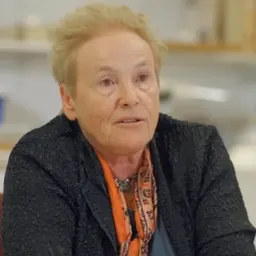


Contemporaries
People whose lives overlapped Cynthia W. Shelmerdine's



Frequently asked questions
Who is Cynthia W. Shelmerdine?
American archaeologist
When was Cynthia W. Shelmerdine born?
Cynthia W. Shelmerdine was born in 2000.
What is Cynthia W. Shelmerdine's occupation?
Cynthia W. Shelmerdine is an archaeologist.
What nationality is Cynthia W. Shelmerdine?
Cynthia W. Shelmerdine is American.
Sources & further reading
· Wikipedia: Cynthia W. Shelmerdine
· DBpedia: Cynthia W. Shelmerdine
Cite this page
APA: Biography.guide. (2026). Cynthia W. Shelmerdine. https://biography.guide/cynthia-w-shelmerdine/
MLA: "Cynthia W. Shelmerdine." Biography.guide, https://biography.guide/cynthia-w-shelmerdine/.
Chicago: "Cynthia W. Shelmerdine." Biography.guide. https://biography.guide/cynthia-w-shelmerdine/.
Data last updated: 2026-09-20 · Spot an error? Report a correction.
Page generated 2026-09-27 05:21 UTC