
About Curtis Flowers
Born 1971. Curtis Flowers is an American prisoner and singer.
Curtis Giovanni Flowers (born May 29, 1970) is an American man who was imprisoned for over 22 years while he was tried for the same murders six times by the same prosecutor in the U.S. state of Mississippi. Four of the trials resulted in convictions, all of which were overturned on appeal for repeated prosecutorial misconduct. Flowers was alleged to have committed the July 16, 1996, shooting deaths of four people inside Tardy Furniture store in Winona, Mississippi, United States. Flowers was first convicted in 1997; in five of the six trials, the prosecutor, Montgomery County District Attorney Doug Evans, sought the death penalty against Flowers. As a result, Flowers was held on death row at the Parchman division of Mississippi State Penitentiary for over 20 years.
In his first trial, Flowers was convicted of the aggravated murder and robbery of the store owner. This verdict and a conviction in a second trial for the murder of one of the store employees were both overturned by the Mississippi Supreme Court due to prosecutorial misconduct. A subsequent trial for all four murders resulted in conviction, but this was overturned by the Mississippi Supreme Court for racial bias by the prosecutor in jury selection: Flowers is black and the prosecution excluded a disproportionate number of black jurors. Flowers's fourth and fifth trials ended as mistrials. On June 18, 2010, a majority-white jury in Flowers's sixth trial convicted him of the 1996 murders and voted to impose a death sentence.
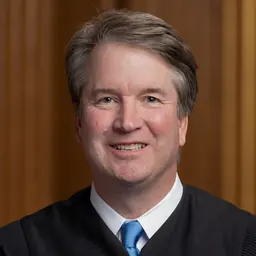
Flowers's case was one of three that the U.S. Supreme Court ruled in June 2016 were to be remanded to lower courts to be reviewed for evidence of racial bias in jury selection. After the Mississippi Supreme Court reaffirmed the conviction, the U.S. Supreme Court again reviewed Flowers's case. It overturned, on a 7–2 vote, the murder convictions in June 2019 in the decision Flowers v. Mississippi, with Justice Brett Kavanaugh writing for the majority. In December 2019, Flowers was released from prison for the first time since his original arrest, on $250,000 bond, pending a state decision on whether it would attempt another prosecution. On September 4, 2020, Mississippi Attorney General Lynn Fitch, a Republican who had taken over the case from District Attorney Evans, announced she would not seek a seventh trial and had dropped the charges against Flowers.
The Flowers case served as the subject of a 2018 podcast, In the Dark, on American Public Media. In early 2021, Flowers was awarded $500,000—the maximum allowed under Mississippi law providing compensation for wrongful incarceration. Under the agreed order, Mississippi was ordered to pay Flowers $50,000 per year for the next 10 years. Flowers was charged with murder in the shooting deaths of the four victims.
Trials and state-court appeals Summary State District Attorney Doug Evans prosecuted all six of Flowers's trials. The first through third trials (1997, 1999, 2004) ended in convictions but were overturned by the Mississippi Supreme Court – the first two because of prosecutorial misconduct; the third because District Attorney Evans was found to have discriminated against black jurors during jury selection. The sixth (2010) resulted in a conviction, and an appeal failed. The following year the state court confirmed the original decision.
First trial and appeals (1997–2000) Trial 1: The prosecutor decided to try Flowers for the death of the store owner, Bertha Tardy,
In addition, prosecution witnesses testified that projectiles found at the crime scene were most likely from a .380-caliber pistol, the same as a gun stolen from Flowers's uncle on the morning of the murders. $400 was found to be missing from the till, and $235 was found in Flowers's headboard. Of the original two witnesses to the confession, both later retracted their testimony. A third witness alleged a later confession by Flowers when the both of them were in a different prison, after the first trial, but that witness also later recanted. and said he never admitted any crimes to his cellmates. He said he was wearing Nike shoes that day, the clothes he was wearing did not match the description given by eyewitnesses, and the particulate matter on his hands was due to his having handled fireworks the day before the murders. In addition, the prosecutor was held to have asked questions "not in good faith" and "without basis in fact." Harvey Freelon Outcome: Guilty. Sentenced to death Appeal: Conviction overturned in 2003 by Mississippi Supreme Court due to prosecutorial misconduct.
While the first case was still under appeal, ). Evans then used the state's three alternate juror strikes to exclude African-Americans. )
The state Supreme Court stated that there was disparate treatment by the prosecutor in evaluation of black compared with white jurors on issues such as the jurors' connections with the defendants and the jurors' willingness to use the death penalty; he struck blacks from the jury on grounds for which he did not strike whites. In addition, the court found that although in many cases Evans presented race-neutral reasons to strike, he used the challenge process as "an exercise in finding race neutral reasons to justify racially motivated strikes." The Mississippi Supreme Court overturned the conviction, on the request of family of the victims who, aware that the defense would have the harder task of appealing a higher court if the sentence was life in prison, wanted the trial concluded so they could 'move on'. the resulting jury, however, had five African Americans on it. The fourth trial ended in a mistrial, as the jury was split 7–5 in favor of conviction; votes could be classified by race, among other factors, with African Americans voting to acquit.
Fifth trial (2008) Trial 5: This time Joseph Loper sat as judge. was arrested for perjury for lying during jury selection when she said she did not know Flowers. The trial, with a jury of nine white and three black jurors, concluded in 2008 in a mistrial due to a hung jury. James Bibbs, an African American, was the sole juror opposed to conviction. Immediately after the trial the judge, Joseph Loper, accused Bibbs of perjury for having lied during jury selection. Loper was also recused as judge in Bibbs' trial.
Sixth trial and appeals (2010–2014) Trial 6: After deliberating for approximately 90 minutes during the penalty phase, the jury returned a death sentence. An appeal by Flowers failed, the Mississippi Supreme Court ruling in 2014 that the conviction was to be upheld.
In the Dark
In 2018, the second season of the American Public Media podcast In the Dark was based on reporting about the Flowers case, hosted and reported by journalist Madeleine Baran. Through in-depth investigative reporting, serious doubt was cast on the legitimacy of the case against Flowers, including claims by numerous witnesses that they had perjured themselves, potential misconduct by the prosecutor, and the disappearance of a gun, potentially the murder weapon, after it was turned over to police. A petition for a writ of certiorari was filed, seeking review of the Mississippi Supreme Court's application of Batson v. Kentucky. The U.S. Supreme Court granted the writ on November 2, 2018. Amicus briefs on behalf of Flowers were filed by the Magnolia Bar Association, the Mississippi Center for Justice, and Innocence Project New Orleans. On June 21, 2019, the U.S. Supreme Court overturned Flowers's sixth conviction with a vote of 7–2 in Flowers v. Mississippi. The Supreme Court's decision was made based on the argument that the prosecutor, Doug Evans, had committed a Batson violation by striking all but one prospective black juror in Flowers's sixth trial. Justice Brett Kavanaugh wrote the majority decision: "The state's relentless, determined effort to rid the jury of black individuals strongly suggests that the state wanted to try Flowers before a jury with as few black jurors as possible, and ideally before an all-white jury. We cannot ignore that history."
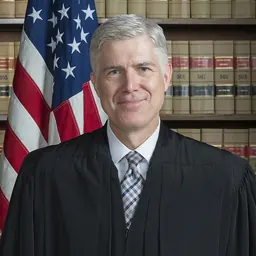
Justices Neil Gorsuch and Clarence Thomas dissented from the Court's decision. and the Winston-Chickasaw Regional Correctional Facility, in Louisville, Mississippi, pending decisions from prosecutors and the local court on any future prosecution. Flowers's attorneys petitioned for the charges to be dismissed, or failing that, for bail to be granted and for Doug Evans to be removed from any role in the prosecution, citing the multiple findings of prosecutorial misconduct in the case.
Evans was sued in federal court by the local NAACP chapter on behalf of multiple Flowers's jury pool members, seeking class action status to include all jury-eligible black residents of his district, based on his alleged systematic racial discrimination in jury selection. This suit was later dismissed on procedural grounds.
On December 16, 2019, Judge Loper granted Flowers bail in the amount of $250,000, of which he was required to deposit 10 percent. Flowers was restricted to his residence, and required to wear an ankle monitor. Judge Loper noted in his decision that several of the prosecution's key witnesses had recanted. In addition, the podcast In the Dark reported that potentially exculpatory evidence had been uncovered, as well as alternative suspects, seemingly leaving the prosecution with a weaker case than in the previous trials. District Attorney Evans, prosecutor in all six of Flowers's trials, recused himself from the case in January 2020 and asked the presiding judge to turn over prosecution to the Mississippi Attorney General's office. The state declined to prosecute Flowers for the seventh time, officially dropping all charges against Flowers on September 4, 2020. The Attorney General's office stated that it would be nearly impossible to convict Flowers due to the lack of any available living witnesses who had not recanted or otherwise rendered their testimony unusable by making multiple conflicting statements, the identification of alternative suspects, and new potentially-exculpatory evidence. The case was dismissed with prejudice, barring further prosecution and thus freeing Flowers and bringing the case to a formal conclusion.
Don’t just read it —
keep it.
Full-length biographies made to live with: read them, listen on the way to work, watch them tonight.
- E-book
- Audio
- Video
Instant download · yours to keep · every purchase keeps this site free
Important facts
People in Curtis Flowers's life
Named in this biography and alive at the same time


Related people
Same field, nearest in time



Contemporaries
People whose lives overlapped Curtis Flowers's



Frequently asked questions
Who is Curtis Flowers?
American death row inmate
When was Curtis Flowers born?
Curtis Flowers was born in 1971 in Winona.
What is Curtis Flowers's occupation?
Curtis Flowers is a prisoner and singer.
What nationality is Curtis Flowers?
Curtis Flowers is American.
Sources & further reading
Cite this page
APA: Biography.guide. (2026). Curtis Flowers. https://biography.guide/curtis-flowers/
MLA: "Curtis Flowers." Biography.guide, https://biography.guide/curtis-flowers/.
Chicago: "Curtis Flowers." Biography.guide. https://biography.guide/curtis-flowers/.
Data last updated: 2026-09-20 · Spot an error? Report a correction.
Page generated 2026-09-27 05:09 UTC