
About Cristóbal Rojas
Lived 1857 – 1890 (aged 32). Cristóbal Rojas was a Venezuelan painter.
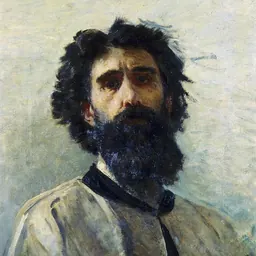
Cristóbal Rojas Poleo (December 15, 1857 – November 8, 1890) was one of the most important and high-profile Venezuelan painters of the 19th century. Rojas's styles varied considerably throughout his life and ranged from the post-romantic to the impressionist style, but most of his works was characterised by realism.
Biography Cristóbal Rojas Poleo was born in the city of Cúa in the Valles del Tuy to parents who worked in the medical profession. Part of his childhood occurred during the middle of the federal war (1859–1863) and Cúa was particularly affected by the events of the war. He initiated studies under his grandfather, José Luis Rojas, who taught him how to draw and motivated him to improve. At 13 years old, his father died and he was forced to begin work in a tobacco factory in Cúa to help support his family.
In Caracas he attended classes by José Manuel Maucó at the Universidad Central de Venezuela. Between 1880 and 1882, he developed a keen interest in oils and displayed a primitive technique that would prevail in his later paintings such as Ruinas de Cúa después del Terremoto and Ruinas del templo de la Merced.
Rojas' La muerte de Girardot en Bárbula which won him a silver medal and scholarship in 1883. 287 x 217 cm.
In 1883, Rojas exhibited his La muerte de Girardot en Bárbula (The death of Girardot in Bárbula) in the Salón del Centenario to commemorate the birth of Simon Bolivar and won a silver medal in second place along with the painter Arturo Michelena.
Rojas was known for his reserved but highly passionate nature, rarely socialising with others around him and preferring to study art in his own medium. Peers and artistic commentators have consistently referred to him as "melancholic". Jose Antonio Hedderich, in an interesting article published in the National Magazine of Culture, after studying the life of Rojas described him; "He was of a shy character, that one was aware of the distance that existed between him and those who surrounded to him. He had few friends". However, Hedderich also continues to identify that Rojas was of a highly emotional nature. Once remarking that, "He had almost fatalistic temperament and was emphatically sad". According to Hedderich, Rojas was embittered by excessive guilty feelings about life and was acutely aware of his conscience. These feelings were often reflected in some of his works such as his purgatory painting, painted shortly before his death in the knowledge he was going to die from tuberculosis.
Gallery of paintings
Don’t just read it —
keep it.
Full-length biographies made to live with: read them, listen on the way to work, watch them tonight.
- E-book
- Audio
- Video
Instant download · yours to keep · every purchase keeps this site free
Important facts
People in Cristóbal Rojas's life
Named in this biography and alive at the same time

Related people
Same field, nearest in time

Contemporaries
People whose lives overlapped Cristóbal Rojas's





Frequently asked questions
Who was Cristóbal Rojas?
Venezuelan painter (1857-1890)
When was Cristóbal Rojas born?
Cristóbal Rojas was born on 15 December 1857 in Cúa.
When did Cristóbal Rojas die?
Cristóbal Rojas died on 8 November 1890 in Caracas.
What was Cristóbal Rojas's occupation?
Cristóbal Rojas was a painter.
What nationality was Cristóbal Rojas?
Cristóbal Rojas was Venezuelan.
Sources & further reading
· DBpedia: Cristóbal Rojas (artist)
Cite this page
APA: Biography.guide. (2026). Cristóbal Rojas. https://biography.guide/cristobal-rojas/
MLA: "Cristóbal Rojas." Biography.guide, https://biography.guide/cristobal-rojas/.
Chicago: "Cristóbal Rojas." Biography.guide. https://biography.guide/cristobal-rojas/.
Data last updated: 2026-09-20 · Spot an error? Report a correction.
Page generated 2026-09-27 05:18 UTC