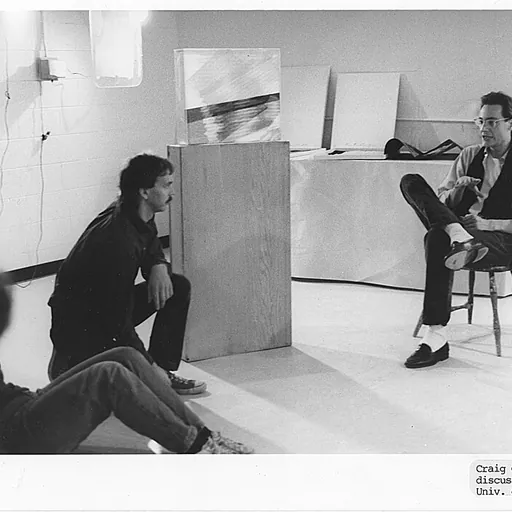
About Craig Owens
Lived 1950 – 1990 (aged 39–40). Craig Owens was an American art critic, journalist, essayist, activist shareholder and activist.
Craig Owens (1950–1990) was an American post-modernist art critic, gay activist and feminist.
Biography Craig Owens was a senior editor of Art in America, a contributor to such scholarly journals as Skyline and October, a graduate of Haverford College, and a professor of art history at Yale University and Barnard College. He wrote many essays on such diverse topics as photography, feminism, gay politics, art in the marketplace, serial art, and psychoanalysis, as well as a number of seminal essays on individual contemporary individual artists, including Allan McCollum, William Wegman, and Barbara Kruger. According to his colleague Douglas Crimp, Owens's great interest in ballet was important to his critical work. According to the critic Thomas Lawson, Owens was "on the one hand... this very high-minded, very abstract thinker, but he also had this mischievous, playful side that was a little cruel, maybe."
One of Owens's most influential essays was The Allegorical Impulse: Toward a Theory of Postmodernism, an article in two parts in which he explores the allegorical aspects of contemporary art. The two parts were published in the journal October in Spring 1980 and Summer 1980. In the first part Owens says that, "Allegorical imagery is appropriated imagery" (Owens, p54) and discerns an allegorical impulse at work in the appropriation art of artists such as Sherrie Levine. He describes the postmodernist artist as one that "lays claim to the culturally significant, poses as its interpreter... If he adds, however, he does so only to replace: the allegorical meaning supplants an antecedent one; it is supplement" (Owens, p54). These inclinations can be seen in works such as oil-barrels of Belgian artist Wim Delvoye and bullets of a gun by French artist Philippe Perrin. With reference to Walter Benjamin in The Origin of German Tragic Drama, he also links allegory with impermanence, the piling up of fragments and obsessional accumulation. These impulses can be seen, respectively, in site-specific art, photomontage and art that follows a mathematical progression (for instance Sol LeWitt). (Owens, p55-57). In the second part he considers the work of Laurie Anderson, Robert Rauschenberg and Cindy Sherman.
Don’t just read it —
keep it.
Full-length biographies made to live with: read them, listen on the way to work, watch them tonight.
- E-book
- Audio
- Video
Instant download · yours to keep · every purchase keeps this site free
Important facts
People in Craig Owens's life
Named in this biography and alive at the same time


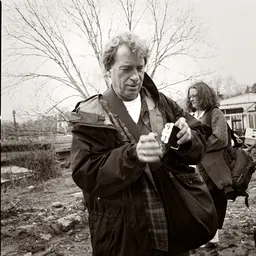


Related people
Same field, nearest in time
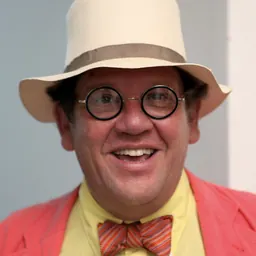




Contemporaries
People whose lives overlapped Craig Owens's



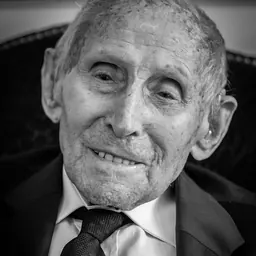
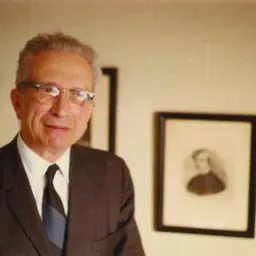

Frequently asked questions
Who was Craig Owens?
American art critic (1950–1990)
When was Craig Owens born?
Craig Owens was born in 1950.
When did Craig Owens die?
Craig Owens died in 1990 in Chicago.
What was Craig Owens's occupation?
Craig Owens was an art critic, journalist, essayist, activist shareholder and activist.
What nationality was Craig Owens?
Craig Owens was American.
Sources & further reading
· DBpedia: Craig Owens (critic)
Cite this page
APA: Biography.guide. (2026). Craig Owens. https://biography.guide/craig-owens/
MLA: "Craig Owens." Biography.guide, https://biography.guide/craig-owens/.
Chicago: "Craig Owens." Biography.guide. https://biography.guide/craig-owens/.
Data last updated: 2026-09-20 · Spot an error? Report a correction.
Portrait: Wikimedia Commons · author & licence
Page generated 2026-09-27 04:58 UTC