
About Courtenay Edward Stevens
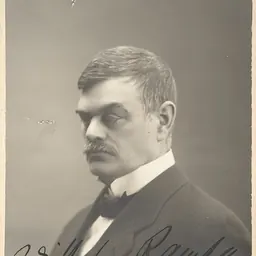
Lived 1905 – 1976 (aged 71). Courtenay Edward Stevens was a British historian and historian of classical antiquity.
Courtenay Edward Stevens (14 April 1905 – 1 September 1976) was a British classicist. He was educated at Winchester College and received a first class degree in literae humaniores ("the Greats") from New College, Oxford. Stevens remained at Oxford after graduation, receiving scholarships and, in 1933, a research fellowship at Magdalen College. During the Second World War he worked for British military intelligence, specialising in propaganda. Stevens produced German-language newspapers and broadcasts and suggested the use of the first notes of Beethoven's Fifth Symphony for Allied broadcasts. After the war he returned to Magdalen, taking on a huge teaching workload of up to 72 hours per week. Stevens enjoyed success, in partnership with the philosopher J. L. Austin, in preparing students for examination in the Greats. He served as vice-president of the college from 1950–51.
Education and early career Stevens was born on 14 April 1905 and educated at Winchester College. He studied at New College, Oxford, from 1924, receiving the nickname "Tom Brown Stevens" by which he was afterwards known informally in academic circles. Stevens studied the literae humaniores ("the Greats") and was well regarded academically, though more for his expertise in the classics than the philosophy side (he did not get on well with his philosophy tutor H. W. B. Joseph). He afterwards received a University Senior Scholarship, a Craven Fellowship and, in 1933, a research fellowship at Magdalen College.
Intelligence agent During the Second World War Stevens worked in military intelligence, specialising in "black propaganda". He produced a series of German-language newspapers that were dropped into occupied Europe and served as an intelligence officer with Deutscher Kurzwellensender Atlantik, a broadcast aimed at German U-boat crews. It was Stevens who suggested that the four opening notes of Beethoven's Fifth Symphony, which was also "V" (for "victory") in Morse code, were used as a signature theme for Allied radio broadcasts.
Stevens was married three times, once to Leila Buckley, and had one son by his first wife.
Don’t just read it —
keep it.
Full-length biographies made to live with: read them, listen on the way to work, watch them tonight.
- E-book
- Audio
- Video
Instant download · yours to keep · every purchase keeps this site free
Important facts
People in Courtenay Edward Stevens's life
Named in this biography and alive at the same time



Related people
Same field, nearest in time

Contemporaries
People whose lives overlapped Courtenay Edward Stevens's




Frequently asked questions
Who was Courtenay Edward Stevens?
British historian (1905-1976)
When was Courtenay Edward Stevens born?
Courtenay Edward Stevens was born on 14 April 1905 in London.
When did Courtenay Edward Stevens die?
Courtenay Edward Stevens died on 1 September 1976 in Oxford.
What was Courtenay Edward Stevens's occupation?
Courtenay Edward Stevens was a historian and historian of classical antiquity.
What nationality was Courtenay Edward Stevens?
Courtenay Edward Stevens was British.
Sources & further reading
· Wikipedia: Courtenay Edward Stevens
· DBpedia: Courtenay Edward Stevens
Cite this page
APA: Biography.guide. (2026). Courtenay Edward Stevens. https://biography.guide/courtenay-edward-stevens/
MLA: "Courtenay Edward Stevens." Biography.guide, https://biography.guide/courtenay-edward-stevens/.
Chicago: "Courtenay Edward Stevens." Biography.guide. https://biography.guide/courtenay-edward-stevens/.
Data last updated: 2026-09-20 · Spot an error? Report a correction.
Page generated 2026-09-27 05:15 UTC