
About Costanza da Varano
Lived 1426 – 1447 (aged 20–21). Costanza da Varano was a poet and writer.
Costanza Varano (1426–1447) was a noted humanist, scholar, and writer in early modern Italy. She is regarded as "one of the best known learned women" of the mid-15th century.
Life and education Varano was the first child born to Pier Gentile da Varano, lord of Camerino, and Elisabetta Malatesta. She was born in Camerino in 1426. Her father was lord of Camerino until his death in 1433, while her mother was the daughter of scholar Battista da Montefeltro Malatesta and Galeazzo Malatesta, lord of Pesaro until 1444. She had one known brother, Rodolfo, heir to Camerino. In her early years, the family lived in the Varano family palace, Palazzo Ducale, in Camerino, which rests in the heart of the Marche region. In 1433, Pier Gentile da Varano was executed by his brothers during a struggle to rule the city of Camerino. In the aftermath, her mother fled to Pesaro in 1434 with Costanza, her brother Rodolfo, and two other children, where her grandmother and grandfather lived.
Varano's education in Latin was perhaps her most notable accomplishment. Battista da Montefeltro Malatesta, a scholar, active ruler in Pesaro, and pioneer of education for women helped educate Costanza. Women of wealth and influence in the 15th century were expected to have some education as they were sometimes rulers of their cities and often entrusted to educate their heirs, the future rulers of their cities. During the 15th century, the humanist movement had taken hold of Italy, and women of affluence were able to receive an education that encouraged writing and speaking with eloquence and clarity. While women were a small minority in the humanist movement during their time, their contribution to the development of the Renaissance and evolution of intellectual life in modern Europe was significant. Margaret King argues that Varano, like most educated women of the time, failed to realize her potential within the field of humanism beyond her adolescence, when women were expected to marry and relinquish their lives of learning.
During her time in Pesaro, it is believed that Varano was also taught by the notary Antonio de Strullis da Coldazzo, and possibly Giacomo da Pesaro. Varano was educated in both Latin and Greek, and her knowledge was considered exceptional compared to other women in 15th century Italy. after his previous proposals to Costanza were rejected by her mother, who believed Alessandro (then a knight and warrior) was unfit to wed a woman of a ruling dynasty when he had no land of his own. Like her grandmother before her and daughter after, Costanza demonstrated that Renaissance women helped redefine expectations for the role of women that established a tradition of female education and played a critical role in the culture of the Marche. Varano, her grandmother, mother and daughter were all politically involved women, often speaking publicly on their families' behalf because their male counterparts could not. Further, their ruling dynasty seems to have appreciated that intelligent women with contemporary education were capable co-rulers. Her speeches and letters often included phrases about her ineptitude in Latin, her ignorance, and her inexperience. She was praised in her time by male humanists, who were often impressed by learned women because they were so rare, and because their eloquence and clarity was comparable to their own. Similarly, modern scholars praise her accomplishments for their rarity in their time, as well as for her achievements at such a young age. Costanza used her poems and orations to exact promises from her family, request the return of land, and make requests on her family's behalf while she was only a teenager. There, Varano delivered a speech to Bianca Maria Visconti to request that Camerino be returned to the control of the Varano family under the leadership of her brother, Rodolfo, and cousin, Giulio Cesare. Her oration attests to her learning and is believed to be part of the reason Francesco returned the city to the Varano family (though scholars speculate that her marriage to Alessandro Sforza, Francesco's brother, had more to do with that decision than her speech). She additionally wrote a letter and poem to the King Alfonso V of Aragon in the same year on her brother's behalf.
In a letter to Isotta Nogarola in 1442, Varano demonstrated how learned women supported the education of other women through their letters and praise of intelligence. She also promises continued learning, which was both remarkable for the time and a testament to her family's legacy of learned women.
Humanist careers were far less common in women than education was, and two socially acceptable paths were available to educated women: marriage or religious vows. Like other notable female scholars in early modern Northern Italy to whom she is compared (Ginevra Nogarola and Caterina Caldiera, for example), Costanza married and her Latin humanist education ceased. Her family's grammar teacher, Giacomo da Pesaro, dedicated his De octo partibus orations to Costanza, and after her death, many eulogies were written to praise and celebrate her fame and intellect.
List of works Letter to Isotta Nogarola, c. 1442, as quoted in Oration to Bianca Maria Visconti, c. 1442, as quoted in Oration to the people of Camerino, c. 1442, as quoted in Letter to Lady Ceclia Gonzaga, c. 1444, as quoted in Letter to Isotta Nogarola, c. 1442, Latin pp 35–56, as quoted in Poem to Isotta Nogarola, c. 1442, as quoted in Oration to the people of Camerino, c. 1442, as quoted in Poem to the people of Camerino, c. 1442, as quoted in Poem to Oddantonio da Montefeltro, c. 1442–1443, as quoted in Verses to Gianlucido Gonzaga, c. 1443, as quoted in Letter to King Alfonso V of Aragon, c. 1444, as quoted in Poem to King Alfonso V of Aragon, c. 1444, as quoted in Poem to Pope Eugenius IV, c. 1447–1448, as quoted in
Don’t just read it —
keep it.
Full-length biographies made to live with: read them, listen on the way to work, watch them tonight.
- E-book
- Audio
- Video
Instant download · yours to keep · every purchase keeps this site free
Important facts
People in Costanza da Varano's life
Named in this biography and alive at the same time

Related people
Same field, nearest in time

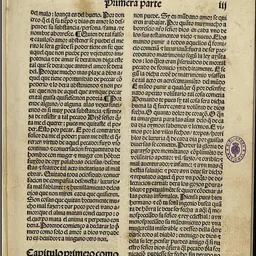
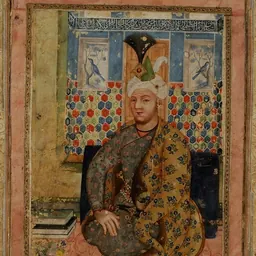
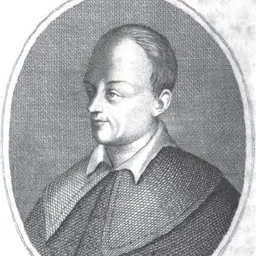

Contemporaries
People whose lives overlapped Costanza da Varano's

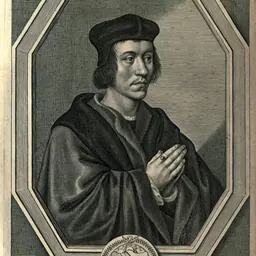
Frequently asked questions
Who was Costanza da Varano?
Italian humanist and scholar
When was Costanza da Varano born?
Costanza da Varano was born in 1426 in Province of Macerata.
When did Costanza da Varano die?
Costanza da Varano died in 1447.
What was Costanza da Varano's occupation?
Costanza da Varano was a poet and writer.
Sources & further reading
· Wikipedia: Costanza da Varano
Cite this page
APA: Biography.guide. (2026). Costanza da Varano. https://biography.guide/costanza-da-varano/
MLA: "Costanza da Varano." Biography.guide, https://biography.guide/costanza-da-varano/.
Chicago: "Costanza da Varano." Biography.guide. https://biography.guide/costanza-da-varano/.
Data last updated: 2026-09-20 · Spot an error? Report a correction.
Page generated 2026-09-27 05:21 UTC