
Corry Tendeloo
Dutch lawyer, feminist, and politician
About Corry Tendeloo
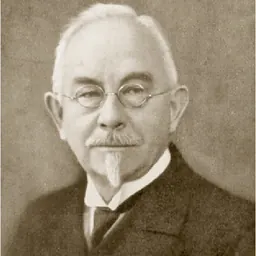
Lived 1897 – 1956 (aged 59). Corry Tendeloo was a Dutch lawyer, politician and women's rights activist.
Nancy Sophie Cornélie "Corry" Tendeloo (3 September 1897 – 18 October 1956) was a Dutch lawyer, feminist, and politician who served in the House of Representatives for the Free-thinking Democratic League (VDB) from 1945 until 1946 and then for the newly-formed Labour Party (PvdA) until her death in 1956. Born in the Dutch East Indies, Tendeloo studied law at Utrecht University, during which time she made contact with people within the women's rights movement. She became politically active in the 1930's and was elected to the Amsterdam City Council for the VDB in 1938. After World War II, Tendeloo was appointed a member of the Provisional House of Representatives, formed to rebuild the country and organise elections. In 1946, the VDB merged with other parties into the PvdA, which Tendeloo represented in parliament. She sat on two select committees and spoke in favour of women's rights issues.
She helped secure universal suffrage for the Dutch colonies Suriname and Curaçao in 1948. In early 1955, she successfully made the case for equal pay and later that year put forward a motion to abolish the ban on state employment for married women. The next year she was instrumental in introducing legislation that would start to end the Dutch version of couverture, a 19th-century legal doctrine according to which married women were deemed incompetent to act on their own behalf and were stopped from performing acts such as opening a bank account without the permission of their husband. Tendeloo died in October 1956, before any of the women's rights issues she fought for became law. She was largely forgotten after her death, even during the second wave of feminism in the 1960s and 1970s. In the 21st century efforts have been made to make her achievements better known.
Early life and career
Nancy Sophie Cornélie "Corry" Tendeloo was born on 3 September 1897 in Tebing Tinggi, on Sumatra, part of the Dutch East Indies. Her mother, Jeanne Cornélie Stamm'ler came from a well-to-do family, as did her father, a high-ranking civil servant named Henri Tendeloo. When she was five years old, her father died and her mother moved with her three children to the Netherlands. In 1916, the family moved to Utrecht. She also encountered cases involving women's inequalities while working pro bono (without pay) for , an association to promote social housing. She volunteered as secretary for the , a position she held until 1937. Because of Tendeloo's role in the protests, VDB nominated her as candidate in the elections for Provincial Council of North Holland. Although she did not win a seat, her performance earned her a place on the candidate list in the Amsterdam City Council elections. In 1941, City Council proceedings were suspended by the German occupation regime during World War II. Tendeloo continued her legal practice while serving on the City Council and in national politics. She resigned from the Amsterdam City Council in September 1946. Tendeloo was the only female representative of the PvdA. In 1947, Tendeloo unsuccessfully tried to stop a ministerial ruling put forward by Minister of Internal Affairs Louis Beel, asking ministries to restrict the hiring of married women. In 1948, she was successful, together with Wim de Kort, in securing universal suffrage for Suriname and Curaçao by having the word "male" struck from the bill for the new charter for the Dutch colonies. In 1952, she gave up her legal work and was absent from parliament for almost a year after she was diagnosed with breast cancer.
Equal pay debates
In March 1955, Tendeloo debated equal pay in the House of Representatives. In a column in the newspaper Het Vrije Volk, she argued that the women's rights movement had begun advocating equal pay in 1898 and made their case at the League of Nations, the United Nations and ultimately the International Labour Organization, which in 1951 adopted the Equal Remuneration Convention. The Dutch government accepted equal pay in principle but opposed ratification and execution on the grounds that the pay gap of 30 per cent should be closed over time and not at once. Tendeloo argued that the convention did not require an immediate closure of the pay gap. She and three other female members agreed with the government that introduction should be gradual; Tendeloo suggested over eight years. The government also claimed it was up to the private sector to prioritise equal pay; Tendeloo argued that anything involving women's rights would end up at the bottom of the priority list. When the government said that equal pay would harm the economy, Tendeloo pointed out that if ever there was a time to deal with the cost of social justice, it was while the economy was growing. Tendeloo submitted a motion, with six others, calling on the government to ratify and execute the Equal Remuneration Convention as quickly as possible. The motion passed with 47 votes in favour and 39 against, with crucial votes in favour coming from freule Wttewaall van Stoetwegen's party, the Christian Historical Union (CHU). The government did not act upon it.
Motion of Tendeloo
In September 1955, Tendeloo moved the "Motie Tendeloo" ("Motion Tendeloo") for the end of mandatory dismissal of female civil servants once they married. Since 1924, a law banned married women from working for the state, partly on the grounds that their place was with their family, and partly to help save money during the Great Depression. In the 1930s, the Hendrik Colijn government wrote proposals to ban married women from working in the private sector as well, but these were not implemented. During and after World War II, with great labour shortages, the law was circumvented by offering dismissed married women a temporary contract. In 1950, fewer than 2 per cent of married women worked. The newspapers reported the next day that if ten members who had been absent had voted, the motion would still have passed, by a 52–48 vote, based on the absentees' expressed opinions.
Ending Courveture
Tendeloo was instrumental in ending marital power (analogous to couverture under Common Law) in the Netherlands. As described in the 1838 civil code, under marital power, married women were legally "incompetent to act" , similar to the status of minors and people with severe mental health problems. This meant that in principle married women could not open a bank account, apply for a mortgage or insurance, or sign a labour agreement without the permission of their husband. In practice a "silent assent" was assumed for most contracts, but many educated women found their inferior legal position demeaning. Similar laws existed in other countries, often for centuries. In January 1956, Minister of Justice Leendert Donker unexpectedly died; Tendeloo urged Prime Minister Willem Drees to appoint Julius Christiaan van Oven because of van Oven's views on equal legal rights for women and men and couverture in particular. In May 1956, the House passed the new legislation, now called Lex van Oven, without taking a vote. Tendeloo celebrated, saying "The husband no longer is automatically right about everything and the wife's subordination is a thing of the past!" Lex van Oven came into effect on 1 January 1957. During the next Drees cabinet, in November 1957, the ban on work for married women was abolished. The sentence "The man is the head of the marriage" survived in the law until 1970. In 1975, equal pay became law. Tendeloo frequently used a French saying to describe her own fighting approach: "Frappez, frappez toujours!", which translates as "Knock and keep knocking!" According to Posthumus-van der Goot, Tendeloo deployed the techniques the male members of the House used: they commonly first stated they had listened with great interest to the speaker and agreed with what was said, with just one addition, and then followed it with a sharp critique. Tendeloo said she could only be taken seriously in parliament if she used this technique.
Tendeloo was buried in Bilthoven on 22 October; her funeral was attended by nearly all members of the House of Representatives. Liesbeth Ribbius Peletier, former chair of the VVGS and fellow PvdA member, praised Tendeloo's efforts and called her an "energetic and relentless women's rights fighter". Jaap Burger, the PvdA House leader, said she had earned much respect in parliament. Beethoven's Ode to Joy was played. Afterwards, Speaker of the House of Representatives Rad Kortenhorst said in parliament that she had been "an apostle" with "sharp, legal insights"; Prime Minister Drees praised her great dedication to women's rights issues. PvdA colleague Rita de Bruin called her a "tireless fighter for women's rights". Het Parool commented that it must have given her great satisfaction just before she died to see the appointment of Marga Klompé as the first female minister of the Netherlands, something she had urged Drees to do already in 1952. More recently, Tendeloo came to be seen as one of the few who kept feminism alive in the Netherlands between the first and second waves of feminism. Lilianne Ploumen, member of the House of Representatives for the PvdA, said in 2019 that Tendeloo has done more for women than any prime minister in Tendeloo's time, adding that it was time to put Tendeloo in the history textbooks. A bridge in Amsterdam was named after her in 2016 and streets bearing her name can be found in the cities of Arnhem and Deventer. An online petition to get a statue erected in The Hague to honour Tendeloo was signed over 18,000 times but paused when the COVID-19 pandemic started.
Don’t just read it —
keep it.
Full-length biographies made to live with: read them, listen on the way to work, watch them tonight.
- E-book
- Audio
- Video
Instant download · yours to keep · every purchase keeps this site free
Important facts
People in Corry Tendeloo's life
Named in this biography and alive at the same time




Related people
Same field, nearest in time


Contemporaries
People whose lives overlapped Corry Tendeloo's



Frequently asked questions
Who was Corry Tendeloo?
Dutch lawyer, feminist, and politician (1897–1956)
When was Corry Tendeloo born?
Corry Tendeloo was born on 3 September 1897 in Tebing Tinggi.
When did Corry Tendeloo die?
Corry Tendeloo died on 18 October 1956 in Wassenaar.
What was Corry Tendeloo's occupation?
Corry Tendeloo was a lawyer, politician and women's rights activist.
What nationality was Corry Tendeloo?
Corry Tendeloo was Dutch.
Sources & further reading
Cite this page
APA: Biography.guide. (2026). Corry Tendeloo. https://biography.guide/corry-tendeloo/
MLA: "Corry Tendeloo." Biography.guide, https://biography.guide/corry-tendeloo/.
Chicago: "Corry Tendeloo." Biography.guide. https://biography.guide/corry-tendeloo/.
Data last updated: 2026-09-20 · Spot an error? Report a correction.
Page generated 2026-09-27 05:25 UTC