
About Cornelius F. Kelley
Lived 1875 – 1957 (aged 81–82). Cornelius F. Kelley was a businessperson and politician.
Cornelius Francis Kelley (February 10, 1875 – May 12, 1957) was an American lawyer, mining executive, and politician. He spent 54 years with the Anaconda Copper Mining Company, serving as president from 1918 to 1940, chairman of the board from 1940 to 1955, and chairman of its executive committee until his death. Under Kelley and his longtime associate John D. Ryan, Anaconda expanded from a Montana copper producer into an international, vertically integrated metals company with mines and plants in the United States, Chile, Mexico, and Poland.
Kelley also served one term in the Montana House of Representatives, represented Anaconda in industry organizations and public investigations, and was a director of the 1939 New York World's Fair. He received the Mining and Metallurgical Society of America Gold Medal in 1929.
Early life and education Kelley was born on February 10, 1875, in the mining camp of Mineral Hill in Eureka County, Nevada. His parents were Jeremiah C. Kelley, a mine superintendent, and Hannah Murphy Kelley. The family moved to Butte, Montana, in 1883. As a teenager Kelley worked for Anaconda as a water boy and nipper and later joined a surveying gang; by his mid-teens he was doing underground engineering work.
He graduated from Butte High School in 1892 and entered the University of Michigan in 1894, receiving an LL.B. in 1898. He returned to Butte, was admitted to the bar, and opened a law practice in 1898. His work increasingly concerned the ownership of interlocking underground mineral veins during the prolonged litigation between Anaconda and the interests of F. Augustus Heinze.
Political career In 1899 Kelley became a deputy county attorney for Silver Bow County and took office as one of the county's representatives in the sixth Montana Legislature. The House convened on January 2 and adjourned on March 2, 1899. Kelley chaired the Committee on State Boards and Officers and introduced legislation concerning the appointment and compensation of special constables.
Kelley also served as assistant county attorney through 1901. In 1900 he ran for the United States House of Representatives as the candidate of the Independent Democratic Party but was not elected. His brief political career occurred during the contest between Montana's rival copper interests, when corporate influence over elections and the press became a persistent state issue.
Anaconda career Lawyer and executive Kelley entered Anaconda's legal department in 1901 while continuing some private practice. He became general counsel in 1908, a vice president and director in 1911, and president and a director in 1918. Ryan, who had left for wartime public service, became board chairman after returning, while Kelley remained the operating president.
Kelley assumed office as the company was consolidating control of Montana copper and integrating mines, smelters, refineries, and fabrication. In 1920 he joined the board of the newly renamed Metals Bank and Trust Company of Butte. In 1922 Anaconda acquired the American Brass Company; it then acquired Chile Copper Company and its Chuquicamata mine, the Greene Cananea properties in Mexico, Potrerillos in Chile, and an interest in the Giesche zinc enterprise in Upper Silesia. By the mid-1920s, Kelley publicly described a strategy of balancing foreign and domestic markets and moving the company toward finished products.
The expansion also made Anaconda a major force in Chilean labor relations and national politics. Historians have treated the paired company towns of Butte and Chuquicamata as connected communities shaped by Anaconda's investment, labor policies, and paternalism. Contemporary criticism also focused on Anaconda's dominant place in Montana's economy and its ownership of several daily newspapers. Scholars have described that influence as the "copper collar."
Depression and wartime leadership The 1929 crash and collapse of copper prices sharply reduced Anaconda's earnings and employment. Kelley remained president after Ryan's death in 1933 and became the company's principal public spokesman. Federal investigators later examined international copper discussions involving Anaconda and other producers; the Federal Trade Commission's account referred to contacts with Kelley but did not charge him personally with a criminal offense. Earlier antitrust debates had also cited statistics and arguments presented by Kelley about conservation and production.
In 1940 Kelley was elected chairman of the board, a post left formally vacant after Ryan's death, and James R. Hobbins succeeded him as president. During World War II, Kelley emphasized mineral preparedness and expansion of nonferrous-metal output. Anaconda ranked among the largest American military contractors by value of wartime production, supplying copper, zinc, brass, and other materials.
Postwar projects and retirement After the war Kelley supported the Greater Butte Project, designed to extract lower-grade ore through block caving. A new shaft named for him began production in 1948 and became the core of Anaconda's last major underground operation in Butte. The project anticipated the company's subsequent shift toward large-scale open-pit mining.
Kelley also promoted diversification. In 1952 he announced a broad capital program that included a $45 million aluminum reduction plant at Columbia Falls, Montana, using power from Hungry Horse Dam. The company also entered uranium development in New Mexico.
Kelley announced his retirement as chairman on May 18, 1955, after 54 years with Anaconda. At the same stockholders' meeting, the corporation shortened its name to the Anaconda Company to reflect its business beyond copper. Roy H. Glover succeeded him as chairman, while Kelley remained a director and chairman of the executive committee.
Industry work and writings Kelley held leadership positions in several trade groups, including the Copper Exporters Association and the Copper Institute. In 1926 he became president of Copper Exporters, Inc., a new organization formed to stabilize foreign trade in American copper. He spoke frequently on copper demand, international trade, silver policy, taxation, antitrust law, and mineral preparedness. His published addresses included "The Position of Silver After the Pittman Act," "The Present and Future of the Copper Industry," and wartime remarks on strategic minerals.
He testified or supplied information in public proceedings involving mining claims, labor relations, prices, and international copper arrangements. Corporate records and surviving correspondence are held by the Montana Historical Society, with related papers in other western repositories.
Directorships and public service In addition to Anaconda and its principal subsidiaries, Kelley served as a director of the American Brass Company, Anaconda American Brass, Anaconda Wire and Cable, Andes Copper, Chile Copper, Chile Exploration, Greene Cananea Copper, International Smelting and Refining, the Butte, Anaconda and Pacific Railway, and the Guaranty Trust Company of New York.
Kelley was a director of the 1939–1940 New York World's Fair. He was also active in the American Red Cross, the Boy Scouts, and Catholic charities; served as a trustee of St. Patrick's Cathedral; and was a Knight of Malta.
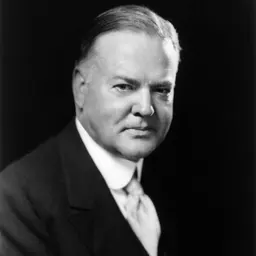
Honors The Mining and Metallurgical Society of America awarded Kelley its Gold Medal in 1929. President Herbert Hoover, himself a mining engineer and an earlier recipient, sent a congratulatory message praising Kelley's contribution to the stabilization and public standing of mining. Kelley had presented Hoover with an AIME medal the previous year. In 1944 AIME awarded him the Charles F. Rand Memorial Gold Medal for leadership of large nonferrous-metals enterprises and for developing engineering talent.
Kelley received honorary degrees from the Michigan College of Mining and Technology (D.Sc., 1930), Montana School of Mines (LL.D., 1936), New York University (D.C.S., 1950), and Fordham University (LL.D., 1955). Kelley was the subject of a 1955 Time magazine profile.
Personal life and death Kelley married Mary Tremblay of Missoula in 1903. Their Butte house, completed in 1906, is a contributing property in the Butte–Anaconda National Historic Landmark district. They later maintained a home on Shelter Rock Road in Manhasset, New York, as well as a summer retreat at Swan Lake, Montana. Kelley and his family received a private audience from Pope Pius XI in 1927. Mary died in November 1955. They had three daughters who survived Kelley.
Kelley suffered a heart attack in 1956, and died on May 12, 1957, at Harkness Pavilion of Columbia–Presbyterian Medical Center in Manhattan, one week after entering the hospital for an operation. He was 82. He was entombed in the Kelley family mausoleum at Gate of Heaven Cemetery in Hawthorne, New York.
Legacy Kelley's tenure encompassed Anaconda's transformation from a Montana-centered copper company into one of the world's largest integrated nonferrous-metals concerns. A contemporary business history credited the Kelley administration with the company's international and manufacturing expansion, while later historians have also emphasized the social costs of corporate power in Montana and Anaconda's influence in Chile.
The Kelley mine and shaft in Butte bore his name. It remained a key underground operation until 1974, and the surviving industrial buildings have since been adapted to new uses. Kelley's Butte mansion and associated properties are interpreted as part of the city's mining and architectural history.
Don’t just read it —
keep it.
Full-length biographies made to live with: read them, listen on the way to work, watch them tonight.
- E-book
- Audio
- Video
Instant download · yours to keep · every purchase keeps this site free
Important facts
People in Cornelius F. Kelley's life
Named in this biography and alive at the same time


Related people
Same field, nearest in time


Contemporaries
People whose lives overlapped Cornelius F. Kelley's


Frequently asked questions
Who was Cornelius F. Kelley?
American mining executive and politician (1875–1957)
When was Cornelius F. Kelley born?
Cornelius F. Kelley was born in 1875.
When did Cornelius F. Kelley die?
Cornelius F. Kelley died in 1957.
What was Cornelius F. Kelley's occupation?
Cornelius F. Kelley was a businessperson and politician.
Sources & further reading
· Wikipedia: Cornelius F. Kelley
· DBpedia: Cornelius F. Kelley
Cite this page
APA: Biography.guide. (2026). Cornelius F. Kelley. https://biography.guide/cornelius-f-kelley/
MLA: "Cornelius F. Kelley." Biography.guide, https://biography.guide/cornelius-f-kelley/.
Chicago: "Cornelius F. Kelley." Biography.guide. https://biography.guide/cornelius-f-kelley/.
Data last updated: 2026-09-20 · Spot an error? Report a correction.
Page generated 2026-09-27 05:27 UTC