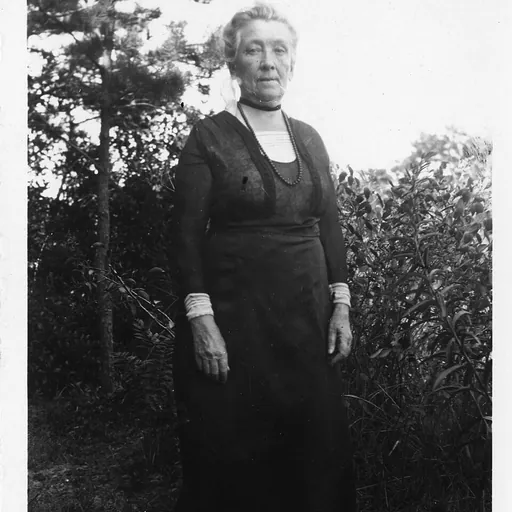
About Cornelia Clapp
Lived 1849 – 1934 (aged 85). Cornelia Clapp was an American zoologist, university teacher, scientific illustrator, entomologist, ichthyologist and malacologist.
Cornelia Maria Clapp (March 17, 1849 – December 31, 1934) was an American educator and zoologist, specializing in marine biology. She earned the first Ph.D. in biology awarded to a woman in the United States from Syracuse University in 1889, and she would earn a second doctoral degree from the University of Chicago in 1896. She was rated one of the top 150 zoologists in the United States in 1903, and her name was starred in the first five editions of American Men of Science (now American Men and Women of Science).
Education Clapp matriculated at Mount Holyoke Female Seminary (now Mount Holyoke College) in 1868 and completed the equivalent of an undergraduate program in 1871. ) She would continue to pursue postgraduate studies while she taught at the school, beginning in 1874, when she went with colleague Lydia Shattuck to the Anderson School of Natural History on Penikese Island, an experimental residential summer school that provided women with postbaccalaureate education when it was not a formal option for them. Clapp would later call her time at Penikese "an opening of doors," where she first encountered a community of people deeply engaged with biological research and theory.
Clapp received her first Ph.D. from Syracuse University in 1889, which she earned by examination based on her first summer of work on the toadfish at the Marine Biological Laboratory rather than by taking a leave from Mount Holyoke to conduct research at Syracuse. In 1891, she published a paper entitled "Some Points in the Development of the Toadfish (Batrachus tau)" in which she described features of the embryonic development and nesting habits of the oyster toadfish now properly known as Opsanus tau. This is one of the earliest known publications on segmentation of the toadfish egg. In 1896, she received a second Ph.D. from the University of Chicago for her dissertation on The lateral line system of Batrachus tau, which was published in the Journal of Morphology in 1898. While materials from both Syracuse and the MBL claim that her doctorates were respectively the first and second Ph.D. granted to a woman in the biological sciences, this is not the case; they were, however, the only two doctorates in the same subject received by the same woman in the 19th century.
Career After graduating from Mount Holyoke, Clapp spent a year as a Latin teacher at a boys' boarding school, Potter Hall, in Andalusia, Pennsylvania. She returned to Mount Holyoke in 1872, teaching mathematics and natural history before becoming the college's gymnastics instructor from 1876 to 1891. In 1888, Clapp began her affiliation with the Marine Biological Laboratory (MBL) during its inaugural session, where she was the first researcher to be assigned a topic of investigation - the lateral line of the toadfish. While at the MBL, Clapp conducted laboratory research using specimens from the area alt=Photograph of Cornelia Clapp with students working in a zoology laboratory
When she returned to Mount Holyoke after obtaining her doctoral degrees, she helped organize the department of zoology and develop its teaching facilities.
Clapp retired from teaching in 1916, though she would continue her research at the MBL and remain involved with the Mount Holyoke community as professor emeritus.
Mount Holyoke awarded Clapp an honorary Sc.D. in 1921, and in 1923, funding for a new biology building to be named the Cornelia Clapp Laboratory in her honor was raised. The building was completed in 1924.
By 1926, she was a member of the American Association for the Advancement of Science,
Marine Biological Laboratory
Trustees of the Marine Biological Laboratory at Woods Hole, 1934. Clapp, the only woman pictured, stands near the center of the front row. Clapp was the first female investigator at the Marine Biological Laboratory, where she also served as librarian and trustee. Her affiliation with the institution ran from its opening in 1888 to her death in 1934. Clapp was instrumental in establishing the fledgling Marine Biological Laboratory, and she was present at the MBL's inaugural season in 1888. She was adamant about the need for a library in Woods Hole with subscriptions to the top scientific journals, and she served as the first MBL librarian. In that role, she initiated an exchange program whereby the MBL sent out its Biological Bulletin and received other international journals in return, which over time added up to a magnificent collection.
Legacy
Clapp was a pioneering zoology researcher and leading ichthyology scholar. Her work on the toadfish was instrumental in correcting the idea that its egg was attached by a "sucker" to the yolk stalk, as she discovered that it was instead adhered with a disc of "transparent secretion" that could be separated from the membrane. For example, one of her students and assistants, Louise B. Wallace, wrote an article building upon Clapp's toadfish research that was published in an 1898 issue of the Journal of Morphology. Wallace would go on to earn a Ph.D. from the University of Pennsylvania in 1908.
Works
Clapp, Cornelia M. (1891). "Some points in the development of the Toad-fish (Batrachus tau)". Journal of Morphology. 5 (3): 494–501. Clapp, Cornelia M. (1898). "The lateral line system of Batrachus tau". Journal of Morphology 15 (2): 223–264.
Don’t just read it —
keep it.
Full-length biographies made to live with: read them, listen on the way to work, watch them tonight.
- E-book
- Audio
- Video
Instant download · yours to keep · every purchase keeps this site free
Important facts
Related people
Same field, nearest in time





Contemporaries
People whose lives overlapped Cornelia Clapp's



Frequently asked questions
Who was Cornelia Clapp?
American zoologist (1849-1934)
When was Cornelia Clapp born?
Cornelia Clapp was born on 17 March 1849 in Montague.
When did Cornelia Clapp die?
Cornelia Clapp died on 31 December 1934 in Mount Dora.
What was Cornelia Clapp's occupation?
Cornelia Clapp was a zoologist, university teacher, scientific illustrator, entomologist, ichthyologist and malacologist.
What nationality was Cornelia Clapp?
Cornelia Clapp was American.
Sources & further reading
Cite this page
APA: Biography.guide. (2026). Cornelia Clapp. https://biography.guide/cornelia-clapp/
MLA: "Cornelia Clapp." Biography.guide, https://biography.guide/cornelia-clapp/.
Chicago: "Cornelia Clapp." Biography.guide. https://biography.guide/cornelia-clapp/.
Data last updated: 2026-09-20 · Spot an error? Report a correction.
Portrait: Wikimedia Commons · author & licence
Page generated 2026-09-27 04:57 UTC