
About Conrad Schick
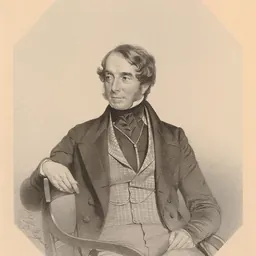
Lived 1822 – 1901 (aged 79). Conrad Schick was an archaeologist, anthropologist, architect and missionary.
Conrad Schick (1822–1901) was a German architect, archaeologist and Protestant missionary who settled in Jerusalem in the mid-nineteenth century. For many decades, he was head of the "House of Industry" at the Christ Church, which was the institute for vocational training of the London Society for Promoting Christianity Amongst the Jews.
Biography Conrad Schick was born in Bitz, Kingdom of Württemberg, Germany. At the age of 24, after completing his studies in Basel, he settled in Palestine in October 1846. The St. Chrischona Pilgrim Mission at Bettingen sent him out as missionary.
When Schick died in Jerusalem in 1901, he was mourned by Jews, Muslims and Christians alike. He was buried in the Protestant cemetery on Mount Zion. The name of the house is based on a verse from Psalms (89:12): "The north and the south, Thou has created them; Tabor and Hermon shall rejoice in Thy name." The façade is decorated with carvings of palm leaves and the Greek letters Alpha and Omega, symbolizing the beginning and the end. The house was bought in 1951 by Swedish Protestants and now houses the Swedish Theological Institute for religious instruction and Land of Israel studies.
In 1887, Schick designed the Unity of the Brethren lepers' hospital Jesus Hilfe, since 1885 led by his son-in-law Dr. Adalbert Einsler (1848–1919), a landmark building (later the Hansen Government Hospital for Lepers, now an art and culture center) that can still be seen today near the Jerusalem Theater in Talbiya. (now St Paul's Church, see Anglican Diocese of Jerusalem) and the German Deaconesses Hospital (until the 2020s the eastern wing of the meanwhile closed Bikur Holim Hospital), both on Street of the Prophets.
Archaeology Schick is also remembered for his fifty years of archaeological investigations of Jerusalem and its surroundings. He worked for many years for the Palestine Exploration Fund, publishing frequently in the Fund's journal. In 1872, Schick was permitted to conduct research on the Temple Mount, which was generally off limits to non-Muslims. Consequently, he built models of the Temple Mount (see below).
Schick was involved in the discovery and initial study of the Siloam Inscription describing how the Siloam Tunnel was finished, probably in the days of King Hezekiah of Judah.
In 1874 Schick was the first scholar to publish a description of the Garden Tomb, and in 1901 he rejected General Charles Gordon's theory of it being the tomb of Jesus. King Charles I of Württemberg bought the other and subsequently raised Schick to the rank of Royal Württembergian Hofbaurat (Privy Construction Councillor) for his excellent work.
His replica of the biblical Tabernacle was visited in Jerusalem by several crowned heads of state, toured the United Kingdom, and was exhibited at the 1873 Vienna World Fair. So is the alley leading to the entrance of The Garden Tomb.
Assorted writings
Don’t just read it —
keep it.
Full-length biographies made to live with: read them, listen on the way to work, watch them tonight.
- E-book
- Audio
- Video
Instant download · yours to keep · every purchase keeps this site free
Important facts
People in Conrad Schick's life
Named in this biography and alive at the same time

Related people
Same field, nearest in time
Contemporaries
People whose lives overlapped Conrad Schick's




Frequently asked questions
Who was Conrad Schick?
German architect (1822-1901)
When was Conrad Schick born?
Conrad Schick was born on 27 January 1822 in Bitz.
When did Conrad Schick die?
Conrad Schick died on 23 December 1901 in Jerusalem.
What was Conrad Schick's occupation?
Conrad Schick was an archaeologist, anthropologist, architect and missionary.
What nationality was Conrad Schick?
Conrad Schick's recorded nationality: Kingdom of Württemberg.
Sources & further reading
Cite this page
APA: Biography.guide. (2026). Conrad Schick. https://biography.guide/conrad-schick/
MLA: "Conrad Schick." Biography.guide, https://biography.guide/conrad-schick/.
Chicago: "Conrad Schick." Biography.guide. https://biography.guide/conrad-schick/.
Data last updated: 2026-09-20 · Spot an error? Report a correction.
Page generated 2026-09-27 05:24 UTC