
Columba of Sens
Saintly virgin associated with Sens in France and a fountain named d'Azon
About Columba of Sens
Lived 257 – 273 (aged 15–16).
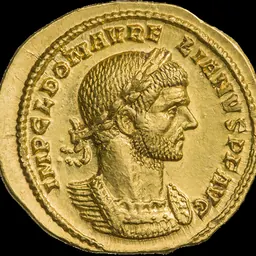
Columba of Sens (probably born Eporita, d. 273; ), was a virgin and nun who was born to a noble pagan family in the northwest of the Iberian Peninsula. She left Gallaecia for Gaul as a child to avoid being denounced as a Christian and received the baptismal name Columba, meaning "dove" in French. She settled in Sens, France, where the Roman emperor Aurelian noticed her and tried to force her to marry his son. When she refused, he imprisoned her. She was protected from being burned alive by a female bear and a miraculous rain shower, but was finally beheaded. Columba was venerated throughout France; a chapel was later built over her relics and the Abbey of Sens, which at one time was a pilgrimage site in her honor, was eventually built there.
Columba is portrayed "as a crowned maiden in chains", with a dog or bear on a chain, holding a book and a peacock's feather, with an angel on a funeral pyre, or beheaded. Her principal attribute is a she-bear. Her feast day is 31 December. Her cult was probably a combination of two virgin martyrs, Columba of Spain and Columba of Sens. In 1595, Italian poet and writer Lucrezia Marinella wrote an allegorical Christian epic poem about Columba.
The municipality of Santa Comba, in Galicia, is named after Columba of Sens.
Life Columba was born to a noble pagan family in modern Galicia, the northwestern region of Spain. writer Fernando Lanzi called it "hardly historical". According to hagiographer Omer Englebert, she left Spain for France because she had been told it was where "a more beautiful religion flourished" and because she "had an insurmountable horror of idols". Historian Katharine Rabenstein stated that according to legend, Columba left Spain with other believers to avoid being denounced as a Christian. Columba continued to Sens, near Paris in north-central France, where she was martyred in 273. Columba of Spain (d. 853) and Columba of Sens. Poska speculated that a Visigothic church dedicated to Columba in Bande (near the Portuguese border) could have indicated the spread of her devotion before the Muslims invaded Spain. The legend probably became conflated with Columba of Spain when settlers repopulated Galicia after the Muslims were expelled from the region.
In 1595, Italian poet and writer Lucrezia Marinella wrote a poem about Columba, "La Columba sacre". Writer Virginia Cox, who compared this poem with another poem and a prose piece Marinella wrote about Francis of Assisi, Cox stated that the poem Columba's defeat of Aurelian signified the defeat of pagan values by Christian values, as symbolized by the dove.
Don’t just read it —
keep it.
Full-length biographies made to live with: read them, listen on the way to work, watch them tonight.
- E-book
- Audio
- Video
Instant download · yours to keep · every purchase keeps this site free
Important facts
People in Columba of Sens's life
Named in this biography and alive at the same time
Frequently asked questions
Who was Columba of Sens?
saintly virgin associated with Sens in France and a fountain named d'Azon
When was Columba of Sens born?
Columba of Sens was born in 257 in Gallaecia.
When did Columba of Sens die?
Columba of Sens died in 273 in Sens.
Sources & further reading
Cite this page
APA: Biography.guide. (2026). Columba of Sens. https://biography.guide/columba-of-sens/
MLA: "Columba of Sens." Biography.guide, https://biography.guide/columba-of-sens/.
Chicago: "Columba of Sens." Biography.guide. https://biography.guide/columba-of-sens/.
Data last updated: 2026-09-20 · Spot an error? Report a correction.
Page generated 2026-09-27 05:27 UTC