
About Colston Westbrook
Lived 1937 – 1989 (aged 51). Colston Westbrook was an American academic and soldier.
Colston Richard Westbrook (September 14, 1937 – August 3, 1989) was an American teacher and linguist who worked in the fields of minority education and literacy. At the University of California, Berkeley, he established a program of prison outreach and approved students from the Bay Area to serve as volunteers. Some of the participants from Berkeley and two former prisoners at Vacaville Prison were among the founding members in 1973 of the radical leftist group known as the Symbionese Liberation Army.
Westbrook had previously served with a contractor in Vietnam for the US Army that provided services to the CIA. After returning to the United States, he worked for the Los Angeles Police Department in its Criminal Conspiracy Section and the State of California's Criminal Identification and Investigation Unit. In 1970 he started graduate work at University of California, Berkeley and taught at the university after completing it.
Early life Westbrook was born on September 14, 1937, in Chambersburg, Pennsylvania, where he was raised. He also grew up in this area. His father was Edward Cody Westbrook, who died in Germany while serving as a sergeant in the Army in World War II. His mother, Virginia Ruth (Colston) Westbrook, was first a housewife and then held various jobs while raising their five children. She stressed their education. His siblings were Cody, Naomi (married name Martinez), and Diane and Tanya Hill. He was selected to travel to Rome, Italy to represent Contra Costa College under President Dwight D. Eisenhower's People to People Student Ambassador Program.
Military and government contracting career In an unusual path, Westbrook served in the Army, followed by the Air Force. After an assignment in South Korea, he was assigned in 1960 to Travis Air Force Base in California.
In 1968, Westbrook returned to the United States, where he began working with the Los Angeles Police Department's Criminal Conspiracy Section and the State of California's Criminal Identification and Investigation Unit. During that time radical black militant organizations were a top target of those units. According to writer Ward Churchill, circumstantial evidence suggests that Westbrook could have begun a working relationship at the time with Donald DeFreeze, an alleged informant for LAPD.
Years later Westbrook had contact with DeFreeze when the latter was in prison at the California Medical Facility in Vacaville. By then working as a teaching assistant and later professor at University of California, Berkeley, Westbrook had set up a program of prisoner outreach for student volunteers. They worked with members of the Black Cultural Association, an organization of black prisoners, to participate in discussion groups on politics and social justice, and assist in education. Westbrook organized student volunteers to work with prisoners, who included DeFreeze. He focused on how many African-American students customarily code-switched between the General American dialect and their own dialect of English, which has some roots in West African languages. In 1972, DeFreeze invited these three to join his separate study group, Unisight. Another inmate, Thero Wheeler, a former Black Panther, was also in this group.
These individuals were among the founding members in 1973 of the Symbionese Liberation Army following DeFreeze's escape from Soledad prison, where he had been transferred. Wheeler later escaped from Vacaville and joined his associates in Berkeley.
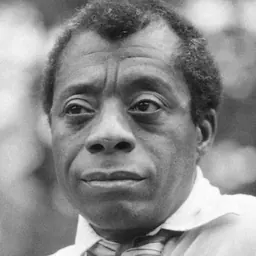
Westbrook was involved in student politics on campus. He was President of the Pan African Student Union at UC Berkeley for two consecutive terms. In 1979, he hosted a question-answer session with noted author James Baldwin on campus. His views on equity and justice often created controversy.
Symbionese Liberation Army
Questions about Westbrook's relationship to the Symbionese Liberation Army arise from his relationships with its key players, including DeFreeze and student participants in the BCA educational outreach project. DeFreeze had received favorable treatment while at Vacaville and Soledad prisons, which followed court approval of lenient probation and lack of prosecution earlier on weapons charges while in Los Angeles. Some reporters have suggested that DeFreeze's escape was arranged by law enforcement in an effort to launch intelligence-gathering and sting operations against Bay Area radicals. Westbrook may not have supervised or foreseen the role of his BCA/educational outreach contacts' in founding a radical group. But he may have had a role facilitating undercover operations with DeFreeze, in line with his purported earlier role facilitating LAPD undercover operations against black radicals.
After kidnapping Patty Hearst in February 1974, the SLA placed Westbrook on their death list by April. They claimed he was a CIA agent, and had worked as a "torturer" for the CIA in Vietnam.
Westbrook soon went into hiding, in fear for his life. On May 4, 1974, Headley, along with writer Donald Freed, held a press conference in San Francisco to announce their findings.
They presented 400 pages of documentation, and detailed the following findings: A year before the kidnapping Patty Hearst had visited convict, Donald DeFreeze, who later became the SLA's figurehead.
On May 17, 1974, The New York Times ran an article about the relationship of DeFreeze and the Los Angeles Police Department and suggestions that he was an informant. Headley presented evidence that DeFreeze had been a police informant and agent provocateur. Further, he said that the Black Cultural Association was used by law enforcement to monitor radicals among students and prison inmates.
Theories that the SLA was conceived of as a disguised CIA hit squad gained currency in some leftist circles. These were discussed in satirical and men's entertainment/storytelling publications.
Dick Russell suggested that inmates in California prisons were recruited with a combination of coercion and promises of favored treatment, and later withdrew their consent and faced consequences.
Don’t just read it —
keep it.
Full-length biographies made to live with: read them, listen on the way to work, watch them tonight.
- E-book
- Audio
- Video
Instant download · yours to keep · every purchase keeps this site free
Important facts
People in Colston Westbrook's life
Named in this biography and alive at the same time






Related people
Same field, nearest in time


Contemporaries
People whose lives overlapped Colston Westbrook's

Frequently asked questions
Who was Colston Westbrook?
American academic
When was Colston Westbrook born?
Colston Westbrook was born on 14 September 1937 in Chambersburg.
When did Colston Westbrook die?
Colston Westbrook died on 3 August 1989 in Oakland.
What was Colston Westbrook's occupation?
Colston Westbrook was an academic and soldier.
What nationality was Colston Westbrook?
Colston Westbrook was American.
Sources & further reading
· Wikipedia: Colston Westbrook
Cite this page
APA: Biography.guide. (2026). Colston Westbrook. https://biography.guide/colston-westbrook/
MLA: "Colston Westbrook." Biography.guide, https://biography.guide/colston-westbrook/.
Chicago: "Colston Westbrook." Biography.guide. https://biography.guide/colston-westbrook/.
Data last updated: 2026-09-20 · Spot an error? Report a correction.
Page generated 2026-09-27 05:01 UTC