
About Clyde Fitch
Lived 1865 – 1909 (aged 44). Clyde Fitch was an American playwright, songwriter, writer and journalist.
William Clyde Fitch (May 2, 1865 – September 4, 1909) was an American dramatist, the most popular writer for the Broadway stage of his time .
Born in Elmira, New York, and educated at Holderness School (1879–1882) William Clyde Fitch wrote 62 plays, 36 of them original, ranging from social comedies and farces to melodrama and historical dramas. In Amherst's 1884 Olio, his wearing a sky blue suit is mentioned humorously. Lydia Languish in Richard Brinsley Sheridan's 1775 comedy "The Rivals" the next year,
Fitch was one of the early American playwrights to publish his plays. His first work of note was Beau Brummell (1890), set in the English Regency and based on the life of the historical figure. The play became a lucrative showcase for actor Richard Mansfield (1857–1907), who played the title role for the rest of his life. His 1892 play Masked Ball (an adaption from Alexandre Bisson's Le Veglione) was the first time that producer Charles Frohman put Maude Adams with John Drew Jr., a pairing that led to many successes.
In 1893, Fitch was elected to The Lambs Club.
In 1899, The Cowboy and the Lady faced criticism for a lack of character development and consistency. However, this play was popular in the East, despite being considered inaccurate in the West.
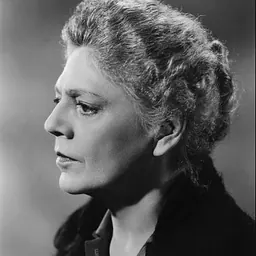
In 1901, Captain Jinks of the Horse Marines made a star of Ethel Barrymore, great-aunt of Drew Barrymore. "Fitch had a special talent for writing female characters that female stars could act agreeably," theater critic and historian Brooks Atkinson wrote of him in his history of Broadway. In 1896, he wrote the lyrics to a popular song "Love Makes the World Go 'Round", with an arrangement by William Furst.
The Climbers faced criticism in The North American Review for having an overdone premise, but its comedic moments were nonetheless praised.
In December 1905, Fitch visited novelist Edith Wharton in her Park Avenue apartment to discuss collaborating on a dramatization of her novel The House of Mirth. Wharton was not a fan of Fitch's plays, which she regarded as more commercial than artistic, but knew him to be a consummate professional and the most likely writer to be able to bring Lily Bart's story to the stage. She also enjoyed his ironic sense of humor. (Wharton described her visitor as "a plump showily dressed little man, with his olive complexion and his beautiful Oriental eyes full of wit and understanding.")
Fitch's career spanned a brief two decades, but he earned upwards of $250,000 from his plays at a time when a dollar per day was the working wage. He directed at least two thirds of his plays and was involved in the production of all of them. He was the first American playwright to be taken seriously, and at one time, managed to have five plays running simultaneously on Broadway. "Once Clyde Fitch got his foot in the door," Brooks Atkinson wrote, "he dominated Broadway drama." Even more than his scripts, Fitch's directing was praised by those that acted for him. He was said to be devoted to his art, working with feverish rapidity, and laboring painstakingly over every detail.
Health and death Fitch suffered from attacks of appendicitis but refused his American doctor's recommendation of surgery; instead he trusted the specialists in Europe who assured him that they could effect a cure over time without surgery. He left for Europe in Spring 1909 against his doctor's wishes.
While staying at the Hotel de la Haute Mère de Dieu at Châlons-en-Champagne in France, he suffered what would be a fatal attack. He underwent surgery by a local doctor rather than travel to Paris and died from blood poisoning aged 44. His body was returned from France where it was entombed for a time in the Swan Callendar Mausoleum at Woodlawn Cemetery in The Bronx, which belonged to a friend.
In 1910, the body was removed and taken to New Jersey for cremation, and the ashes were returned to the Swan Callendar Mausoleum until the Hunt & Hunt monument was finished. His ashes were placed in a sarcophagus (where his parents' ashes later joined his) in their own mausoleum in Woodlawn Cemetery.
A memorial exists at the Clyde Fitch Memorial Room in Converse Hall at Amherst. In memory of their son, Fitch's parents donated a large number of wax portraits, six painted wall panels, a bed, two console tables, three armchairs, a dressing table, two clocks, a nightstand, a fire fender, two candelabra, and an Aubusson carpet from the French Empire Period to the Metropolitan Museum of Art.
Legacy
Since his death, Fitch has fallen into obscurity, but some of his plays were revived in repertory theaters in the twentieth century or made into films and adapted for television. The Archives and Special Collections at Amherst College holds a collection of his papers.
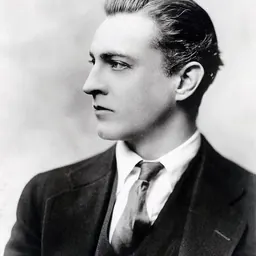
Silent film adaptations of Fitch's work include Girls, The City (1916), The City (1926), Lovers' Lane, and Barbara Frietchie. All are presumed lost. His play Beau Brummel has been adapted at least twice, once in 1924 under the title Beau Brummell with John Barrymore in the title role, and again in 1954 under the title Beau Brummell starring Stewart Granger and Elizabeth Taylor.
Works
Beau Brummell (1890) The Masked Ball (1892) An American Duchess (1893) Gossip (1895) Mistress Betty (1895) Bohemia (1896) The Liar (1896) A Superfluous Husband (1897) The Moth and the Flame (1898) The Head of the Family (1898) Nathan Hale (1899) Barbara Frietchie (1899) The Cowboy and the Lady (1899) Sapho (1900) The Climbers (1901) Captain Jinks of the Horse Marines (1901) Lover's Lane (1901) The Girl and the Judge (1901) The Curl and the Judge (1901) Captain Jinks of the Horse Marines (1901) The Way of the World (1901) The Marriage Game (1901) The Stubbornness of Geraldine (1902) The Girl with the Green Eyes (1902) The Bird in the Cage (1903) The Frisky Mrs. Johnson (1903) Her Own Way (1903) Major Andre (1903) Glad of It (1903) The Coronet of the Duchess (1904) Cousin Billy (1905) The Woman in the Case (1905) Her Great Match (1905) The Toast of the Town (1905) The House of Mirth (Oct 22, 1906 - Nov 1906) The Girl Who Has Everything (1906) The Truth (1907) The Straight Road (1907) Captain Jinks of the Horse Marines (1907) Her Sister (1907) Toddles (1908) Girls (1908) The Blue Mouse (1908) The Bachelor (1909) The Happy Marriage (1909) The City (1909)
Don’t just read it —
keep it.
Full-length biographies made to live with: read them, listen on the way to work, watch them tonight.
- E-book
- Audio
- Video
Instant download · yours to keep · every purchase keeps this site free
Important facts
People in Clyde Fitch's life
Named in this biography and alive at the same time




Related people
Same field, nearest in time



Contemporaries
People whose lives overlapped Clyde Fitch's


Frequently asked questions
Who was Clyde Fitch?
American playwright (1865-1909)
When was Clyde Fitch born?
Clyde Fitch was born on 2 May 1865 in Elmira.
When did Clyde Fitch die?
Clyde Fitch died on 4 September 1909 in Châlons-en-Champagne.
What was Clyde Fitch's occupation?
Clyde Fitch was a playwright, songwriter, writer and journalist.
What nationality was Clyde Fitch?
Clyde Fitch was American.
Sources & further reading
Cite this page
APA: Biography.guide. (2026). Clyde Fitch. https://biography.guide/clyde-fitch/
MLA: "Clyde Fitch." Biography.guide, https://biography.guide/clyde-fitch/.
Chicago: "Clyde Fitch." Biography.guide. https://biography.guide/clyde-fitch/.
Data last updated: 2026-09-24 · Spot an error? Report a correction.
Page generated 2026-09-27 05:01 UTC