
Clyde Bruckman
American film director and writer
About Clyde Bruckman
Lived 1894 – 1955 (aged 60). Clyde Bruckman was an American screenwriter, film director, film screenwriter, film producer, director and writer.
Clyde Adolf Bruckman (June 30, 1894 January 4, 1955) was an American writer and director of comedy films during the late silent era, who continued working into the 1950s. Bruckman collaborated with such comedians as Buster Keaton, Monty Banks, W. C. Fields, Laurel and Hardy, The Three Stooges, Abbott and Costello, and Harold Lloyd.
Hollywood chronicler Kenneth Anger considers Bruckman to have been one of the key figures in the history of American screen comedy.
Early life Clyde Adolf Bruckman (pronounced "BROOK-mun") was born on June 30, 1894, in San Bernardino, California.
Recycling gags Clyde Bruckman's wealth of silent-comedy experience earned him a steady position in Columbia Pictures' short-subject department (Bruckman was instrumental in Columbia's hiring his old boss Keaton in 1939). Bruckman continued to write new material for The Three Stooges and other comics, but as time went by, Bruckman's work ethic became lazier and he resorted to borrowing gags from Lloyd's and Keaton's silent films. After Bruckman lifted the magician's-coat sequence from Lloyd's Movie Crazy for The Three Stooges' Loco Boy Makes Good, and the "loosely basted tuxedo" routine from Lloyd's The Freshman for the Stooges' Three Smart Saps, Lloyd sued Columbia and won. "Never mind that Bruckman had co-written and co-directed Movie Crazy, giving him a pretty strong claim to intellectual ownership of the routine, or that Bruckman and Lloyd may very well have borrowed their ideas from a vaudeville act in the first place", wrote Ethan Gates in The New Republic, reviewing Matthew Dessem's 2015 biography of Bruckman, The Gag Man. Incidentally, Bruckman was not involved with The Freshman in any capacity, and he had no major involvement with Movie Crazy beyond a director credit and a few scenes, as Lloyd had to step in to direct the film due to Bruckman's alcohol abuse.
One example of Bruckman's constant recycling is a routine involving the comedian thinking he is boxed in while trying to leave a parallel parking space. The routine was used at least four times by Bruckman: with Lloyd Hamilton in Too Many Highballs (1933); W. C. Fields in Man on the Flying Trapeze (1935); Buster Keaton in Nothing But Pleasure (1940); and Abbott and Costello in a TV episode called Car Trouble (1954).
Bruckman was hired by Universal Pictures to write comedy scenes for the studio's "B" musical features. This was a lucrative assignment that paid better than short subjects. He continued recycling gags but on a larger scale, now lifting entire sequences from older films. He inserted the tuxedo routine into Universal's "B" musical-comedy feature Her Lucky Night. Bruckman adapted material from Lloyd's Welcome Danger into Universal's Joan Davis–Leon Errol comedy She Gets Her Man, and again consulted Movie Crazy for Universal's "B" comedy So's Your Uncle. Lloyd, outraged by three "wholesale infringements" within months, filed suit for US$1,700,000; the court ruled in Lloyd's favor but reduced the damages to $40,000. Universal fired Bruckman, and he never worked on a feature film again. Demoralized, he returned to the Columbia short-subject department. His work was now so slipshod that, according to writer-director Edward Bernds, Bruckman would simply hand in an old feature-film script without any attempt to update or revise it. "Bruckman's scripts were very sloppy. I would frequently have to revise his work, as there were so many unconnected pieces. Some of his scripts were totally incomprehensible."
Television The advent of television, and its constant need for broadcast material, gave Bruckman a new start. In 1949 he reunited with Buster Keaton for a new series of half-hour TV comedies. Abbott and Costello launched a filmed television series in 1951 and, having used up most of their own familiar routines during the show's first season, hired Clyde Bruckman, whose mental storehouse of gags saw them through a second season. Although Bruckman received credit for several scripts, these turned out to contain reworkings of old Keaton and Lloyd gags. Again, Lloyd filed suit, naming Abbott & Costello's production company as a party to the suit. As a result, other producers were unwilling to hire Bruckman.
Bruckman's only safe haven was Columbia, but producer Jules White had already filled his quota of scripts for that season and turned Bruckman away, having no immediate need for his services.
Suicide With nowhere else to turn, the desolate Bruckman borrowed a .45-caliber pistol from Keaton, claiming to need it for a hunting trip. On the afternoon of January 4, 1955, Bruckman, a resident of Santa Monica, California, parked his car outside a local restaurant, entered a restroom, and shot himself in the head. He left a typed note requesting that his wife be notified and his body be donated for medical or experimental purposes, stating that "I have no money to pay for a funeral."
Some reports claim the location was Santa Monica Boulevard in Hollywood or inside a phone booth, but according to his January 5 obituary, it was in the city of Santa Monica, and Bruckman left a typewritten note for the "gentlemen of the Santa Monica Police Department." Neither Buster Keaton nor Jules White had any inkling of Bruckman's intentions.
Personal life Bruckman married first wife Lola in 1916. She died after complications from emergency surgery on October 8, 1931. He was married to his second wife, Gladys, from March 1932 until his death. They had no children.
Cultural references The X-Files Season 3 episode "Clyde Bruckman's Final Repose" features a character, played by Peter Boyle, who foresees how other people die. Two detective characters on that episode are named Havez and Cline, after Jean Havez and Eddie Cline, two other writers who also worked with Keaton. A murder victim in that episode is named Claude Dukenfield, which was the real middle and last name of W.C. Fields, who collaborated with Bruckman on several films. As with his real-life namesake, Boyle's Bruckman character kills himself.
Don’t just read it —
keep it.
Full-length biographies made to live with: read them, listen on the way to work, watch them tonight.
- E-book
- Audio
- Video
Instant download · yours to keep · every purchase keeps this site free
Important facts
Family & relationships
People in Clyde Bruckman's life
Named in this biography and alive at the same time
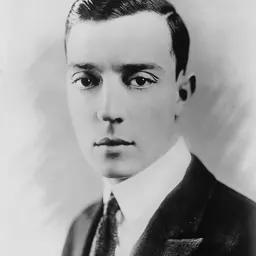

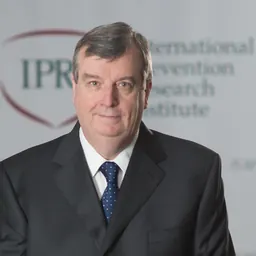
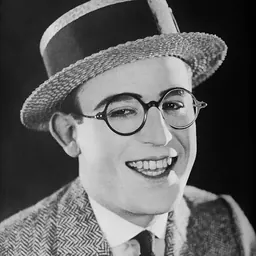
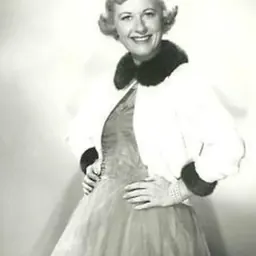

Related people
Same field, nearest in time



Contemporaries
People whose lives overlapped Clyde Bruckman's


Frequently asked questions
Who was Clyde Bruckman?
American film director and writer (1894–1955)
When was Clyde Bruckman born?
Clyde Bruckman was born on 20 September 1894 in San Bernardino.
When did Clyde Bruckman die?
Clyde Bruckman died on 4 January 1955 in Hollywood.
What was Clyde Bruckman's occupation?
Clyde Bruckman was a screenwriter, film director, film screenwriter, film producer, director and writer.
What nationality was Clyde Bruckman?
Clyde Bruckman was American.
Sources & further reading
Cite this page
APA: Biography.guide. (2026). Clyde Bruckman. https://biography.guide/clyde-bruckman/
MLA: "Clyde Bruckman." Biography.guide, https://biography.guide/clyde-bruckman/.
Chicago: "Clyde Bruckman." Biography.guide. https://biography.guide/clyde-bruckman/.
Data last updated: 2026-09-20 · Spot an error? Report a correction.
Page generated 2026-09-27 05:32 UTC