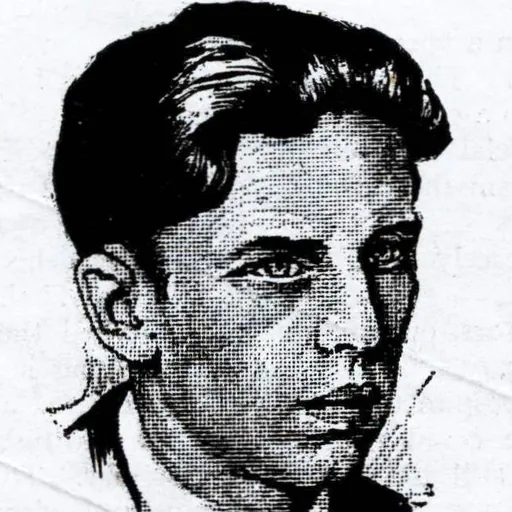
About Clifford D. Simak
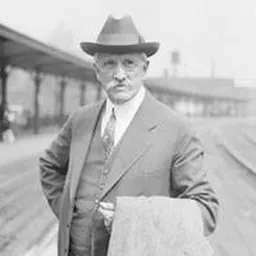
Lived 1904 – 1988 (aged 83). Clifford D. Simak was an American writer, journalist, novelist, screenwriter, science fiction writer and editor.
Simak's first story, "The World of the Red Sun", was listed on the cover of Wonder Stories in 1931.
Clifford Donald Simak (; August 3, 1904 – April 25, 1988) was an American science fiction writer and journalist. He won three Hugo Awards and one Nebula Award.
Early life, education, and journalism career Simak was born in Millville, Wisconsin in 1904. The son of Czech immigrant John Lewis Simak, from Mokřice, and Margaret, née Wiseman, he attended the University of Wisconsin–Madison and then taught in the public schools until 1929. During this period, Simak also published a number of war and western stories in pulp magazines. City, a fix-up novel from this period based on short stories with a common theme of mankind's eventual exodus from Earth, won the International Fantasy Award.
Simak continued to produce award-nominated novels throughout the 1950s and 1960s. Aided by a friend, he continued writing and publishing science fiction and, later, fantasy, into his 80s. He believed that science fiction not rooted in scientific fact was responsible for the failure of the genre to be taken seriously, and stated his aim was to make the genre a part of what he called "realistic fiction."
Themes
Simak's stories often have a rural setting, which led to his style being described as "pastoral" or "pastoral science fiction". Crusty individualistic backwoodsman characters often appear - for example, Hiram Taine, the protagonist of "The Big Front Yard". Hiram's dog "Towser" (sometimes "Bowser") is common to many of Simak's works. The rural setting is not always idyllic; for instance, in Ring Around the Sun, it is largely dominated by intolerance and isolationism.
Many of his aliens have a dry, otherworldly sense of humor, and others are unintentionally amusing, in their speech, behavior or appearance. His robots are full of personality, as are his dogs. By contrast, his "heroes" are ciphers. His protagonists are often boring men, never described and never reappearing. One of Simak's editors objected to his stories because his heroes were "losers". Simak replied, "I like losers."
Many of Simak's story lines involve a quest, or a mission. Characters set out, alone, and acquire companions, often unlikely matches, along the way. On the journey, some fall by the wayside, and of these, some are reunited with the group, whilst others never heard from again.
Simak's stories often say that there is no past time for a time traveler to go to. The world moves along in a stream of time, and to move to a different place in time is to move to another world. Thus in City the Earth is overrun by ants, but the intelligent dogs and the remaining humans escape to other worlds in the time stream. In Ring Around the Sun, the persecuted paranormals escape to other Earths which, if they could all be seen at once, would be at different stages of their orbit around the Sun, hence the title. In Time Is the Simplest Thing a paranormal escapes a mob by moving back in time, only to find that the past is a place where there are no living things and inanimate objects are barely substantial.
Time travel also plays an important role in Time and Again. A long-lost space traveler returns with a message which is science fiction-slanted, yet religious in tone. Having crashed on a planet, he is then nurtured by ethereal duplicates that seem to accompany every sentient being throughout life. His befuddled observations are seized upon by religious factions, and a schism then threatens to erupt into war on Earth.
Intelligence, loyalty and friendship, the existence of God and souls, the unexpected benefits and harm of invention, and tools as extensions of humanity are often explored by Simak's robots, whom he uses as "surrogate humans". They begin as likable mechanical persons, but change in surprising ways. Having achieved intelligence, robots move on to common themes such as, "Why are we here?" and "Do robots have souls"? Examples are the faithful butler Jenkins in City, the religious robot Hezekiel in A Choice of Gods, the frontier robots in Special Deliverance and A Heritage of Stars, and the monk-like robots in Project Pope who seek heaven.
In "All the Traps of Earth", a 600-year-old robot, a family retainer who earned the name Richard Daniel, is considered chattel to be reprogrammed and lose all its memories. The robot runs away, hitches onto a spaceship, and passes through hyperspace unprotected. Daniel gains the ability to see and fix problems in anything – a ship, a robot, a human – telekinetically, but is still drifting and hunted as chattel. He stumbles on a frontier planet and finds a purpose, helping the pioneers as a doctor, a servant, a colonist, and a friend. And here Daniel achieves an epiphany: Human beings are more clever than they know. Human-created robots, set loose, can become agents with para-human abilities that benefit humanity. Thus do robots, and humankind, escape "all the traps of earth".
Simak's work also explored the idea of unknowability and encountering beings or concepts beyond human understanding. Hezekiel in A Choice of Gods cannot accept that the God he found was inhuman and abstract: "God must be, forever, a kindly old (human) gentleman with a long, white, flowing beard." In Special Deliverance, the humans are stalked by The Wailer, which turns out to be a huge wolf-like creature that bellows an infinitely sad howl. They never learn what the creature is, why it seems sad, or how it got there.
Simak's short stories and longer novellas range from the contemplative and thoughtfully idyllic to pure terror, although the punch line is often characteristically understated, as in "Good Night, Mr. James" and "Skirmish'". There is also a group of humorous stories, including "The Big Front Yard". Way Station is a psychological study of a lonely man who has to make peace with his past and finally manages to do so, but not without personal loss.
Other traditional science fiction themes in Simak's work include the importance of knowledge and compassion, such as in "Immigrant" and "Kindergarten". Identity play, as in "Good Night, Mr. James" (filmed as The Outer Limits: The Duplicate Man in 1964). Fictions come to life in "Shadow Show" and elsewhere, such as the novel Out of Their Minds. There is a revolt of the machines in "Skirmish", and a meeting with an alien world in "Beachhead", also known as "You'll Never Go Home Again" (many of these are in his collection Strangers in the Universe).
Simak sometimes wrote stories close to his profession as a writer. For example, in the novelette "So Bright the Vision" (1968), he portrayed artificial intelligence writing software similar to ChatGPT, but focusing on socio-psychological issues.
Simak sums up his life's work in the foreword to his collection Skirmish. After explaining what themes he avoids – no large-scale alien invasions, no space wars, no empire sagas – he states:
Works
From 1950 to 1986 Clifford Simak wrote more than 30 novels and four non-fiction works, with Way Station winning the 1964 Hugo Award. More than 100 of his short stories were published from 1931 to 1981 in the science fiction, western, and war genres, with "The Big Front Yard" winning the 1959 Hugo Award for Best Novelette and "Grotto of the Dancing Deer" winning the Hugo and Nebula Awards for Best Short Story in 1981.
One of his short stories, "Good Night, Mr. James", was adapted as "The Duplicate Man" on The Outer Limits in 1964. Simak notes this is a "vicious story—so vicious that it is the only one of my stories adapted to television." International Fantasy Award for best fiction book (1953) for City Hugo Award for best novelette (1959) for "The Big Front Yard" Hugo Award for best novel (1964) for Way Station Jupiter Award for best novel (1978) for A Heritage of Stars Hugo Award for best short story (1981) for "Grotto of the Dancing Deer" Nebula Award for best short story (1981) for "Grotto of the Dancing Deer"
Don’t just read it —
keep it.
Full-length biographies made to live with: read them, listen on the way to work, watch them tonight.
- E-book
- Audio
- Video
Instant download · yours to keep · every purchase keeps this site free
Important facts
People in Clifford D. Simak's life
Named in this biography and alive at the same time



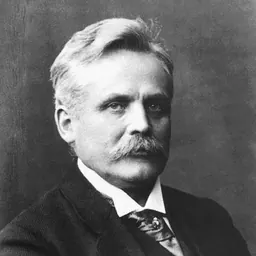
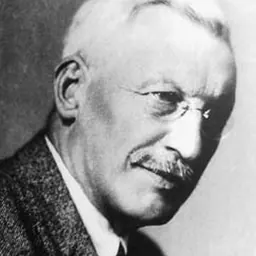
Related people
Same field, nearest in time



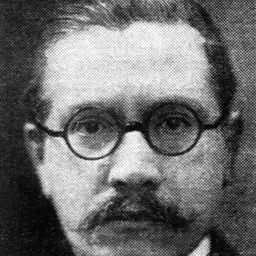

Contemporaries
People whose lives overlapped Clifford D. Simak's


Frequently asked questions
Who was Clifford D. Simak?
American writer, journalist (1904–1988)
When was Clifford D. Simak born?
Clifford D. Simak was born on 3 August 1904 in Millville.
When did Clifford D. Simak die?
Clifford D. Simak died on 25 April 1988 in Minneapolis.
What was Clifford D. Simak's occupation?
Clifford D. Simak was a writer, journalist, novelist, screenwriter, science fiction writer and editor.
What nationality was Clifford D. Simak?
Clifford D. Simak was American.
Sources & further reading
· Wikipedia: Clifford D. Simak
Cite this page
APA: Biography.guide. (2026). Clifford D. Simak. https://biography.guide/clifford-d-simak/
MLA: "Clifford D. Simak." Biography.guide, https://biography.guide/clifford-d-simak/.
Chicago: "Clifford D. Simak." Biography.guide. https://biography.guide/clifford-d-simak/.
Data last updated: 2026-09-24 · Spot an error? Report a correction.
Portrait: Wikimedia Commons · author & licence
Page generated 2026-09-27 05:08 UTC