
About Clement of Alexandria
Lived 150 – 215 (aged 64–65). Clement of Alexandria was a Roman theologian, philosopher and writer.
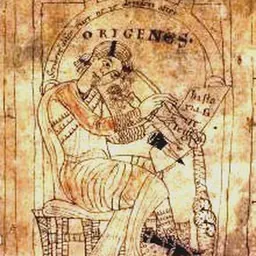
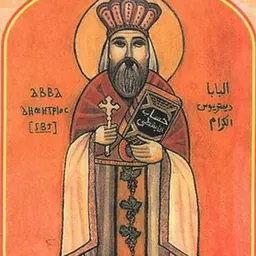
Titus Flavius Clemens, also known as Clement of Alexandria (; – ), was a Christian theologian and philosopher who taught at the Catechetical School of Alexandria. Among his pupils were Origen and Alexander of Jerusalem. A convert to Christianity, he was an educated man who was familiar with classical Greek philosophy and literature. As his three major works demonstrate, Clement was influenced by Hellenistic philosophy to a greater extent than any other Christian thinker of his time, and in particular, by Plato and the Stoics. His secret works, which exist only in fragments, suggest that he was familiar with pre-Christian Jewish esotericism and Gnosticism as well. In one of his works he argued that Greek philosophy had its origin among non-Greeks, claiming that both Plato and Pythagoras were taught by Egyptian scholars.
Clement is usually regarded as a Church Father. He is venerated as a saint in Coptic Christianity, Eastern Catholicism, Ethiopian Christianity, and Anglicanism. He was revered in Western Catholicism until 1586, when his name was removed from the Roman Martyrology by Pope Sixtus V on the advice of Baronius. The Eastern Orthodox Church officially stopped any veneration of Clement of Alexandria in the 10th century. Nonetheless, he is still sometimes referred to as "Saint Clement of Alexandria" by both Eastern Orthodox and Catholic authors.
Biography Neither Clement's birthdate or birthplace is certain. It is speculated that he was born sometime around 147 AD. According to Epiphanius of Salamis, he was born in Athens, but there is also a tradition of an Alexandrian birth.
His parents were pagans and Clement was a convert to Christianity. In the Protrepticus he displays an extensive knowledge of Greek religion and mystery religions, which could have arisen only from the practice of his family's religion.
In around 180 AD, Clement reached Alexandria, where he met Pantaenus, who taught at the Catechetical School of Alexandria. Eusebius suggests that Pantaenus was the head of the school, but controversy exists about whether the institutions of the school were formalized in this way before the time of Origen. Clement studied under Pantaenus, and was ordained to the priesthood by Pope Julian before 189. Otherwise, virtually nothing is known of Clement's personal life in Alexandria. He may have been married, a conjecture supported by his writings.
During the Severian persecution of 202–203, Clement left Alexandria. In 211, Alexander of Jerusalem wrote a letter commending him to the Church of Antioch, which may imply that Clement was living in Cappadocia or Jerusalem at that time. He died at an unknown location.
Theological works
Trilogy Three of Clement's major works have survived in full and they are collectively referred to as a trilogy: The Protrepticus (Exhortation) – written The Paedagogus (Tutor) – written After a short philosophical discussion, it opens with a history of Greek religion in seven stages. Clement suggests that at first, humans mistakenly believed the Sun, the Moon, and other heavenly bodies to be deities. The next developmental stage was the worship of the products of agriculture, from which he contends the cults of Demeter and Dionysus arose. Following Plato, Clement is critical of all forms of visual art, suggesting that artworks are but illusions and "deadly toys". Clement is supportive of women playing an active role in the leadership of the church and he provides a list of women he considers inspirational, which includes both Biblical and Classical Greek figures. It has been suggested that Clement's progressive views on gender as set out in the Paedagogus were influenced by Gnosticism; While prohibiting drunkenness, he promotes the drinking of alcohol in moderation following 1 Timothy 5:23. This parallels Clement's earlier insistence that martyrdom can only be achieved by those who practice their faith in Christ through good deeds, not those who simply profess their faith. God transcends matter entirely, and thus the materialist cannot truly come to know God. Although Christ was God incarnate, it is spiritual, not physical comprehension of him that is important. ) is the true religion and states they should be an example of what a true Christian is, even saying they are "holy and pious" and "worships the true God in a manner worthy of him". Clement then gives a description of the nature of Christ, and that of the true Christian, who aims to be as similar as possible to both the Father and the Son. Clement then criticizes the simplistic anthropomorphism of most ancient religions, quoting Xenophanes' famous description of African, Thracian, and Egyptian deities. He indicates that the Greek deities may also have had their origins in the personification of material objects: Ares representing iron, and Dionysus wine. Prayer, and the relationship between love and knowledge are then discussed. Corinthians 13:8 seems to contradict the characterization of the true Christian as one who knows; but to Clement knowledge vanishes only in that it is subsumed by the universal love expressed by the Christian in reverence for the Creator. Following Socrates, he argues that vice arises from a state of ignorance, not from intention. The Christian is a "laborer in God's vineyard", responsible both for one's own path to salvation and that of one's neighbor. The work ends with an extended passage against the contemporary divisions and heresies within the church.
Other works Besides the great trilogy, Clement's only other extant work is the treatise Salvation for the Rich, also known as Who is the Rich Man who is Saved? written c. 203 AD Having begun with a scathing criticism of the corrupting effects of money and misguided servile attitudes toward the wealthy, Clement discusses the implications of Mark 10:25. According to the Eclogae Propheticae, every thousand years every member of each order moves up a degree, and thus humans can become angels. Even the protoctists can be elevated, although their new position in the hierarchy is not clearly defined.
In the same work, Eusebius cites Alexander of Jerusalem (180–251) lauding "the holy Clement, who was both my master and benefactor," describing him as one of the "blessed fathers who have trod the path before us," while Eusebius himself is quoted as calling him "an incomparable master of Christian philosophy." Jerome (342–420) calls Clement "the most learned of men," recording that his writings are "full of eloquence and learning, both in sacred Scripture and in secular literature." The aforementioned Alexander of Jerusalem is quoted by Jerome praising "the blessed presbyter Clement, a man illustrious and approved." According to Theodoret (393–450), "he surpassed all others, and was a holy man." Likewise, Cyril of Alexandria (376–444) says Clement was "a man admirably learned and skillful, and one that searched to the depths all the learning of the Greeks, with an exactness rarely attained before." Maximus the Confessor (580–662) refers to him reverentially as "the great Clement."
More recently, scholars have acknowledged Clement's primacy and importance in various respects. He has been called "the first Christian scholar" (Shelley), "the first systematic teacher of Christian doctrine" (Patrick), "the first great teacher of philosophical Christianity" (Hatch), "the first self-conscious theologian and ethicist" (Backhouse), "the first great Christian teacher in Alexandria" (Needham), "the founder of Christian philosophical theology" (Bray), "the true creator of ecclesiastical theology" (DeFaye), "the first major commentator on the Bible" (Bray), "the founder of Christian literature" (ANF), "the great founder of the Alexandrian School" (Coxe), a "pioneer of Christian scholarship" (ACCS), "an intellectual giant in the early church" (Kruger), "that man of genius who introduced Christianity to itself, as reflected in the burnished mirror of his intellect" (Coxe), and "the most inquisitive and independent spirit that has perhaps ever appeared in the Church" (DeFaye).
Stylistically, it has been noted that "his writings shine with a happy, peaceful, optimistic spirit; reading them can be a remarkably uplifting experience" (Needham). "He loves God's creation and sees it as good; he gives us a warm, joyous picture of life; he is richly human, sane, and moderate" (Ferguson). Additionally, Clement's works "are a storehouse of curious ancient lore—a museum of the fossil remains of the beauties and monstrosities of the world of pagan antiquity, during all the epochs and phases of its history" (Wilson). "His prodigious erudition was unsurpassed even by that of Origen" (Cayre). "I do not know where we shall look for a purer or a truer man than this Clemens of Alexandria; he seems to me one of the old fathers whom we should all have reverenced most as a teacher, and loved best as a friend" (Maurice).
Nonetheless, there have been a few detracting voices. Photios I of Constantinople writes polemically against Clement's theology in the Bibliotheca, although he also is appreciative of Clement's learning and the literary merits of his work. In particular, he is highly critical of the Hypotyposes, a work of biblical exegesis of which only a few fragments have survived. Photios compared Clement's treatise, which, like his other works, was highly syncretic, featuring ideas of Hellenistic, Jewish, and Gnostic origin, unfavorably against the prevailing orthodoxy of the 9th century. Amongst the particular ideas Photios deemed heretical were: The belief that matter and thought are eternal, and thus did not originate from God, contradicting the doctrine of Creatio ex nihilo. The belief in cosmic cycles predating the creation of the world, following Heraclitus, which is extra-Biblical in origin. The belief that Christ, as Logos, was in some sense created, contrary to John 1, but following Philo. Ambivalence toward docetism, the heretical doctrine that Christ's earthly body was an illusion. The belief that Eve was created from Adam's sperm after he ejaculated during the night. The belief that Genesis 6:2 implies that angels indulged in sexual intercourse with human women. The belief in reincarnation, i.e., the transmigration of souls. However, it is not clear that these are accurate representations of Clement's actual beliefs, since his extant writings appear to be mostly in line with what would come to be considered orthodox Christian theology. It has been suggested that Photios may have misunderstood Clement to be speaking for himself when he was often quoting from Gnostics and other sects without agreeing with their teachings.
As one of the earliest of the Church fathers whose works have survived, he is the subject of a significant amount of recent academic work, focusing on, among other things, his exegesis of scripture, his Logos-theology and pneumatology, his belief in apokatastasis, the relationship between his thought and non-Christian philosophy, and his influence on Origen.
Veneration Up until the 17th century Clement was venerated as a saint in the Catholic Church. His name was to be found in the martyrologies, and his feast fell on the fourth of December, but when the Roman Martyrology was revised by Pope Clement VIII his name was dropped from the calendar on the advice of Cardinal Baronius. Benedict XIV maintained this decision of his predecessor on the grounds that Clement's life was little known, that he had never obtained public cultus in the Church, and that some of his doctrines were, if not erroneous, at least suspect.
Although Clement is not widely venerated in Eastern Christianity, the Prologue of Ohrid repeatedly refers to him as a saint, as do various Orthodox authorities including the Greek Metropolitan Kallinikos of Edessa.
The Coptic tradition considers Clement a saint. Saint Clement Coptic Orthodox Christian Academy in Nashville, Tennessee, is specifically named after him.
Clement is commemorated in Anglicanism.
Theology Gnosis Clement taught that faith was the basis of salvation; he also believed that faith was the basis of gnosiswhich to him meant spiritual and mystical knowledge. Clement of Alexandria appropriated the word gnosis from the Gnostics (whom he opposed) but reinterpreted the word in a more Christian manner.
Philosophy Clement suggested that philosophy was a preparatory discipline to the Greek world preceding its wide acceptance of Christianity and often sought to harmonize insights of Greek philosophy with biblical teaching. He defined philosophy as "the desire for true being and the studies which lead to it." Clement has been described as "the founder of what was to become the great tradition of Christian philosophical theology." He was a forerunner to some of the later views of Augustine, such as just war theory and the theory of the two cities. as one of the first Christian universalists. He espoused a belief in the eventual salvation of all, though with less systematic clarity than his disciple Origen. As Patristics scholar Illaria Ramelli has observed, Clement believed divine punishment to be corrective and remedial rather than merely retributive or destructive, and "In Stromateis 7:2:12 Clement is clear that God's project, aim, and activity is universal salvation: 'The God of the universe has disposed everything for universal salvation, in general and singularly.'"
Education For Clement, disciplining the body would help the Christian discipline the soul; he gave detailed instructions on proper Christian conduct, decorum, and relationships in the second and third books of The Instructor. According to Clement, once the passions are subject to the authority of the Word (or reason), the Christian can embark on an advanced course of philosophical study and contemplation.
Clement adopted a position that gave rise to a whole stream of later Christian thought: true philosophy and authentic human knowledge have their origin in the Logos, which is the unique source of all truth. He accepts the conception of παιδεία as he conducts the wisdom taught by the Logos through education in the sacred letters: on the one hand, the Greek παιδεία prepares the mind of the Christian to distinguish and defend the truth, and, on the other, the liberal arts help the new Christian to direct all his efforts towards the truly useful of each particular discipline, geometry, music, grammar and philosophy.
Notably (considering the time period), Clement seemed to advocate for the equality of women and men in the area of education, at least within the context of Christian spirituality and ethics. He wrote, "Let us recognize, too, that both men and women practice the same sort of virtue; surely, if there is but one God for both, then there is but one Educator for both."
Economics Clement opposed a literal interpretation of the command "sell what you have and give to the poor," and argued that the Bible does not command every person to renounce all property, and that wealth can be used either for good or evil.
Creation Clement believed that the days mentioned in Genesis are allegorical. Clement assumed a double creation, one of an invisible world and the second being material creation. He believed that formless matter existed before the creation of the world, being influenced by Plato. Clement tried to interpret Genesis 6 in harmony with the Book of Enoch.
Others Clement of Alexandria was the first person in church history to introduce a view of an invisible and a visible church. Because Clement saw the Protoevangelium of James as canonical, it could imply he believed in the perpetual virginity of Mary, though some have argued that he does not seem to believe in the sinlessness of Mary.
Clement of Alexandria interprets "Fire of Wisdom" which prevades the soul as by a baptism. He used the word "symbol" to define the Eucharist, and interpreted John 6 to be an allegory about faith, however his views on real presence are disputed.
Clement of Alexandria was apparently an amillennialist.
Works
Editions
Sylburg, Friedrich (ed.) (1592). Clementis Alexandrini Opera Quae Extant. Heidelberg: ex typographeio Hieronymi Commelini. Heinsius, Daniel (ed.) (1616). Clementis Alexandrini Opera Graece et Latine Quae Extant. Leiden: excudit Ioannes Patius academiae typographus. Potter, John (ed.) (1715). Clementis Alexandrini Opera, 2 vols. Oxonii: e theatro Sheldoniano. Vol. 1. Cohortatio ad gentes. Paedagogus. Stromatum I-IV. Vol. 2. Stromatum V-VIII. Quis dives salvetur. Excerpta Theodoti. Prophetarum ecologiae. Fragmenta. Klotz, Reinhold (ed.) (1831–34). Titi Flaui Clementis Alexandrini Opera Omnia, 4 vols. Leipzig: E. B. Schwickert. Vol. 1. Ρrotrepticus. Paedagogus. Vol. 2. Stromatorum I-IV. Vol. 3. Stromatourm V-VIII. Quis dives salvetur. Vol. 4. Fragmenta. Scholia. Annotationes. Indices. Migne, J.-P. (ed.) (1857). Clementis Alexandrini Opera Quae Exstant Omnia, 2 toms. (= PG 8, 9) Paris: J.-P. Migne. Tom. 1. Cohortatio ad gentes. Paedagogus. Stromata I-IV. Tom. 2. Stromata V-VIII. Quis dives salvetur. Fragmenta. Dindorf, Wilhelm (ed.) (1869). Clementis Alexandrini Opera, 4 vols. Oxonni: e typographeo Clarendoniano. Vol. 1. Ρrotrepticus. Paedagogus. Vol. 2. Stromatum I-IV. Vol. 3. Stromatum V-VIII. Vol. 4. Annotationes. Interpretum. Barnard, P. Mourdant (ed.) (1897). Clement of Alexandria, Quis dives salvetur. Texts and Studies 5/2. Cambridge: Cambridge University Press. de:Otto Stählin (ed.) (1905–36). Clemens Alexandrinus, 4 bds. (= GCS 12, 15, 17, 39) Leipzig: J. C. Hinrichs. Bd. 1. Ρrotrepticus und Paedagogus. Bd. 2. Stromata I-VI. Bd. 3. Stromata VII-VIII. Excerpta ex Theodoto. Eclogae prophetica. Quis dives salvetur. Fragmente. Bd. 4. Register. Marcovich, Miroslav and Jacobus C. M. van Winden (eds.) (2002). Clementis Alexandrini Paedagogus. Leiden: Brill.
Translations
Wilson, William (trans.) (1867). "The Writings of Clement of Alexandria". In Ante-Nicene Fathers, ed. A. Roberts, et al., 2:163–629. (Reprint 1905) New York: Charles Scribner's Sons. Barnard, P. Mourdant (trans.) (1901). A Homily of Clement of Alexandria, Entitled: Who is the Rich Man that is being Saved? London: SPCK. Hort, F. J. A. and Joseph B. Mayor (eds. & trans.) (1902). Clement of Alexandria, Miscellanies Book VII. London: Macmillan. Patrick, John (1914). Clement of Alexandria, 183-85. Edinburgh: Wm. Blackwood. (Exhortation to Endurance, or, To the Newly Baptized; cf. Butterworth 1919, 371 ff.) Butterworth, G. W. (ed. & trans.) (1919). Clement of Alexandria, Exhortation to the Greeks, Rich Man's Salvation, etc. (= LCL 92) Cambridge: Harvard University Press. Casey, Robert Pierce (ed. & trans.) (1936). The Excerpta ex Theodoto of Clement of Alexandria. Studies and Documents 1. London: Christophers. Oulton, J. E. L. and Henry Chadwick (trans.) (1954). Alexandrian Christianity, 40–165. Philadelphia: Westminster Press. (Miscellanies, Books III, VII) Wood, Simon P. (trans.) (1954). Clement of Alexandria, Christ the Educator. Fathers of the Church 23. Washington, D.C.: Catholic University of America Press. Ferguson, John (trans.) (1991). Clement of Alexandria, Stromateis, Books 1–3. Fathers of the Church 85. Washington, D.C.: Catholic University of America Press.
Don’t just read it —
keep it.
Full-length biographies made to live with: read them, listen on the way to work, watch them tonight.
- E-book
- Audio
- Video
Instant download · yours to keep · every purchase keeps this site free
Important facts
People in Clement of Alexandria's life
Named in this biography and alive at the same time

Related people
Same field, nearest in time


Contemporaries
People whose lives overlapped Clement of Alexandria's



Frequently asked questions
Who was Clement of Alexandria?
Christian theologian (c.150 – c.215)
When was Clement of Alexandria born?
Clement of Alexandria was born in 150 in Athens.
When did Clement of Alexandria die?
Clement of Alexandria died in 215 in Kayseri.
What was Clement of Alexandria's occupation?
Clement of Alexandria was a theologian, philosopher and writer.
What nationality was Clement of Alexandria?
Clement of Alexandria was Roman.
Sources & further reading
· Wikipedia: Clement of Alexandria
· DBpedia: Clement of Alexandria
Cite this page
APA: Biography.guide. (2026). Clement of Alexandria. https://biography.guide/clement-of-alexandria/
MLA: "Clement of Alexandria." Biography.guide, https://biography.guide/clement-of-alexandria/.
Chicago: "Clement of Alexandria." Biography.guide. https://biography.guide/clement-of-alexandria/.
Data last updated: 2026-09-26 · Spot an error? Report a correction.
Page generated 2026-09-27 05:14 UTC