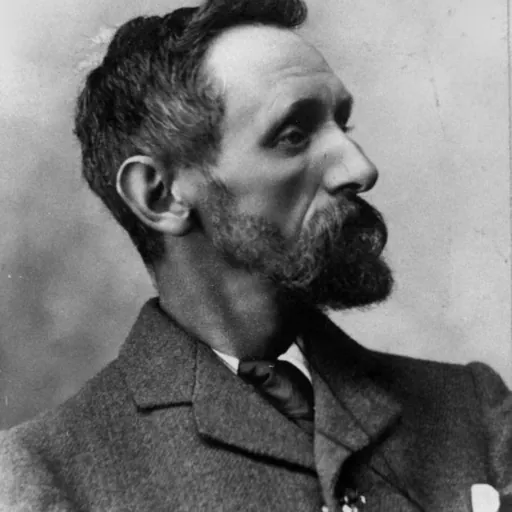
About Clement Lindley Wragge
Lived 1852 – 1922 (aged 70). Clement Lindley Wragge was a British and Australian meteorologist and civil servant.
Clement Lindley Wragge (18 September 185210 December 1922) was an English meteorologist. He set up the Wragge Museum in Stafford following a trip around the world. He was a Fellow of the Royal Geographical Society and in 1879 was elected Fellow of the Royal Meteorological Society in London. To the end of his life, he was interested in theosophy and spiritualism. In 1908, during a tour of India, he met with Mirza Ghulam Ahmad of Qadian, the founder of the Ahmadiyya movement in Islam who had claimed to be the Mahdi, the messianic redeemer awaited by Muslims. Sir Arthur Conan Doyle sought him out in New Zealand to ask for his views on spiritualism before writing The Wanderings of a Spiritualist in 1921. After training in law, Wragge became a meteorologist, his accomplishments in the field including winning the Scottish Meteorological Society's gold medal and years later starting the trend of using people's names for cyclones. He travelled widely, giving lectures in London and India, and in his later years was an authority on Australia, India and the Pacific Islands.
Early years
Wragge was born in Stourbridge, Worcestershire, England. He was originally named William Lindley (Lindley being the name of his great uncle), but this was changed to Clement Lindley. Both of his parents died when he was young: his mother at five months and his father, Clement Ingleby Wragge, at five years following a fall from his horse. He was raised for a number of years by his grandmother, Emma Wragge (née Ingleby) at Oakamoor, Staffordshire who taught him the rudiments of cosmology and meteorology. Emma's husband George had died in 1849 and had managed the Oakamoor works of the Cheadle Brass Wire Company before it was sold to Thomas Bolton in 1852.
Wragge became an avid naturalist at a young age, being surrounded by the beauty of the Churnet valley. He was educated initially at the Church school in Oakamoor, and then his formal education was at Uttoxeter Thomas Alleyne's Grammar School. Wragge hated being a boarder at Uttoxeter and ran away, but was returned to the school where he excelled. Upon the death of his grandmother in 1865 his uncles George and William decided that he should move to London to live with his Aunt Fanny and her family in Teddington. He was considered by his aunt to be spoilt and he rebelled against the harsh treatment. There he later boarded at the Belvedere school in Upper Norwood and at the end of his education he improved his Latin in Cornwall. He then followed in the footsteps of his father, studying law at Lincoln's Inn. He also attended St Bartholomew's Hospital alongside medical students to watch operations. Wragge travelled on the continent of Europe extensively with his Uncle William of Cheltenham. His second cousin was Clement Mansfield Ingleby, a partner in the family law firm Ingleby, Wragge, and Ingleby (which later became known as Wragge & Co of Birmingham), and later a literary scholar. At the age of 21 Wragge came into the inheritance left to him by his parents and a legacy and family silver left to him by his aunt on his mother's side of the family. He decided to take eight months break from Lincoln's Inn to visit the Egypt and the Levant.
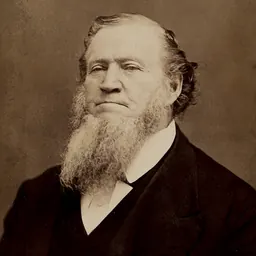
In October 1874 Wragge together with a friend Gaze Hoclen departed London on a Thomas Cook tour travelling to Paris by rail and on to Marseilles, where he sailed to Egypt on the Neiman. He travelled up the Nile and took part in an archeological dig. He then toured Palestine, Jerusalem and the Holy sites, where he met a group of Mormons who interested him. He promised to visit their new city being built at Salt Lake in the American West. After much deliberation, he decided not to return to the United Kingdom with his friend and booked a passage through Cooks on the John Tennant via India to Australia, then sailed from Newcastle, Sydney in late August 1875 across the Pacific to San Francisco. Once in San Francisco he travelled by rail across the wild west to Toronto via Salt Lake City. Whilst in Salt Lake City he met briefly with Brigham Young as was his right as a visitor. Later, he wrote a number of articles about Mormons and their religion. In Toronto he met with his cousin Edmund Wragge who became a famous railway engineer in Canada, South Africa and Great Britain. He returned home to Oakamoor to face his Uncle George (of Ingleby, Wragge and Ingleby solicitors) who now had Oakamoor Lodge as a country retreat from his practice in Birmingham and was very displeased with his behaviour. He made the far-reaching decision that the law was not for him, and he surrendered his articles and was trained as a midshipman at Janet Taylor's Nautical Academy in London. In 1876 he sailed to Australia, working his passage to Melbourne. He was a good singer and enjoyed the sea shanties sung when hauling up the sails.
He visited his Ingleby relations in Adelaide, including Rupert Ingleby QC (brother of John Ingleby), and obtained a position with the Surveyor-General's Department in South Australia, participating in surveys of the Flinders Ranges and Murray scrub land. He married on 13 September 1877 Leonora Edith Florence d'Eresby Thornton (her much older sister being married to Rupert Ingleby) and returned to Oakamoor, England on the Hesperus in 1878 with his wife, where he went straight to his lodgings in Oakamoor.
Meteorology Wragge needed experience in reading weather, and set up two weather stations: one in North Staffordshire in 1879 at Oakamoor railway station for low level readings, and a high level station at Beacon Stoop in the Weaver Hills in North Staffs, not far from Parkhouse farm, Farley, where he moved after a time at Farley Cottage. These readings were made continually until 1883 and the results were sent to him at Ben Nevis when he was in Scotland. He became a prolific writer and was a weekly contributor to the Cheadle Herald newspaper from 1879 to 1885 and Good Words and the Midland Naturalist, who supported his work. He became a firm friend of W. H. Goss, the porcelain manufacturer in Stoke-on-Trent, a fellow member of the North Staffordshire Naturalist and Archeological Field Club.
During 1881 after learning of the Scottish Meteorological Society's plans to establish a weather station on Ben Nevis, Wragge offered to make daily ascents and take meteorological observations. This offer was subsequently accepted, with Wragge climbing to the top of the mountain on most days between 1 June and mid October, while his wife took comparable readings near sea level at Fort William.
He decided to return to Australia and left taking his wife, his now famous, faithful dog 'Renzo' and his cat who caused some havoc on the voyage. In 1884 he moved to the outskirts of Adelaide, South Australia and set up a private meteorological observatory. He subsequently set up a weather station on Mount Lofty, and in 1886 was a prime mover in the founding of the Royal Meteorological Society of Australia. Wragge built a home, Capemba, at Taringa (now 217 Swann Road).
In 1898 Wragge began publishing Wragge's Australian Weather Guide and Almanac, which contained not just meteorological information, but contributions on geology, bush craft, agriculture, mining, water supplies and postal information. In an effort to break the drought of 1902 he purchased a number of Steiger Vortex Cannons, which were supposedly able to bring rain from the clouds. Test firings at Charleville on 26 September were unsuccessful. Wragge was not there to see the actual experiment, having left town after an argument with the local council. Two of the cannons are on display in Charleville.
Wragge resigned in 1903 when the weather bureau of Queensland was combined with other states following the Federation of Australia, which downgraded his role from a chief to a subordinate.
Later years
Wragge travelled for a number of years after finishing with the Queensland Government. In 1904 he visited the Cook Islands, New Caledonia and Tahiti to examine local fauna, and wrote a report on caterpillars and paper wasps for the government in Rarotonga.
He applied unsuccessfully for the job of (Australian) Commonwealth Meteorologist at the Bureau of Meteorology in 1908 before returning to New Zealand. He lived for a time in Dunedin before settling at 8 Awanui Street (previously named Arawa St and prior to that Bath St), Birkenhead, Auckland with his de facto wife Louisa Emmeline (known as Edris) Horne, an Anglo-Indian theosophist. There he founded the Wragge Institute and Museum which was later partly destroyed by fire, including most of his written works and diaries, and also the well known visitor attraction – Waiata tropical gardens.
Between 1900 and 1922, Wraggle gave lectures on the magic lantern, a type of image projector. These lectures, titled, "A Voyage through the Universe" (1902), "The Majesty of Creation" (1906), "The Grandeur of the Universe" (1912), and "The Endless Universe and Eternal Life" (1918–22) were accompanied by a collection of 350 lantern slides. The collection of slides reside with Auckland War Memorial Museum. During his tour to India in 1908, Wragge met Mirza Ghulam Ahmad, who had claimed to be the Promised Messiah foretold in the Bible and Islamic scriptures. The dialogues between the two are recorded in the Malfūzāt, the discourses of Ghulam Ahmad. Some of his followers believe that Wragge had converted to Islam and stayed a Muslim until his death. Proof of his conversion is cited by Ahmadiyya Muslim scholars in the form of letters written to Mufti Muhammad Sadiq, a companion of Ghulam Ahmad, by Prof. Wragge after his meeting with Ghulam Ahmad at Lahore. However, more personal family records suggest that Wragge remained a theosophist up until his death in 1922.
Clement Wragge died on 10 December 1922 in Auckland from a stroke. His son by his de facto wife Louisa, Kismet K Wragge, stayed on as "First Officer" of the Wragge Institute.
Don’t just read it —
keep it.
Full-length biographies made to live with: read them, listen on the way to work, watch them tonight.
- E-book
- Audio
- Video
Instant download · yours to keep · every purchase keeps this site free
Important facts
People in Clement Lindley Wragge's life
Named in this biography and alive at the same time





Related people
Same field, nearest in time

Contemporaries
People whose lives overlapped Clement Lindley Wragge's

Frequently asked questions
Who was Clement Lindley Wragge?
English meteorologist (1852–1922)
When was Clement Lindley Wragge born?
Clement Lindley Wragge was born on 18 September 1852 in Stourbridge.
When did Clement Lindley Wragge die?
Clement Lindley Wragge died on 10 December 1922 in Birkenhead.
What was Clement Lindley Wragge's occupation?
Clement Lindley Wragge was a meteorologist and civil servant.
What nationality was Clement Lindley Wragge?
Clement Lindley Wragge was British and Australian.
Sources & further reading
· Wikipedia: Clement Lindley Wragge
· DBpedia: Clement Lindley Wragge
Cite this page
APA: Biography.guide. (2026). Clement Lindley Wragge. https://biography.guide/clement-lindley-wragge/
MLA: "Clement Lindley Wragge." Biography.guide, https://biography.guide/clement-lindley-wragge/.
Chicago: "Clement Lindley Wragge." Biography.guide. https://biography.guide/clement-lindley-wragge/.
Data last updated: 2026-09-22 · Spot an error? Report a correction.
Portrait: Wikimedia Commons · author & licence
Page generated 2026-09-27 04:58 UTC