
About Clay Meredith Greene
Lived 1850 – 1933 (aged 83). Clay Meredith Greene was an American playwright, actor, film actor and film director.
Clay Meredith Greene (March 12, 1850 – September 5, 1933) was an American screenwriter, theatre critic and journalist, but he was chiefly known as a dramatist. He was often referred to as either the "first American" or "first white American child" born in San Francisco, a claim spread by Greene himself. This assertion originated with Greene himself, who claimed that he was "the first American white child born in San Francisco". the historicity of this claim was questioned by reporters, who pointed out that white children were likely born at the Mission San Francisco de Asís much earlier, during the Spanish colonial period. Greene was the grandson of Squire Fiske, who served as a first lieutenant in the 1st Rhode Island Regiment during the American Revolution. As his descendant, Greene was an active member of the Sons of the American Revolution.
Clay grew up in a house his father built on San Francisco's Telegraph Hill. At that time the school was a college preparatory school, so Greene did not earn a university diploma from that institution. based on a story by Bret Harte and co-authored with A. Slason Thompson); Chispa (1882, co-authored with Thompson); and The Golden Giant (1886). During most of his career as a dramatist, however, he lived and worked in New York City. His plays were performed widely throughout the United States during his lifetime, and he achieved wealth through his work as a playwright. but none of his works remain in the Western canon of theatre literature.
Early writing career Greene began a journalism career in San Francisco, writing for The Golden Era in 1870. He also wrote for its competing paper, The Argonaut. His earliest success as a dramatist was the play Struck Oil which he adapted for actor J. C. Williamson from Sam Smith's play The Dead, or Five Years Away. Premiered in 1874, Struck Oil became a hit for Williamson, who toured in the work in both the United States and Australia. That same year he wrote the four-act play The Cut Glove for the comic duo P. F. Baker and T. J. Farron, which they toured in the southern United States.
With A. G. Thompson, Greene co-wrote the play Freaks of Fortune, which premiered at the Grand Opera House in San Francisco in 1877. Williamson acquired the rights to the work after its original successful run and brought the play to the Boston stage. Williamson and his company performed other plays by Greene at The Boston Theatre in 1878, including Struck Oil and The Chinese Question.
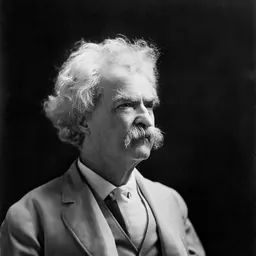
Actress Kate Mayhew There he had his most active years as a dramatist, becoming well known among the literary establishment, including befriending Mark Twain.
1880s With Slauson Thompson, Greene co-authored the four act farce Sharps and Flats as a starring vehicle for the comedy duo of Robson and Crane. A send-up of the speculative New York stock market and its buyers during the Gilded Age, it premiered at the Standard Theatre on Broadway in 1880. Greene and Thompson collaborated on a second play, Chispa, which was produced by David Belasco at the Baldwin Theater in San Francisco in 1881.
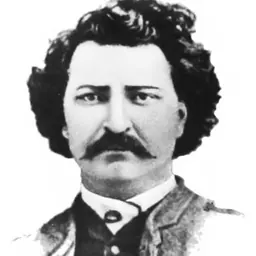
In 1883, Greene collaborated with the Hanlon Brothers acrobats on the play Pico; or, The legend of Castle Molfi, later reworked as the fairy pantomime Fantasma, which had a long stage life in the Hanlon Brothers repertoire. He also worked with the Hanlon Brothers that year on a revised version of their musical Le Voyage en Suisse. Greene was hired to write a play for the Grand Opera House in Toronto on the life and death of Canadian politician and resistance movement leader Louis Riel, who had just been hanged on November 16, 1885. Greene rapidly produced the play, Louis Riel, or, The Northwest Rebellion, and it premiered in Toronto with a cast of New York actors on New Year's Day 1886.
In 1886, Greene wrote his first original musical, Sybil, with the composer John F. Mitchell. The same year his play The Golden Giant was produced by Charles Frohman at Broadway's Fifth Avenue Theatre in a production starring McKee Rankin and his wife Kitty Blanchard. While successful in New York, the play was a flop on the road and lost Frohman a considerable amount of money. 1887 was highly productive for Greene, beginning with the musical play Hans the Boatman, which he created for the Theatre Royal, Sheffield, in England, to start the Swiss-born English actor Charles Arnold (1854–1905), who portrayed the title character. The most successful musical of Greene's career, it was a tremendous hit for Arnold, who toured the piece for three years across Australia, Asia, and the United States. Greene also wrote the libretto to the 1887 musical Our Jennie, starring Jennie Yeamans, which was staged on Broadway at the People's Theatre. That same year he co-authored the play Pawn Ticket 210 with Belasco for Lotta Crabtree; it premiered at McVicker's Theater in Chicago.
In 1888, Greene's play adaptation of Harriet Beecher Stowe's novel Uncle Tom's Cabin premiered at the Hollis Street Theatre in Boston. He served as the lyricist of the musical Blue Beard, Jr., composed by Fred J. Eustis, Richard Maddern, and John Joseph Braham Sr. It premiered at the Grand Opera House, Chicago, in 1889, and then toured nationally, including a stop on Broadway at Niblo's Garden in 1890.
1890s
Greene wrote the book of the musical Peti, the Vagabond, which starred Hubert Wilke in the title role and premiered at the California Theatre in San Francisco in 1890. He co-authored the 1892 play The New South with actor Joseph R. Grismer, about racial animus in the Southern United States after the American Civil War. The story followed a white United States Army captain sent by the U.S. government to arrest individuals illegally making and selling moonshine. The captain's support of African Americans in that community puts him at odds with the white southerners, and his life is threatened. While the authors intended to critique racial prejudice, the work propagated racial stereotypes, and theatre scholars James Fisher and Felicia Hardison Londré described both it and a 1916 silent film adaptation of the play as "exploitive".
Greene collaborated with J. Cheever Goodwin on the book of the musical Africa, which premiered in San Francisco in June 1893 prior to its Broadway run later that year at Star Theatre. He soon followed this with the libretto to a comic opera, The Maid of Plymouth, titled Nazareth. Greene modeled it after the Oberammergau Passion Play. It was subsequently repeated at SCU every three years. With Augustus Thomas serving as his boy (The Lamb's term for vice-president), Greene played an important role in The Lambs history. Together, Greene and Thomas successfully led the organization out of financial troubles, with Greene notably using his own money to prevent the club from defaulting on its bills and closing by personally paying off the club's debts with his own money in 1894. Greene and Thomas also acquired the organization's first permanent building, initiated The Lambs annual "gambols" (a public variety show), and almost doubled the size of the organization's membership.
Greene was also responsible for re-instituting The Lamb's "annual wash", an elaborate costumed event with a different theme each year. Beginning in 1895, he personally hosted the annual event at Los Olmos, his estate in Bayside, Queens. He also utilized his gift as a writer for The Lambs, penning more than 100 dramatic and comedic sketches for various entertainments and events put on by the club during his time with the organization. Fellow Lamb member and impressionist painter Robert Reid, painted a portrait of Greene which hangs in the Lambs club. In 1933, the year of his death, Greene was the first person to be awarded the title "Immortal Lamb" in the history of the club. The title is given only to a Lamb whose contributions led to the survival of the institution.
Later writing and film career in California Louise Huff as Mrs. Dow and Greene as Mark Dow in the 1914 Lubin Manufacturing Company film Treasures on Earth; Greene wrote the story. Greene returned to California after the death of his first wife, Alice Randolph Greene (née Wheeler), in 1910, and his subsequent marriage six months later to his second wife, the playwright Laura H. Robinson, in 1911. Greene had previously collaborated on several plays with Robinson and was 60 years old when he remarried.
Later life and death
While visiting Los Angeles, Greene suffered from a vitreous hemorrhage in 1918 that caused him to lose sight suddenly in one of his eyes. He remained active in public life in San Francisco into his 80s. His last public appearance was at a performance of his Passion Play at Santa Clara University in the spring of 1933. In May 1933, he broke his hip and was unable to walk for the remainder of his life. and his second wife were with him at the time of his death. Venetia, Avenger of the Lusitania (1919) Verses of Love, Sentiment and Friendship (1921) In Memoriam: A Pageant of Friendship (1923)
Filmography
Actor
Getting Atmosphere (1912, as The Gate Keeper; credited as C. E. Green) Her Educator (1912, as The Judge) A Humble Hero (1912, as The Prospector; credited as Daddy Green) A Motorcycle Adventure (1912, as John Martin) The Other Fellow (1912, as Jim) Through Fire to Fortune (1914, as Henry Barrett) Treasures on Earth (1914, as Mark Dow) Forgiven; or, the Jack of Diamonds (1914) The Fortune Hunter (1914) The Girl at the Lock (1914) The House Next Door (1914) The Klondike Bubble (1914) Little Breeches (1914) Patsy at School (1914) The Sleeping Sentinel (1914) The Sorceress (1914) A Strange Melody (1914) Through Fire to Fortune, or, The Sunken Village (1914) Treasures on Earth (1914) The Trunk Mystery (1914) The Belle of Barnegate (1915) The Climbers (1915) The College Widow (1915) The District Attorney (1915) The Great Ruby (1915) It All Depends (1915) The Ogre and the Girl (1915) Patsy Among the Fairies (1915) Patsy Among the Smugglers (1915) Patsy at College (1915) Patsy at the Seashore (1915) Patsy's Elopement (1915) Patsy's First Love (1915) Patsy in a Seminary (1915) Patsy in Business (1915) Patsy in Town (1915) Patsy, Married and Settled (1915) Patsy on a Trolley Car (1915) Patsy on a Yacht (1915) Patsy's Vacation (1915) A Siren of Corsica (1915) The Sporting Duchess (1915) Sweeter Than Revenge (1915) A War Baby (1915) The White Mask (1915) Whom the Gods Would Destroy (1915) The Witness (1915) Billie's Double (1916) Dare Devil Bill (1916) The Evangelist (1916) Millionaire Billie (1916) Mr. Housekeeper (1916) The New South (1916) Two Smiths and a Haff (1916) The Uplift (1916) The Winning Number (1916) A Wise Waiter (1916)
Films adapted from plays by Greene by other writers
M'Liss (1918, adapted by Frances Marion) Struck Oil (1919) Pawn Ticket 210 (1922)
Stage works Plays
Struck Oil (1874) M'liss (1877, Africa, musical (1893; music by Randolph Cruger; libretto co-authored by Greene and J. Cheever Goodwin) The Little Trooper, operetta (1894, also known as Little Miss Trooper; Greene wrote a new English language libretto to Victor Roger's 1892 operetta Les 28 jours de Clairette; new music by William Furst) On Broadway, play with music (1896) April Fool, pasticcio (1897; libretto by Greene) A Musical Discord, pasticcio (1897; libretto by Greene) In Gay Paree, musical (1899, book by Greene; music by Ludwig Englander; lyrics by Grant Stewart) Sharp Becky, burlesque (1899, adapted into a portion of the burlesque musical Around New York in 80 Minutes) The Conspirators, comic opera (1899, libretto by Greene; music by Humphrey John Stewart) | The Remarkable Pipe Dream of Sherlock Holmes (1900, originally Lamb's Gambol; adapted into a portion of the burlesque musical Around New York in 80 Minutes) Aunt Hannah, musical (1900, lyrics by Greene; music by A. Baldwin Sloane; book by Matthew J. Royal) The Regatta Girl, musical (1900; libretto by Greene; music by Harry McLellan) The Silver Slipper, musical (1902 revised libretto by Greene; music by Leslie Stuart) John of Nepomuk: Patron Saint of Bohemia (1921, book and lyrics by Greene; music by composer Humphrey J. Stewart)
Don’t just read it —
keep it.
Full-length biographies made to live with: read them, listen on the way to work, watch them tonight.
- E-book
- Audio
- Video
Instant download · yours to keep · every purchase keeps this site free
Important facts
People in Clay Meredith Greene's life
Named in this biography and alive at the same time




Related people
Same field, nearest in time


Contemporaries
People whose lives overlapped Clay Meredith Greene's



Frequently asked questions
Who was Clay Meredith Greene?
American playwright (1850-1933)
When was Clay Meredith Greene born?
Clay Meredith Greene was born on 12 March 1850 in San Francisco.
When did Clay Meredith Greene die?
Clay Meredith Greene died on 5 September 1933 in San Francisco.
What was Clay Meredith Greene's occupation?
Clay Meredith Greene was a playwright, actor, film actor and film director.
What nationality was Clay Meredith Greene?
Clay Meredith Greene was American.
Sources & further reading
· Wikipedia: Clay Meredith Greene
Cite this page
APA: Biography.guide. (2026). Clay Meredith Greene. https://biography.guide/clay-meredith-greene/
MLA: "Clay Meredith Greene." Biography.guide, https://biography.guide/clay-meredith-greene/.
Chicago: "Clay Meredith Greene." Biography.guide. https://biography.guide/clay-meredith-greene/.
Data last updated: 2026-09-22 · Spot an error? Report a correction.
Page generated 2026-09-27 05:33 UTC