
Claus Lamm
Professor of Biological Psychology
About Claus Lamm
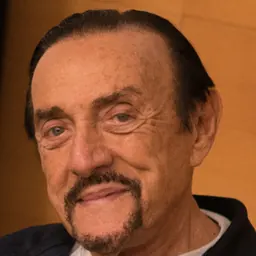
Born 1973. Claus Lamm is an Austrian university teacher, association football player and cognitive scientist.
Claus Lamm (born in 1973 in Lustenau, Austria) is a professor of biological psychology and the head of the Social, Cognitive and Affective Neuroscience Unit at the Faculty of Psychology of the University of Vienna. His research focuses on the psychological and biological mechanisms underlying social cognition, affect, and behavior. His main research interest are the neural underpinnings of empathy, to whose understanding he has made pioneering contributions.
Academic career and achievements
Claus Lamm received his diploma and Ph.D. in psychology from the University of Vienna. He then joined the lab of Jean Decety, first at the French Institute of Health and Medical Research (INSERM) in Bron, France (2005), and then at the University of Chicago (2006-2008). Subsequently, he joined Tania Singer’s research group at the Laboratory of Social and Neural Systems Research (founded by Ernst Fehr, University of Zurich). In 2010, Claus Lamm returned to the University of Vienna as a Professor of Biological Psychology.
He is the director and founder of the Social, Cognitive and Affective Neuroscience Unit, He also established and directs the MRI Center of the University of Vienna. Together with Ludwig Huber he directs one of only a handful of comparative canine neuroimaging facilities that currently exist worldwide.
In 2014, he was elected to become a corresponding member of the Austrian Academy of Sciences, and he received the Elisabeth Lutz Prize by the same institution in recognition for his work on the biological and neural bases of social behavior. and with cognitive biologists. In several papers published in journals such as Proceedings of the National Academy of Sciences, Philosophical Transactions of the Royal Society B, The Journal of Neuroscience, and NeuroImage, Lamm and his collaborators were able to show that empathy is a complex construct for which two main components are essential: shared affective representations, and self-other distinction. More recently, he could show using the phenomenon of placebo analgesia that empathy for pain is grounded in self-experienced pain He has also been engaged in comparative research for several years, using behavioral and neuroscience approaches to gain a deeper understanding of the convergent evolution of empathy and related phenomena. Furthermore, one of his main research foci is environmental social neuroscience and the investigation of why people make pro-environmental decisions and how we can promote climate change mitigation, as well as how specific environments impact human health and well-being . This approach has also been highlighted in a perspective paper in Nature Climate Change (Doell et al., 2023).
Selected works
Doell, K.C., Berman, M.G., Bratman, G.N. et al. Leveraging neuroscience for climate change research. Nature Climate Change, 13, 1288–1297 (2023). https://doi.org/10.1038/s41558-023-01857-4 Lamm, C., Bukowski, H., & Silani, G. (2016). From shared to distinct self–other representations in empathy: evidence from neurotypical function and socio-cognitive disorders. Philosophical Transactions of the Royal Society B, 371: 20150083. doi:10.1098/rstb.2015.0083 Rütgen M., Seidel, E. M., Silani, G., Riecansky, G., Hummer, A., Windischberger, C., Petrovic, P. & Lamm, C. (2015). Placebo analgesia and its opioidergic regulation suggest that empathy for pain is grounded in self pain. Proceedings of the National Academy of Sciences, 112(41), E5638-E5646. doi:10.1073/pnas.1511269112 Lamm C. & Majdandžić Y. (2015). The role of shared neural activations, mirror neurons, and morality in empathy – A critical comment. Neuroscience Research, 90, 15-24. doi:10.1016/j.neures.2014.10.008 Lamm, C., Decety, J., & Singer, T. (2011). Meta-analytic evidence for common and distinct neural networks associated with directly experienced pain and empathy for pain. NeuroImage, 54(3), 2492-2502. doi:10.1016/j.neuroimage.2010.10.014 Steininger, M.O., White, M.P., Lengersdorff, L., Zhang, L., Smalley, A.J., Kühn, S., & Lamm, C. (2015). Nature exposure induces analgesic effects by acting on nociception-related neural processing. Nature Communications, 16(1), 2037. doi: 10.1038/s41467-025-56870-2.
Don’t just read it —
keep it.
Full-length biographies made to live with: read them, listen on the way to work, watch them tonight.
- E-book
- Audio
- Video
Instant download · yours to keep · every purchase keeps this site free
Important facts
People in Claus Lamm's life
Named in this biography and alive at the same time



Related people
Same field, nearest in time




Contemporaries
People whose lives overlapped Claus Lamm's


Frequently asked questions
Who is Claus Lamm?
Professor of Biological Psychology
When was Claus Lamm born?
Claus Lamm was born in 1973 in Lustenau.
What is Claus Lamm's occupation?
Claus Lamm is a university teacher, association football player and cognitive scientist.
What nationality is Claus Lamm?
Claus Lamm is Austrian.
Sources & further reading
Cite this page
APA: Biography.guide. (2026). Claus Lamm. https://biography.guide/claus-lamm/
MLA: "Claus Lamm." Biography.guide, https://biography.guide/claus-lamm/.
Chicago: "Claus Lamm." Biography.guide. https://biography.guide/claus-lamm/.
Data last updated: 2026-09-20 · Spot an error? Report a correction.
Page generated 2026-09-27 05:17 UTC