
About Claudio Tennie
Born 2000. Claudio Tennie is a researcher.
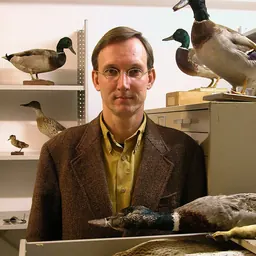
Claudio Tennie (born 1976) is a German professor at the University of Tuebingen. He is an evolutionary anthropologist, cognitive archaeologist and primatologist, whose research focuses on the evolution of culture, social learning, and cumulative culture in humans and non-human primates. In 2009 Tennie and colleagues proposed the Zone of Latent Solution (ZLS) theory, which outlines the main conditions for the evolution of human cumulative culture and seeks to explain differences observed between contemporary human and most animal cultures. In April 2024, Tennie successfully defended a rare triple habilitation in prehistory, psychology, and behavioral biology at the University of Tübingen. As the main focus of Tennie's research is the evolution of special types of culture within the human lineage, his experimental and theoretical studies intersect multiple research fields, including biology, psychology, archaeology and philosophy, with special emphasis on behavioural biology, comparative and developmental psychology, cognitive archaeology of early stone tools, and philosophy of science.
Education and career Tennie studied biology at the University of Marburg (1996–1998), where he obtained his intermediate diplom. He also attended biology, ethology and philosophy classes at the University of Edinburgh (1998–1999) and then completed his diplom thesis in behavioral biology and psychology at the University of Bielefeld (1999–2003). In 2013 Tennie was appointed Adjunct Scientist at Lester E. Fisher Center for the Study and Conservation of Apes, Lincoln Park Zoo, Chicago, USA. In the same year he was granted an ESRC Future Research Leader Grant. In 2017 he received a new permanent position as a group leader ("Tools and Culture among Early Hominins") at the University of Tuebingen, where he resides to this day. which started in 2017 testing early stone tools for the first evidence of special types of cultural evolution in the archaeological record. Starting in 2026, he serves as lead investigator for the "Human Origins" Cluster of Excellence (funded by the German Research Foundation DFG).
Zone of Latent Solutions First published in 2009, Zone of Latent Solutions (ZLS) is defined as a zone of behaviors (solutions) that can be principally achieved in suitable circumstances by motivated, typically developed individuals of a given species without the need to copy the underlying "know-how". Similarly, Tennie and colleagues showed that even when motivated, these apes did not copy know how beyond their individual ZLS reach under controlled test conditions.
According to ZLS theory humans have some basic latent solutions, too, but in contrast to apes, humans can copy know-how beyond their realistic individual reach.
Overall, the original hypothesis by Tennie, et al. 2009 already proposed that the behaviors exhibited by great apes can be invented and sometimes are invented by culturally unconnected individuals independently, even if some of these independent inventions happen at low frequencies. According to Tennie, ape culture exists, but is limited to the (evolving) boundaries of their species' ZLS. The very term zone of latent solutions is designed to act as the baseline extension of Vygotskys variously named zones of development
While documented ape cultural practices appear to sometimes be geographically restricted and are often interpreted as unique to the given populations and, with it, human-like in expression and underlying social learning demands. Tennie and colleagues suggest an alternative, parsimonious explanation. They proposed socially mediated solution (re-)invention, which, according to them, depends on three main and interacting factors: "(i) the species' cognitive and learning skills, as well as biological predispositions (where these exist); (ii) the ecologies to which the population is and were exposed; and (iii) the social situation in terms of the age and rank and number of practitioners that are and were potentially observable, as well as the general 'sociability' of the species". The project showed that naive, captive orangutans can spontaneously perform such know how to make artifacts resembling the earliest stone tools. An agent-based model also demonstrated that ape-like and early hominin-like cultural patterns do not require know-how copying. Even ways to shape early handaxes proved to not require special types of know-how copying in exprimental tests on naive humans. Taken all these studies into consideration, upon completion of "STONECULT" project, Tennie concluded that the emergence of special, replicatory types of cultural evolution of know-how in hominins should be attributed to a later time, i.e. to within the last million years.
Selected works
Don’t just read it —
keep it.
Full-length biographies made to live with: read them, listen on the way to work, watch them tonight.
- E-book
- Audio
- Video
Instant download · yours to keep · every purchase keeps this site free
Important facts
Related people
Same field, nearest in time






Contemporaries
People whose lives overlapped Claudio Tennie's




Frequently asked questions
Who is Claudio Tennie?
researcher, archaeologist, primatologist, biologist, psychologist,
When was Claudio Tennie born?
Claudio Tennie was born in 2000 in Bad Pyrmont.
What is Claudio Tennie's occupation?
Claudio Tennie is a researcher.
Sources & further reading
Cite this page
APA: Biography.guide. (2026). Claudio Tennie. https://biography.guide/claudio-tennie/
MLA: "Claudio Tennie." Biography.guide, https://biography.guide/claudio-tennie/.
Chicago: "Claudio Tennie." Biography.guide. https://biography.guide/claudio-tennie/.
Data last updated: 2026-09-20 · Spot an error? Report a correction.
Page generated 2026-09-27 05:12 UTC