
About Claudio Mutti
Born 1946. Claudio Mutti is an Italian essayist and translator.
Claudio Amin Mutti (born May 24, 1946) is an Italian far-right essayist. In the 1960s, he was a member of Young Italy (the juvenile wing of the Italian Social Movement, which expelled him for extremism) and the euro-nationalist Jeune Europe movement. In 1980 he was arrested in connection with the Bologna massacre, alongside fellow neofascist ideologues Paolo Signorelli and Aldo Semerari. He converted to Shia Islam in the 1980s, having become influenced by Julius Evola, René Guénon, Henry Corbin and Ruhollah Khomeini. He met with Aleksandr Dugin in 1990. Mark Sedgwick describes him as an important figure in late twentieth-century Traditionalist networks in Europe. he later joined Jean-François Thiriart's Jeune Europe, a Europeanist-nationalist movement in which Franco Cardini had also joined.
After the movement's crisis in 1969 he joined the Nazi-Maoist group Lotta di Popolo and in 1973 became president of the Italy-Libya Association. During those years he authored articles aimed at celebrating Muammar Gaddafi's Libyan socialism. In 1979 he authored another initiative: the Europe-Islam Association based in Venice.
He devoted himself to Finno-Ugric languages philology for many years, working as an assistant at the University of Bologna, becoming the author of some 30 articles and essays on Magyar folklore and Hungarian literature. He was also interested in the "political" use of language as an instrument of cultural hegemony, defining the English language as a superstructure of the hegemonic projection of the U.S. at the turn of the 20th and 21st century.
A connoisseur of Romanian language and culture, in 1979 he became the holder of a professorship at the Italian Cultural Institute in Bucharest, which was revoked following a parliamentary question by Hon. Antonello Trombadori, who asked the government "whether it was necessary to entrust a Nazi with the representation of Italian culture abroad." He translated and presented numerous documents of the Iron Guard and Corneliu Zelea Codreanu for Franco Freda's Edizioni di Ar.
Since 2004, he has been on the editorial staff of the Geopolitics journal Eurasia, of which he became the editor in December 2011. He taught Italian, History, Geography, Latin and Greek at the Liceo ginnasio statale Gian Domenico Romagnosi high school in Parma until a.s. 2010–2011.
Don’t just read it —
keep it.
Full-length biographies made to live with: read them, listen on the way to work, watch them tonight.
- E-book
- Audio
- Video
Instant download · yours to keep · every purchase keeps this site free
Important facts
People in Claudio Mutti's life
Named in this biography and alive at the same time
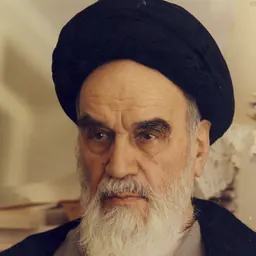

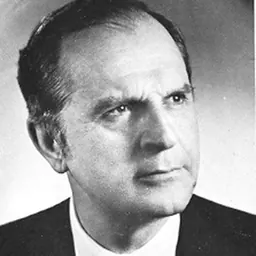




Related people
Same field, nearest in time




Contemporaries
People whose lives overlapped Claudio Mutti's

Frequently asked questions
Who is Claudio Mutti?
Italian essayist
When was Claudio Mutti born?
Claudio Mutti was born in 1946 in Parma.
What is Claudio Mutti's occupation?
Claudio Mutti is an essayist and translator.
What nationality is Claudio Mutti?
Claudio Mutti is Italian.
Sources & further reading
Cite this page
APA: Biography.guide. (2026). Claudio Mutti. https://biography.guide/claudio-mutti/
MLA: "Claudio Mutti." Biography.guide, https://biography.guide/claudio-mutti/.
Chicago: "Claudio Mutti." Biography.guide. https://biography.guide/claudio-mutti/.
Data last updated: 2026-09-20 · Spot an error? Report a correction.
Page generated 2026-09-27 05:12 UTC