
About Claude Aubery
Lived 1501 – 1596 (aged 94–95). Claude Aubery was a French and Swiss physician, philosopher and docent.
Claude Aubery, Claude Auberi or Claudius Alberius Triuncurianus (circa 1545, Triaucourt, Meuse - April 1596, Dijon) was a French Reformed Protestant physician, philosopher and theologian. His doctrine, close to that of Sebastian Castellio or Andreas Osiander, was called Alberianism.
He should not be confused with Claude Aubery son of Nicolas, pastor of Collonge-Bellerive and Corsier from 1578 to 1590, of Collonges-Fort-l'Écluse around 1590–1592, and of Grand-Saconnex from 1592 to 1608.
Biography Claude Aubery embraced Protestantism. A Protestant refugee from Champagne in 1563, he did part of his studies in Geneva, but he also travelled back and forth to Paris during periods of lull in the persecutions. He returned in Switzerland early enough to escape persecution in France in 1568. In 1571 he was in Basel, where he became friends with Theodor Zwinger a member of the consilium facultatis medicae from 1559, with whom he obtained the title of Doctor of Medicine.
In 1576, he was called by the academy of Lausanne to take up the post of Professor of Philosophy. In Lausanne, he became friends with Antoine de la Roche Chandieu, a refugee after Saint Bartholomew's Day. a criticism of the traditional Calvinism prevalent in Switzerland in the 16th century.
His name appears at the Montbéliard Colloquium, at the castle of Montbéliard, from 21 to 26 March 1586, between Lutherans and Reformed:
The main subject of the colloquium was that of predestination; the theses presented by Beza were accepted and signed by Aubery, who thus made a name for himself in the world of theology. In this work, a sort of commentary on the Epistle to the Romans, Aubery set out theories close to those of Andreas Osiander on justification, and their heterodoxy caused a great stir throughout Switzerland reminiscent of Osiander's controversy. and in 1588, at the Synod of Bern, Aubery had to accept his judgment.
“Aubery did not have a combative nature; gentleness and love of peace characterised his person.” He supported the doctrine of Paracelsus but remained cautious about the hypothesis of the philosopher's stone while being a fervent supporter of the doctrine of signatures.
Works Various translations of Greek works :
(1579)
An edition of Theophrastus' Characters :
Don’t just read it —
keep it.
Full-length biographies made to live with: read them, listen on the way to work, watch them tonight.
- E-book
- Audio
- Video
Instant download · yours to keep · every purchase keeps this site free
Important facts
People in Claude Aubery's life
Named in this biography and alive at the same time
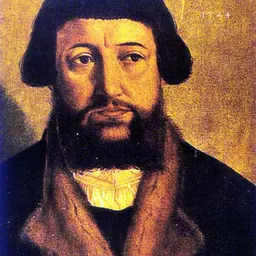
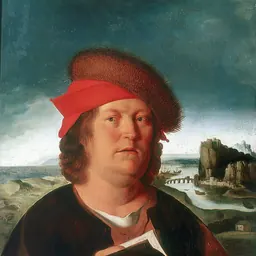
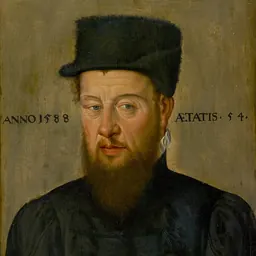

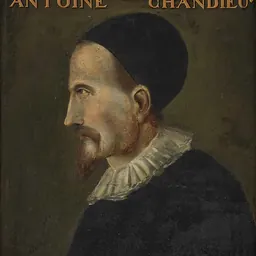
Related people
Same field, nearest in time


Contemporaries
People whose lives overlapped Claude Aubery's






Frequently asked questions
Who was Claude Aubery?
French physician and philosopher
When was Claude Aubery born?
Claude Aubery was born in 1501 in France.
When did Claude Aubery die?
Claude Aubery died in 1596 in Dijon.
What was Claude Aubery's occupation?
Claude Aubery was a physician, philosopher and docent.
What nationality was Claude Aubery?
Claude Aubery was French and Swiss.
Sources & further reading
Cite this page
APA: Biography.guide. (2026). Claude Aubery. https://biography.guide/claude-aubery/
MLA: "Claude Aubery." Biography.guide, https://biography.guide/claude-aubery/.
Chicago: "Claude Aubery." Biography.guide. https://biography.guide/claude-aubery/.
Data last updated: 2026-09-20 · Spot an error? Report a correction.
Page generated 2026-09-27 04:59 UTC