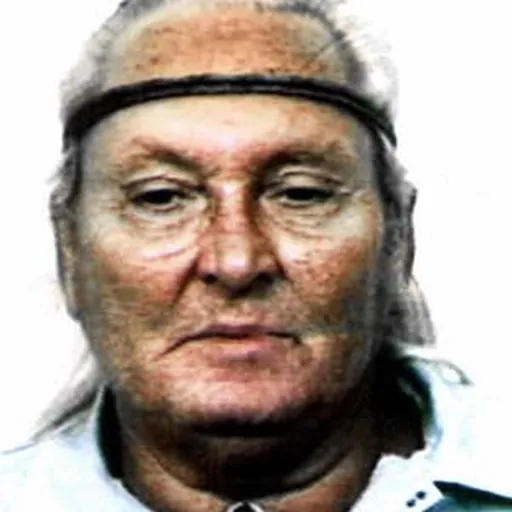
About Clarence Ray Allen
Lived 1930 – 2006 (aged 76). Clarence Ray Allen was an American criminal and prisoner.
Clarence Ray Allen (January 16, 1930 – January 17, 2006) was an American gang leader and proxy murderer who was executed in 2006 at the age of 76 by lethal injection at San Quentin State Prison for the murders of three people. Allen was the second-oldest inmate at the time to be executed in the United States since 1976.
Throughout the 1970s, Allen organized several armed robberies across California. In 1978, he was convicted for ordering the 1974 murder of his son's teenage girlfriend Mary Sue Kitts for informing others of her involvement in Allen's gang. In 1980, while already serving a life sentence for Kitts' murder, Allen organised the killing of Bryon Schletewitz, as part of a greater murder scheme to eliminate witnesses in the murder. The resulting contract killing became known as the Fran's Market murders, in which Schletewitz and two uninvolved employees were murdered by a recently released convict who was promised payment by Allen.
Allen was found guilty of the three murders in 1982 and sentenced to death. The execution date was pushed back three times for two decades. When a final date was decided in 2005, Allen's lawyers declared that "he presents absolutely no danger at this point, as incapacitated as he is. There's no legitimate state purpose served by executing him. It would be gratuitous punishment." They argued that execution would constitute cruel and unusual punishment due to Allen's advanced age and health conditions, and requested that he be granted clemency by California Governor Arnold Schwarzenegger, which was refused. As of 2026, Allen is the most recent person to be executed in California.
Early life Clarence Ray Allen, who was known by his middle name, was born in 1930 in Blair in southwest Oklahoma, as the youngest of five children. Since 1988, Allen had claimed Native American heritage, asserting that his mother was part Choctaw and his father part Cherokee; his race was listed as White with correctional authorities and he was not enrolled with the Choctaw Nation.
Allen's family was poor and he began working as a cotton picker at age 11 or 12.
Allen and his wife briefly lived in a rented house, described as a "little chicken coop", near Pixley, California. By the mid-1950s, Allen had fathered to two sons, became a born-again Christian deacon, and gained employment at a warehouse for Sunland Olive Company.
Although he ultimately did not harm Bryon Schletewitz or his parents and continued to feign innocence, Allen claimed that someone was planning to burn down their house, later paying Eugene "Lee" Furrow $50 to fire several gunshots outside their home.
After the failed Visalia robbery, Allen and his associates, including Lee Furrow, were arrested. In summer 1977, Allen, along with accomplices Roger Allen and Alan Robinson, was first convicted of robbery, attempted robbery, and assault with a deadly weapon, the latter after an attempted murder charge was downgraded as intent to kill could not be proven. As of 2022, the case remains the only murder conviction without a body in Fresno County history.
Fran’s Market murders Allen conspired with fellow inmate Billy Ray Hamilton while in Folsom Prison to murder the eight witnesses who had testified against him: Lee Furrow, Barbara Carrasco, Benjamin Meyer, Charles Jones, Carl Mayfield, Shirley Doeckel, and Ray and Bryon Schletewitz. Allen told Hamilton of Schletewitz's workplace as the first target and that in return for his service, Allen offered Hamilton $25,000 as well as "guns and transportation", saying he was also free to take money from the store, both to stage the killing as a robbery and as a form of payment to Hamilton.
Hamilton received money to travel to Fresno by Allen's eldest son Kenneth, who had received instructions from his father via mail. At Kenneth's home, Hamilton was told to kill Bryon and Ray Schletewitz, but that another target, Ray Allen's ex-girlfriend Shirley Doeckel, was off-limits for now as they needed her to get the location of the remaining witnesses. Hamilton told his girlfriend, Connie Barbo, of the contract killing job. Barbo would boast to friends in the days leading up to the murders that she had the opportunity to receive "a few thousands" in cash and "a few hundred" in "crank" for "snuffing out a life". Hamilton and Barbo originally planned to commit the murders of the Schletewitzes on September 4, when they received their firearms, a sawed-off shotgun and a .32 revolver, from Kenneth, but Barbo convinced her boyfriend to wait for the next day as she did not want to go through with the killings yet after seeing a 15-year-old Mexican boy inside the store that evening. Before heading off to Fran's Market for a second and final time, Hamilton received additional ammunition for both guns.
Kenneth Allen and Hamilton met a final time to switch vehicles, after which Hamilton fled to Modesto to live with Gary Brady, a fellow recently released convict. Hamilton told Brady how he had "done robbery" and "killed three people for Ray", whom he also called "the old man". While living with Brady and his wife, Hamilton wrote to Ray Allen for payment, listing the Brady address in the letter. Five days after the events at Fran's Market, Hamilton was arrested while attempting to rob a liquor store across the street from the Brady apartment. On his person was found a "hit list" with the names and addresses of the witnesses who testified against Allen at his trial for Kitts' murder. Ultimately, the jury convicted Allen of triple murder and conspiracy to murder eight witnesses.
Special circumstances made Allen eligible for the death penalty; the jury found that Allen had previously been convicted of murder, had committed multiple murders, and had murdered witnesses in retaliation for their prior testimony and to prevent future testimony. During a seven-day penalty phase, the Attorney General introduced evidence of Allen's career orchestrating violent robberies in the Central Valley, including ten violent crimes and six prior felony convictions for first degree murder, assault with a deadly weapon, first degree robbery, first degree burglary, and attempted robbery. He was imprisoned on San Quentin Prison's death row and died of cancer in 2007 at a Bakersfield hospital.
Connie Barbo, 33 at the time of the murders, was convicted on February 19, 1982, and given a life sentence without the possibility of parole, plus four years imprisonment. Barbo filed for clemency in 2012, which was opposed by the Fresno County District Attorney's office.
Kenneth Allen, who had been arrested five days after the Fran's Market murders on unrelated drug charges, offered testimony in regards to Hamilton in exchange for protective custody. He was given a life sentence without the possibility of parole, as part of a plea bargain that allowed Kenneth to skip trial. During his father's trial for the murders, the defense argued that Kenneth had planned the killings, with Kenneth's wife Kathy characterizing him as the "drug-crazed, hallucinogenic mastermind". Associate Justice Joseph Grodin's opinion referred to Allen's crimes as "sordid events" with an "extraordinarily massive amount" of aggravating evidence. In a dissenting opinion, California Supreme Court Justice Broussard stated that the prosecutor influenced the jury by telling them that "if you conclude that aggravating evidence outweighs the mitigating evidence, you shall return a death sentence," while the law does not mandate a death sentence in such a situation. According to Justice Broussard, this led to a lack of freedom for the jury to make a "normative decision".
In 2005, the U.S. Ninth Circuit Court of Appeals found that Allen's trial counsel had been inadequate, and the evidence against him was largely the testimony of Allen's several accomplices, who painted him as the mastermind who forced them by threats and scare tactics to commit robberies and murders. However the court denied rehearing in Allen's case. In her opinion for the panel, Judge Kim McLane Wardlaw concluded:
Evidence of Allen's guilt is overwhelming. Given the nature of his crimes, sentencing him to another life term would achieve none of the traditional purposes underlying punishment. Allen continues to pose a threat to society, indeed to those very persons who testified against him in the Fran's Market triple-murder trial here at issue, and has proven that he is beyond rehabilitation. He has shown himself more than capable of arranging murders from behind bars. If the death penalty is to serve any purpose at all, it is to prevent the very sort of murderous conduct for which Allen was convicted.
Deputy California Attorney General Ward Campbell stated in an interview: Well, Mr. Allen has cited his age, the length of time on death row, claims about innocence, errors at his trial. We found and told the governor we found all those reasons to be unpersuasive given the nature of his crime, which was in fact a direct attack on the criminal justice system perpetrated by a man whom Society thought to be safe from. They thought they were safe from him because he was behind bars and yet he continued to perpetrate these types of crimes and none of the factors that they cite now overshadow or outbalance those reasons for now executing the judgment of the people of the state of California.
On January 13, 2006, California Governor Arnold Schwarzenegger refused to grant Allen clemency, stating that "his conduct did not result from youth or inexperience, but instead resulted from the hardened and calculating decisions of a mature man." Schwarzenegger also cited a poem in which Allen glorified his actions, where Allen wrote, "We rob and steal and for those who squeal are usually found dying or dead." Allen's blindness was reported to have been the result of his diabetes and he would wear a pair of sunglasses bequeathed to him by fellow death row inmate Stephen Wayne Anderson, following the latter's execution in 2002.
Execution Allen was executed by lethal injection on January 17, 2006, less than a day after his 76th birthday, at California's San Quentin State Prison. He became the second-oldest inmate to be executed in the United States since 1976 (John B. Nixon of Mississippi was executed in 2005 at age 77). He remains the most recently executed inmate in California as of March 2019 when the imposition of the death penalty was suspended in the state by Governor Gavin Newsom.
Allen was assisted in the death chamber by four correctional officers, though a media observer stated that he was clearly moving under his own power. To the surprise of everyone present, the warden indicated that he needed an additional potassium chloride injection in order to stop his surprisingly healthy heart. Allen died at 12:38 a.m., with the execution taking 33 minutes. Allen wrote in his final statement, which Warden Steven Ornoski read immediately following the execution."First of all I'd like to say how good the last meal was, how much I enjoyed it and how much I love my family and friends who have stood by me all these years. I’d also like to thank my friends from Europe who have written to me and my spiritual advisor Richard Williams, one lady, Henny Ripp from Holland, and another lady from Italy, Christine Kaufmann, who I gave an Indian name of Morning Sun, and she's been that to me, and all of the inmates on death row that I’m leaving behind that they will be joining me one day. One good friend I've got that I hate to leave behind who's been my neighbor for 20 years is Ward Weaver. And all of my family that was here to visit me during this period, I love you very much for being with me during this time. My last words will be 'Hoka Hey, it's a good day to die.' Thank you very much. I love you all. Goodbye." Allen died with an eagle feather on his chest. He was wearing a medicine bag around his neck, and a beaded headband. He was visited shortly before the execution by two Native American spiritual advisers.
Approximately 250 death penalty opponents gathered for a candlelight vigil outside the walls of San Quentin. His last meal consisted of buffalo steak and frybread (both are traditional Native American dishes) as well as a bucket of KFC white-meat-only chicken, sugar-free pecan pie, sugar-free black walnut ice cream, and whole milk.
Purported involvement in other crimes
While in the Fresno County Jail on June 27, 1981, Allen called a "death penalty" vote for fellow inmate Glenn Bell, accused of child molestation, and directed an attack in which inmates scalded the target inmate with two gallons of hot water, tied him to the cell bars and beat him, shot him with a zip gun (a type of improvised firearm), and threw razor blades and excrement at him; Bell survived with injuries. While another inmate, John Plemons, took credit for the assault during Allen's appeal process, correctional officer Delma Graves had identified Allen as the instigating force immediately after the incident.
1983 Chino Hills murders
In June 1983, Douglas and Peggy Ryen, their 10-year-old daughter Jessica, and an 11-year-old neighbor, Christopher Hughes, were all murdered in an stabbing attack in Chino Hills. Ray Allen previously had a disagreement with the family over a horse he had purchased from them. Kevin Cooper was convicted of the murders, but a girlfriend of Eugene "Lee" Furrow, convicted of murder in the Kitts case and on parole at the time of the attacks, claimed Furrow had been the killer. Furrow denied involvement and provided a DNA sample. In 2018, outgoing California Governor Jerry Brown ordered new DNA testing in the Cooper case. The independent investigation argued that results from the testing concluded that no DNA evidence points to any person other than Kevin Cooper, though in 2023, President of the American Bar Association Mary Smith expressed skepticism of the investigation, arguing that their failure to review undisclosed documents made it impossible to have confidence in the verdict.
Don’t just read it —
keep it.
Full-length biographies made to live with: read them, listen on the way to work, watch them tonight.
- E-book
- Audio
- Video
Instant download · yours to keep · every purchase keeps this site free
Important facts
People in Clarence Ray Allen's life
Named in this biography and alive at the same time






Related people
Same field, nearest in time
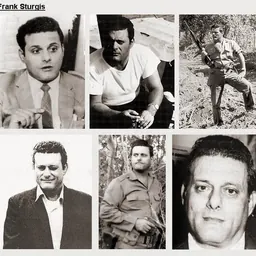

Contemporaries
People whose lives overlapped Clarence Ray Allen's


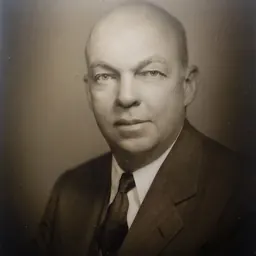
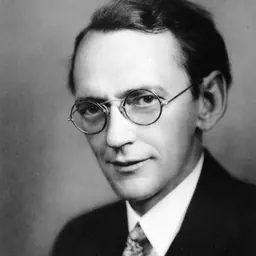
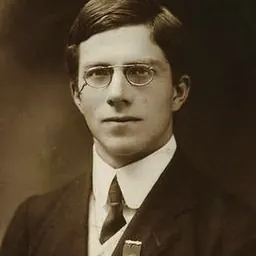
Frequently asked questions
Who was Clarence Ray Allen?
American murderer
When was Clarence Ray Allen born?
Clarence Ray Allen was born on 16 January 1930 in Blair.
When did Clarence Ray Allen die?
Clarence Ray Allen died on 17 January 2006 in San Quentin Rehabilitation Center.
What was Clarence Ray Allen's occupation?
Clarence Ray Allen was a criminal and prisoner.
What nationality was Clarence Ray Allen?
Clarence Ray Allen was American.
Sources & further reading
· Wikipedia: Clarence Ray Allen
Cite this page
APA: Biography.guide. (2026). Clarence Ray Allen. https://biography.guide/clarence-ray-allen/
MLA: "Clarence Ray Allen." Biography.guide, https://biography.guide/clarence-ray-allen/.
Chicago: "Clarence Ray Allen." Biography.guide. https://biography.guide/clarence-ray-allen/.
Data last updated: 2026-09-23 · Spot an error? Report a correction.
Portrait: Wikimedia Commons · author & licence
Page generated 2026-09-27 05:06 UTC