
About Clarence Ellis
Lived 1943 – 2014 (aged 71). Clarence Ellis was an American computer scientist and university teacher.
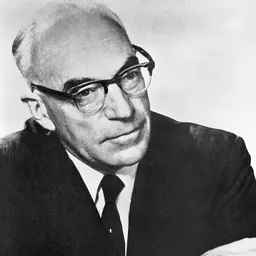
Clarence "Skip" Ellis (May 11, 1943 – May 17, 2014) was an American computer scientist, and Emeritus Professor of Computer Science and Cognitive Science at the University of Colorado at Boulder. While at the CU-Boulder, he was the director of the Collaboration Technology Research Group and a member of the Institute of Cognitive Science. Ellis was the first Black Person to earn a Ph.D. in Computer Science, and the first Black Person to be elected a Fellow of the ACM (1997). Ellis was a pioneer in Computer Supported Cooperative Work and Groupware. He and his team at Xerox PARC created OfficeTalk, one of the first groupware systems. Ellis also pioneered operational transformation, which is a set of techniques that enables real-time collaborative editing of documents.
Childhood In 1958, at age 15, Ellis applied for a job as a graveyard shift computer operator at the manufacturing firm Dover to earn money to help his family. He was offered the job because he was the only applicant. Although his job title was computer operator, his main duties were to walk around all night and be visible to prevent break-ins, and to watch over, but not touch, the company's new computer. At the time, Dover's computer was based on vacuum tube technology (2,400 vacuum tubes), used punch cards as input and output, and filled a huge room.
In Ellis' free time on the job, he read and re-read the dozens of computer manuals that came with the machine. He taught himself as much as possible about the machine without touching it. Two months after he started the job, Ellis helped the company through an emergency. They had run out of unused punch cards, and needed to use the computer to process payroll by morning. During the emergency, Ellis was the only one who knew how to recycle the used punch cards. He lifted the hood of the computer and disabled the parity check circuitry. The used punch cards were recycled and the company was able to process the payroll. After this experience, the company began to seek him out whenever they had computer problems, and even asked him to operate and program the computer for them. Ellis states that this experience helped ignite his passion for computing.
High school and college
Throughout high school, Ellis' teachers recommended that he attend summer school programs at the local universities in Chicago. This was his first encounter with college-level students and university life. Though poor, Ellis was able to attend Beloit College in the fall of 1960 because the church he and his family attended awarded him a scholarship. In Ellis' junior year, Beloit College received an IBM 1620 as a donation, and he and his chemistry professor were asked to set it up. This was the start of the Beloit College computer lab, of which Ellis was the director. During the early 1960s, Beloit didn't offer a degree in computer science, however, Ellis was able to substitute some of his science laboratory work with computer projects. In 1964, Ellis received a B.S. degree from Beloit double majoring in math and physics.
After graduating from Beloit, Ellis enrolled in MIT for graduate school, but only stayed a short time because of his civil rights activism. He eventually attended graduate school at the University of Illinois at Urbana-Champaign, where he worked on hardware, software, and applications of the ILLIAC IV supercomputer. In 1969, Clarence Ellis earned a Ph.D. in computer science from UIUC, becoming the first African-American to do so. His Ph.D. advisor was David E. Muller.
Career Ellis worked at Bell Labs from 1969 to 1972 on probability theory applied to the theory of computing. In 1972 he became an assistant professor and a founding member of the computer science department at the University of Colorado Boulder to work on operating systems research.
Ellis accepted a position three years later as an assistant professor in EECS at MIT to work on research related to ARPANET. He left MIT after one year to start work at Xerox PARC and Stanford University. Ellis remained at Xerox PARC and Stanford University for nearly a decade. During his time there, he worked on the icon-based GUI, object-oriented programming languages, and groupware systems. "He was part of the team of sociologists, psychologists and computer scientists who worked on Alto, the world's first personal computer (PC) and its related interfaces and software. Many of these innovations from the 1970s that Ellis was part of were later widely commercialized, for example in Apple's Lisa computer and Microsoft's MS-DOS software. At PARC, Ellis headed the Office Research Group, which developed the first office system to use icons and Ethernet for collaborating at a distance."
In the mid-1980s, Ellis led the Groupware Research Group at the Microelectronics and Computer Technology Corporation (MCC). While at MCC, he led efforts in Real-time Collaborative Editing, and pioneered the field of Operational transformation. In the early 1990s, Ellis left MCC to become the Chief Architect of the FlowPath workflow product of Bull S.A. in France.
In 1992, Ellis returned to the University of Colorado Boulder as full professor with tenure in the computer science department. There he continued his work on groupware, in particular next-generation, large-scale Workflow systems, and agent-mediated meeting support systems. In 2009, he became an emeritus professor at the university, where he insisted on periodically teaching an introductory computing course to "encourage students of all ethnicities to expand their horizons." To provide further opportunities for students to pursue science and engineering, Ellis "helped establish the 10-week Summer Multicultural Access to Research Training (SMART) program at the university."
Death Ellis dedicated much of his work in later years to Ashesi University in Accra, Ghana. He died unexpectedly at the age of 71 of a pulmonary embolism during a flight home from Ghana on May 17, 2014.
Selected publications Ellis C., Wainer J., Barthelmess P. (2003) Agent-Augmented Meetings. In: Ye Y., Churchill E. (eds) Agent Supported Cooperative Work. Multiagent Systems, Artificial Societies, and Simulated Organizations, vol 8. Springer, Boston, MA. https://doi.org/10.1007/978-1-4419-9200-0_2 Ellis, Clarence A. and Najah Naffah. 2012. Design of Office Information Systems (1st. ed.). Springer Publishing Company, Incorporated. Ellis, Clarence A., Simon J. Gibbs, Gail Rein. "Groupware: some issues and experiences". Communications of the ACM. 34 (1) January 1991. Rein, G.L. and C.A. Ellis. "rIBIS: a real-time group hypertext system" in Computer-supported cooperative work and groupware. ed. Saul Greenberg. January 1991. Pages 223–242. Simmons, Chris, Charles Ellis, Sajjan Shiva, Dipankar Dasgupta, and Qishi Wu. "AVOIDIT: A cyber attack taxonomy." 9th Annual Symposium on Information Assurance (ASIA'14). 2014. 2–12.
Don’t just read it —
keep it.
Full-length biographies made to live with: read them, listen on the way to work, watch them tonight.
- E-book
- Audio
- Video
Instant download · yours to keep · every purchase keeps this site free
Important facts
People in Clarence Ellis's life
Named in this biography and alive at the same time





Related people
Same field, nearest in time

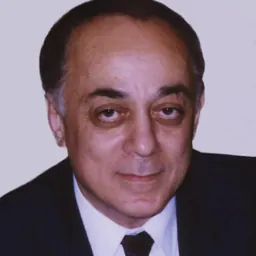
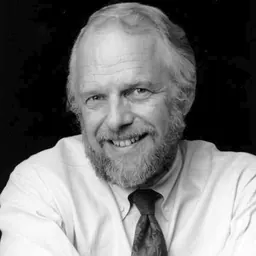



Contemporaries
People whose lives overlapped Clarence Ellis's
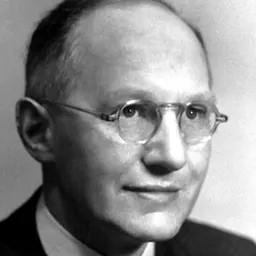

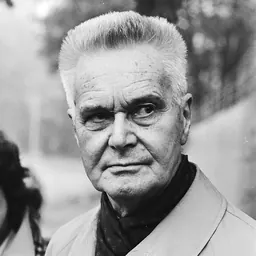

Frequently asked questions
Who was Clarence Ellis?
American computer scientist (1943-2014)
When was Clarence Ellis born?
Clarence Ellis was born on 11 May 1943 in Chicago.
When did Clarence Ellis die?
Clarence Ellis died on 17 May 2014 in Boulder.
What was Clarence Ellis's occupation?
Clarence Ellis was a computer scientist and university teacher.
What nationality was Clarence Ellis?
Clarence Ellis was American.
Sources & further reading
· DBpedia: Clarence Ellis (computer scientist)
Cite this page
APA: Biography.guide. (2026). Clarence Ellis. https://biography.guide/clarence-ellis/
MLA: "Clarence Ellis." Biography.guide, https://biography.guide/clarence-ellis/.
Chicago: "Clarence Ellis." Biography.guide. https://biography.guide/clarence-ellis/.
Data last updated: 2026-09-20 · Spot an error? Report a correction.
Page generated 2026-09-27 05:13 UTC