
About Clara Katharina Pollaczek
Lived 1875 – 1951 (aged 76). Clara Katharina Pollaczek was an Austrian writer and translator.
Clara Pollaczek (born Clara Loeb; 15 January 1875 – 22 July 1951) was a Viennese writer of light novels, stories and verse. She also wrote several stage works. Some of her works appeared under the pseudonyms "Bob" or "Bob Béol".
She is, in addition, known to scholars of literature on account of her relationship with Arthur Schnitzler whose life partner she became between 1923 and his death in 1931.
Life Clara Loeb was born into a culturally aware family of intellectual secular Jews in Vienna, where she grew up along with her two brothers, Alfred and Otto, and her sister, Anna.
Gifted and intensively educated, when Clara was 19 she began to write, using male pseudonyms when publishing her work. In April 1897 "Mimi: Silhouettes from a girl's life" (" Mimi. Schattenbilder aus einem Mädchenleben") appeared in the literary journal Neue Deutsche Zeitschrift, attributed to a writer using the pseudonym "Bob", and incorporating a prologue by Hugo von Hofmannsthal. Mimi was presented as a female counterpart to Arthur Schnitzler's character, Anatol. Mimi was seen as a great success.
Despite the rebellious tendencies evidenced in "Mimi", Clara submitted to her parents' wishes when she gave up writing and married at the Seitenstettengasse Temple (synagogue) on 10 May 1898. Her husband, Otto Pollaczek, was heir to the largest wholesaler of leather hides in the Habsburg monarchy. Their sons, Hermann and Karl Friedrich, were born in 1899 and 1902. She acquired a large number of committed readers. The book describes his mother's life as an exile in England during the Second World War.
According to the same book, his aunt, Clara's sister Anna, also pursued a literary career, but with less success than Clara. Anna was murdered at Theresienstadt. His uncle, Clara's brother Otto Loeb, became a lawyer and remained in Vienna. He survived the Nazi years, possibly because of a distinguished record of military service during the First World War. He was authorized to practice law as a "counsellor and legal advisor for Jews" ("Konsulent, zugelassen zur rechtlichen Beratung von Juden"). Clara's other brother, Alfred, became an artist and member of the Hagenbund. According to a 1939 lexicon he was, at that time, living in London. He died "in a monastery" in 1945.
Arthur Schnitzler Clara Loeb met Arthur Schnitzler at the end of 1896 during a New Year's Eve party held at her parents' house. Guests included leading artistic and literary figures of the time. She met Hugo von Hofmannsthal at the same event. Both men encouraged her to pursue her literary ambitions. Schnitzler later mentioned her in his diary as "the dear little girl with big eyes" ("das liebe kleine Mädel mit großen Augen"). They embarked upon a correspondence that lasted till Clara's marriage in 1898. In their letters they discussed literary issues. They met up frequently at family gatherings. They wrote of arranging to meet up in "nervous encounters" ("nervöse Zusammenkünfte"), although it is not clear whether or not they ever, at this point, met up except within the wider context of social events. Clara's parents disapproved of her friendship with Schnitzler, and of friendships with other men, and hastened to arrange her marriage with Pollaczek. During Clara's marriage the correspondence with Schnitzler was broken off.
The death of her husband in 1908 left Clara Katharina Pollaczek feeling liberated, according to her son's book. She had several male friendships before entering into a closer relationship with Schnitzler. Schnitzler's diaries disclose an exchange of letters, regular encounters, and even one telephone conversation from approximately 1915. After Schnitzler was divorced from Olga Gussmann, which took place in 1921, he and Pollaczek met one another far more frequently. There were theatre and museum visits and walks together in the city's parks. They also later travelled together, and frequently visited the cinema. At this time a sexual relationship outside marriage would have been taboo for a woman. That was one convention that Clara Pollaczek disregarded. She was 48 and Arthur Schnitzler 61, and suffering from Melancholia, when they became, for most purposes, life-partners. Between 1923 and Schnitzler's death in 1931, they were a couple. However, they did not actually live together and there is no evidence that either of them ever contemplated marriage.
After her husband's death in 1908, literary endeavour became a financial necessity for Pollaczek. She was permanently short of money, but did not wish to allow Schnitzler to provide her with financial support. In 1924 he gave her a typewriter for Christmas. He read almost everything she wrote and she also became a critic of his work, whose judgement and suggestions he valued.
Output (selection) Except where otherwise stated the stories and theatre pieces as well as some of the poems were published in the Neue Freie Presse
Theatre pieces
Mimi. Schattenbilder aus einem Mädchenleben, Szenenfolge mit einem Prolog von Hugo von Hofmannsthal. In: Neue Deutsche Rundschau, 1. April 1897, S. 396–413. Wieder abgedruckt in: Hansjörg Graf (Hrsg.): Der kleine Salon. Szenen und Prosa des Wiener Fin de Siècle. Mit Illustrationen von Gustav Klimt. Henry-Goverts-Verlag, Stuttgart 1970, , S. 231–268 Redoute. Schauspiel in einem Aufzug (1926) Dame. Drama (1930)
Novels
Zwischen den Generationen (1920) Der Abhang (1924) Kind der Liebe. In: Neues Wiener Tagblatt 1926 Die Schönheit der Konstanze (1929) Der Aufstieg (1929) Die Tochter des Hauses (1929), Zwischen den Generationen (1930) Mütter (1931) Zwischen den Generationen (1933)
Novellas and short stories
Die Abschiedsfeier der Sybille Eugerth (1924) Der Tod der Gräfin Anastasia (1925) Der ewige Student (1925) Mädchen für Alles (1926) Mord (1927) Die Tochter des Hauses (1929) Das Fräulein von Corday d'Armont (1931) Die Kette (1932)
Poetry
Abend (1926) Nach Sonnenuntergang (1927) Wissen um den Tod (1928) Im Aeroplan/Flug zu zweit (1929) Erinnerungsgang (Cottage 1933) Sein Zimmer (1934) Gedichte der Liebe. Europäischer Verlag, Wien, Leipzig 1936
Translation
Paul Géraldy: Du und Ich (Toi et moi). Gedichte aus dem Französischen nachgedichtet von Clara Katharina Pollaczek, Zsolnay Verlag, Wien 1927
Memoire
Arthur Schnitzler und Ich, 1896–1931, Vols 1-3. unpublished typescript (believed to have been intended for publication). Vienna 1931–1932
Don’t just read it —
keep it.
Full-length biographies made to live with: read them, listen on the way to work, watch them tonight.
- E-book
- Audio
- Video
Instant download · yours to keep · every purchase keeps this site free
Important facts
People in Clara Katharina Pollaczek's life
Named in this biography and alive at the same time
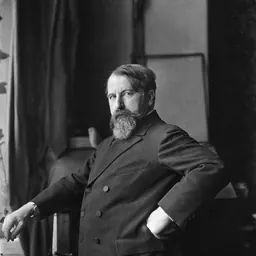

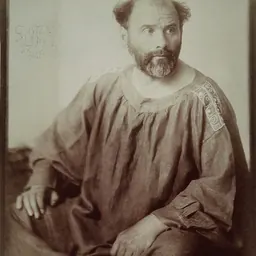

Related people
Same field, nearest in time
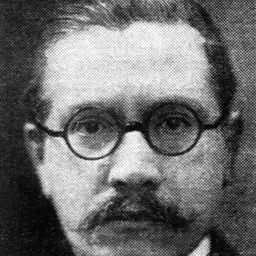

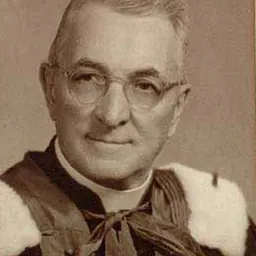

Contemporaries
People whose lives overlapped Clara Katharina Pollaczek's


Frequently asked questions
Who was Clara Katharina Pollaczek?
Austrian writer
When was Clara Katharina Pollaczek born?
Clara Katharina Pollaczek was born on 15 January 1875 in Vienna.
When did Clara Katharina Pollaczek die?
Clara Katharina Pollaczek died on 22 July 1951 in Döbling, Vienna.
What was Clara Katharina Pollaczek's occupation?
Clara Katharina Pollaczek was a writer and translator.
What nationality was Clara Katharina Pollaczek?
Clara Katharina Pollaczek was Austrian.
Sources & further reading
· Wikipedia: Clara Katharina Pollaczek
· DBpedia: Clara Katharina Pollaczek
Cite this page
APA: Biography.guide. (2026). Clara Katharina Pollaczek. https://biography.guide/clara-katharina-pollaczek/
MLA: "Clara Katharina Pollaczek." Biography.guide, https://biography.guide/clara-katharina-pollaczek/.
Chicago: "Clara Katharina Pollaczek." Biography.guide. https://biography.guide/clara-katharina-pollaczek/.
Data last updated: 2026-09-20 · Spot an error? Report a correction.
Page generated 2026-09-27 05:21 UTC