
About Ciccio Franco
Lived 1930 – 1991 (aged 61). Ciccio Franco was an Italian politician and trade unionist.
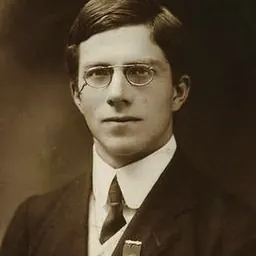
Francesco Franco (Reggio Calabria, March 28, 1930 – Reggio Calabria, November 16, 1991), also known as Ciccio Franco, was an Italian politician, trade unionist and activist. He was a senator for the Italian Social Movement – National Right (, MSI–DN) (1972–1991). He gained particular notoriety for his role as a popular leader during the Reggio revolt of 1970–1971.
Reggio revolt
In July 1970, Franco, at the time a trade union leader from the National Italian Workers' Union (CISNAL) close to the neofascist movement, became the informal leader of the rebel Action Committee and of the revolt. The cause of the protests was a government decision to make Catanzaro, not Reggio Calabria, regional capital of Calabria.
On September 17, 1970, he was arrested along with other leaders of the revolt on charges of incitement in a police sweep that targeted some 100 people. The news about the arrest provoked violent reactions, in particular in the dilapidated Sbarre suburb in Reggio. At least 6,000 policemen were deployed from many parts of Italy to try to stop the violence. Franco was released on December 23, 1970.
On January 31, 1971, four leaders of the rebel Action Committee were arrested on charges for instigating violence. Franco was able to escape arrest initially, but was arrested on June 5, 1971, after a scuffle at a neo-fascist party rally in Rome. In February 1971, journalist Oriana Fallaci had been able to interview the fugitive Franco for L'Europeo. He explained that many potentially leftist youths "today are fascists simply because they believe that the battle of Reggio is interpreted fairly only by the fascists."
The revolt ended up by being taken over by neo-fascists (relevant was also the role of the militant neo-fascist movement National Vanguard ) and led to unexpected electoral fortunes for the Italian Social Movement at the Italian general election in May 1972, when Franco was elected senator. The neo-fascists benefitted, because the Christian Democrats were divided, while the city was one of its fiefdoms, and the Italian Communist Party (PCI) supported the suppression of the riots. Subsequent judicial investigations of charges of provocation and terrorism ended with his acquittal. He initially was convicted to four years but never served his sentence; the appeal never took place due to the expiration of the statute of limitations.
Franco was re-elected for four subsequent terms, serving in the Senate from 1972 until his death in 1991, as a member of the Italian Social Movement. He died from a brain stroke on November 16, 1991, in his hometown Reggio Calabria.
Don’t just read it —
keep it.
Full-length biographies made to live with: read them, listen on the way to work, watch them tonight.
- E-book
- Audio
- Video
Instant download · yours to keep · every purchase keeps this site free
Important facts
People in Ciccio Franco's life
Named in this biography and alive at the same time


Related people
Same field, nearest in time





Contemporaries
People whose lives overlapped Ciccio Franco's

Frequently asked questions
Who was Ciccio Franco?
Italian neo-fascist politician
When was Ciccio Franco born?
Ciccio Franco was born on 28 March 1930 in Reggio Calabria.
When did Ciccio Franco die?
Ciccio Franco died on 16 November 1991 in Reggio Calabria.
What was Ciccio Franco's occupation?
Ciccio Franco was a politician and trade unionist.
What nationality was Ciccio Franco?
Ciccio Franco was Italian.
Sources & further reading
Cite this page
APA: Biography.guide. (2026). Ciccio Franco. https://biography.guide/ciccio-franco/
MLA: "Ciccio Franco." Biography.guide, https://biography.guide/ciccio-franco/.
Chicago: "Ciccio Franco." Biography.guide. https://biography.guide/ciccio-franco/.
Data last updated: 2026-09-20 · Spot an error? Report a correction.
Page generated 2026-09-27 05:17 UTC