
Chrysostomos Papasarantopoulos
Greek pioneering Orthodox missionary in Africa
About Chrysostomos Papasarantopoulos
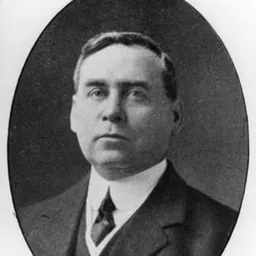
Lived 1903 – 1972 (aged 68–69). Chrysostomos Papasarantopoulos was a Greek missionary, ieromonachos and eastern Orthodox priest.
Rev. Archimandrite Chrysóstomos Papasarantópoulos (Greek: Χρυσόστομος Παπασαραντόπουλος, 1903–1972) was a pioneering missionary of the Eastern Orthodox Christianity in Uganda, Kenya, Tanzania, and Congo.
Greece 1903–1960
Childhood Years Rev. Archimandrite Chrysostomos Papasarantopoulos was born Christos Papasarantopoulos in 1903 in Vasilitsi, Messenia, Greece, to Theodoros Papasarantopoulos and Stavroula Trigourea (afterwards Nun Sebastiani), the seventh child of the family. He was born into a devout Christian home, and from childhood he devoted his life to Christ. At the age of 10 he lost his father, and was forced to leave school in order to work.
At 15 years of age he left his family home in secret and went to settle at the Koroni monastery in order to pursue his longing for the spiritual life; however he soon left this monastery since his relatives would visit him and beg him to return to the family.
Afterwards, he went to Kalamata, to the then well-known Hermitage of Panagoulakis (Holy Monastery of the Annunciation of the Virgin Mary), known for its strict asceticism; here he became a monk. The excesses of the Igumen there and the very strict lifestyle of that Hermitage overcame him and left him with a permanent health problem.
Later years During the years 1920–1929 Archimandrite Chrysostomos stayed at the Gardikiou Monastery, in Messenia. On May 4, 1926, he was ordained into the priesthood, and was appointed as the Igumen of that monastery.
At some point he tonsured his mother as a Nun. For several years he served the surrounding villages as the officiating priest. During this period Fr. Chrysostomos found time to complete his school studies (via Homeschooling), and undertook to learn the French language. After the disestablishment of the Monastery of Gardikiou (due to lack of personnel), Fr. Chrysostomos transferred to the Metochion of the Holy Monastery of Voulkano, Chrysokellaria, near Koroni.
He then came to Athens and joined the Petraki Monastery, where his main duty was that of father confessor for people of all ages and walks of life, becoming well respected and loved. In the years of occupation Fr. Chrysostomos went to Edessa where he served as the General Hierarchical Vicar and Protosyngellos. Subsequently, he was transferred to Kozani, Thessaloniki, and Athens, where he received his Secondary School Diploma. Eventually he returned again to the Petraki Monastery, from where he determined to enroll in the University of Athens Theological School. At the age of 55, in 1958, he finally received his theological degree.
During the course of his studies in Athens he came into contact with certain colleagues of African descent, who may have inspired him towards his forthcoming mission. The African students at the university were from Uganda, and represented the first native Orthodox Christians from Uganda to be formally educated in the Orthodox faith. One of these fellow students, Theodore Nankyamas, would later play a prominent role and become one of the first Orthodox bishops in East Africa. Another, Demetrios Mumbale, would become the first Orthodox physician and founder of an Orthodox medical clinic in Uganda. In the event, after many years of faithful service in his native country, he experienced a strong leading, a true "Macedonian Call," to go as a missionary to Africa.
Africa 1960–1972
Uganda At the age of 57 Fr. Chrysostomos decided to go on his mission to Africa. thus resolving to continue the mission.
In 1960 Archimandrite Chrysostomos Papasarantopoulos went to Kampala, Uganda, where he worked for ten years before moving to Zaire to begin a new mission there. Through correspondence he also encouraged others to become involved in mission, among them the present Bishop Makarios of Riruta, Kenya. After years of repression by the British colonial regime and the disingenuous propaganda of the Catholic and Protestant missionaries who supported it, the Eastern Orthodox Church was in a perilous state.
Father Chrysostomos wrote about the first difficulties he encountered: ...(there are) neither homes, nor churches, nor clergy.[...] the few Greek families here live miles away from each other. Likewise the Black Orthodox are also scattered in tens and hundreds of miles in the four cardinal directions...
He began an extensive correspondence program, writing to friends, relatives and acquaintances who might be able to help in any way. Thus he slowly started to receive aid from Greece, Europe and America in the form of packages of clothing, cheques, utensils and other items. In another letter he wrote:
...by the end of March 1961 the inauguration and opening of the small church of our mission was completed...I have not yet learned the (Bantu) language of Luganda, however I have learned Swahili to a considerable extent. I speak it together mixed with English, and I am understood fairly well.
Learning a new language at that age was not easy, but within a year of arriving in Africa, Father Chrysostomos could preach in Swahili. He provided catechesis, he taught, and performed the Divine Liturgy, and baptized numerous of the Indigenous peoples. In addition, he prepared others for the mission, guiding them towards the priesthood.
In 1963 Father Chrysostomos became the spiritual founder of the missionary society "The Friends of Uganda." This Society continues its mission today based in the city of Thessaloniki.
Kenya, Tanzania, Congo He then expanded the mission to neighbouring Kenya and Tanzania (Tanganyika). In Nairobi he created another missionary station, stating "the work (of mission) is progressing, Orthodoxy is expanding." He also completed a translation of the Divine Liturgy and various Prayers into Swahili.
Although he made constant appeals for assistance in his correspondence to Greece, inviting others to join the mission, he received no response. At an advanced age, he preached often. She agreed to join him and moved to Congo, where she engaged in the mission's effort, succeeding her uncle as the sole Eastern Orthodox missionary in the area for a time, after the death of Chrysostomos.
One month before his death, he wrote a letter saying: |group=note
By July 1973 he was succeeded in the missionary echelon of Kananga by his old friend and partner, the Archimandrite Chariton (Pneumatikakis) (1908–1998).
On December 29, 1985, the Metropolis of Messenia erected a bust of Father Chrysostom in his honor. and a service to the saint was published in Greek.
On March 22, 2026 the relics of the newly canonized St. Chrysostomos the Missionary were solemnly uncovered, in a significant ceremony led by Patriarch Theodoros II, alongside hierarchs and clergy of the Patriarchate of Alexandria, in the city of Kananga in the Democratic Republic of the Congo.
Don’t just read it —
keep it.
Full-length biographies made to live with: read them, listen on the way to work, watch them tonight.
- E-book
- Audio
- Video
Instant download · yours to keep · every purchase keeps this site free
Important facts
People in Chrysostomos Papasarantopoulos's life
Named in this biography and alive at the same time


Related people
Same field, nearest in time

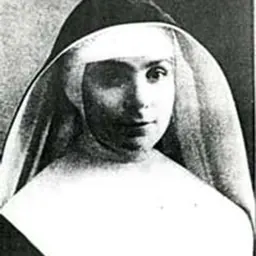

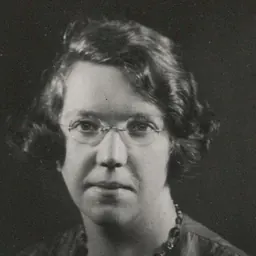
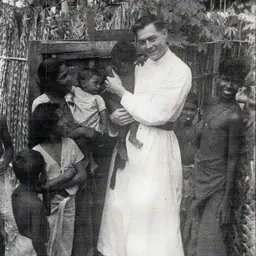
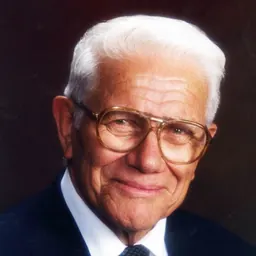
Contemporaries
People whose lives overlapped Chrysostomos Papasarantopoulos's

Frequently asked questions
Who was Chrysostomos Papasarantopoulos?
Greek pioneering Orthodox missionary in Africa
When was Chrysostomos Papasarantopoulos born?
Chrysostomos Papasarantopoulos was born in 1903 in Vasilitsi.
When did Chrysostomos Papasarantopoulos die?
Chrysostomos Papasarantopoulos died on 29 December 1972 in Kananga.
What was Chrysostomos Papasarantopoulos's occupation?
Chrysostomos Papasarantopoulos was a missionary, ieromonachos and eastern Orthodox priest.
What nationality was Chrysostomos Papasarantopoulos?
Chrysostomos Papasarantopoulos was Greek.
Sources & further reading
· Wikipedia: Chrysostomos Papasarantopoulos
· DBpedia: Chrysostomos Papasarantopoulos
Cite this page
APA: Biography.guide. (2026). Chrysostomos Papasarantopoulos. https://biography.guide/chrysostomos-papasarantopoulos/
MLA: "Chrysostomos Papasarantopoulos." Biography.guide, https://biography.guide/chrysostomos-papasarantopoulos/.
Chicago: "Chrysostomos Papasarantopoulos." Biography.guide. https://biography.guide/chrysostomos-papasarantopoulos/.
Data last updated: 2026-09-20 · Spot an error? Report a correction.
Page generated 2026-09-27 05:00 UTC