
Christopher Morcom
British scientist
About Christopher Morcom
Lived 1911 – 1930 (aged 18). Christopher Morcom was a British student.
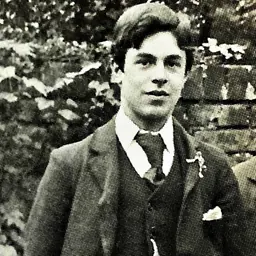
Christopher Collan Morcom (13 July 1911 – 13 February 1930) was an English student mathematician, scientist and astronomer. He is known for being a childhood friend of Alan Turing, the founder of modern computer science. Morcom has been described as Turing's first love, but the affection is not known to have been reciprocated.
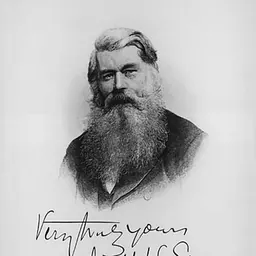
Morcom was born in Fockbury, Worcestershire, to a wealthy family involved in the arts and sciences; his mother, Frances Isobel Morcom, was a sculptor, and his father an engineer. He was the grandson of Sir Joseph Swan, an inventor of the incandescent light bulb. Morcom was educated at King's Mead School in Seaford, East Sussex, from 1922 to 1925, and Sherborne School in Dorset from 1925 to 1929. He excelled at Sherborne and was awarded several scholarships and prizes. In December 1929 he was awarded a scholarship at Trinity College, Cambridge, but died before he could begin his studies there.
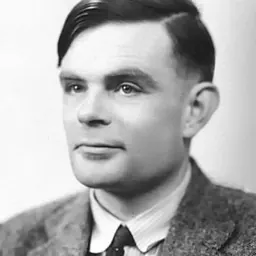
At Sherborne, Morcom met and befriended Alan Turing, a fellow student, and the two bonded over mathematics and science. Morcom had several inside jokes with Turing and was known to tease him. Their relationship is depicted in the 2014 film The Imitation Game, which contains several inaccuracies.
Morcom contracted bovine tuberculosis at a young age after drinking infected cows' milk. This led to his death in 1930, at the age of 18, which devastated Turing. In memory of Morcom, the deceased boy's mother commissioned a stained-glass window, designed by the artist Karl Parsons, for Christ Church, Catshill. It depicts Saint Christopher carrying the Christ Child across a river on his shoulders; the face of the child was probably modelled after that of Morcom. The family also created the Christopher Morcom Prize for Science at Sherborne School.
Family alt=Outdoor photograph of Morcom and his parentsChristopher Collan Morcom was born on 13 July 1911, at the Clock House in Fockbury, Worcestershire, England, to a wealthy family involved in the arts and sciences. His mother, Frances Isobel Morcom (née Swan),
Christopher's older brother Rupert attended Sherborne School and Trinity College, Cambridge. Whilst Christopher was at Sherborne, Rupert studied at ETH Zurich, in Switzerland. a modified manor house from the 16th century in Fockbury. and enjoyed chess puzzles. In September 1922 he was the first to solve a specific chess puzzle in The Saturday Review, for which he chose to win a copy of Luigi Villari's 1922 military book The Macedonian Campaign. The Enigma writes that he "loved all games and was always finding out new ones (of the more trivial kind)". On 7 November 1927 Morcom was confirmed by St Clair Donaldson, the Bishop of Salisbury, at the chapel of Sherborne School. Friends confirmed that day included his schoolmates Turing, John Noel Patch Bennett and Peter Hogg.
Morcom had a telescope and was given a star atlas for his eighteenth birthday. He conducted astronomical observations from his dormitory at Lyon House and produced a star chart. Turing intentionally sat next to Morcom in every class in 1929, when he joined the same form as him. Morcom remarked on this, but, as Turing later wrote, "seemed to welcome [him] in a passive way". The two bonded over numerous scientific topics, including Rupert's chemistry experiments, relativity, iodised salt, the orbits of planets and the age of stars. Turing wrote about himself that he "worshipped the ground he trod on" However, on the day of Morcom's service, Turing wrote to his own mother, "I feel sure that I shall meet Morcom again somewhere & that there will be some work for us to do together, as I believed there was for us to do here." When visiting the Morcom family's home in 1932, Turing wrote an essay titled "The Nature of Spirit" which discusses the relationship between the body and spirit.
Legacy
Morcom's mother commissioned a window in memory of him from the stained-glass artist Karl Parsons. Installed in the parish church in Catshill, the art piece depicts Saint Christopher carrying the Christ Child across a river on his shoulders. The face of Jesus was modelled after that of Morcom. The prize included an illuminated manuscript designed by the artists Madeline Walker and Miss E. Stiles, as well as a mezzotint portrait by the illustrator Norman Hirst. In 1930 Turing became the first winner of the prize, "for showing originality in a paper on 'the reaction of sulphites and iodates in acid solution. Turing won it again the following year for his open scholarship at King's College Cambridge. He features in the plays Turing by George Zarkadakis and Pure by Rey Pamatmat. Geoffrey Hill's poem "A Cloud in Aquila" ends with mentions of Morcom, his relationship with Turing, and the Clock House.
In 2014 Morcom was played by Jack Bannon in The Imitation Game, a biographical film about Turing. The film's depiction of Morcom has several inaccuracies. In the film, Turing and Morcom connect over an interest in cyphers, but they actually bonded over mathematics and chemistry; it was another friend with whom Turing bonded over cyphers. In the film, Turing names a computer "Christopher" after Morcom, but this was entirely fictional.
Don’t just read it —
keep it.
Full-length biographies made to live with: read them, listen on the way to work, watch them tonight.
- E-book
- Audio
- Video
Instant download · yours to keep · every purchase keeps this site free
Important facts
People in Christopher Morcom's life
Named in this biography and alive at the same time





Related people
Same field, nearest in time

Frequently asked questions
Who was Christopher Morcom?
British scientist
When was Christopher Morcom born?
Christopher Morcom was born on 13 July 1911.
When did Christopher Morcom die?
Christopher Morcom died on 13 February 1930.
What was Christopher Morcom's occupation?
Christopher Morcom was a student.
What nationality was Christopher Morcom?
Christopher Morcom was British.
Sources & further reading
· Wikipedia: Christopher Morcom
Cite this page
APA: Biography.guide. (2026). Christopher Morcom. https://biography.guide/christopher-morcom/
MLA: "Christopher Morcom." Biography.guide, https://biography.guide/christopher-morcom/.
Chicago: "Christopher Morcom." Biography.guide. https://biography.guide/christopher-morcom/.
Data last updated: 2026-09-20 · Spot an error? Report a correction.
Page generated 2026-09-27 05:16 UTC