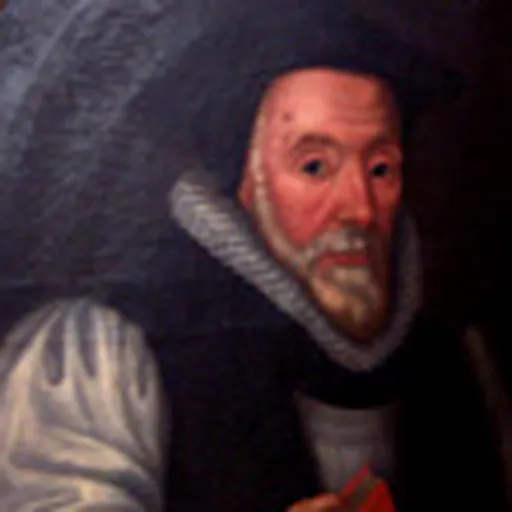
About Christopher Hampton
Lived 1552 – 1625 (aged 72–73). Christopher Hampton was an English anglican priest.
Christopher Hampton (1552–1625) was an Englishman who was the Church of Ireland Archbishop of Armagh from 1613 to 1625.
Family and education He was born at Calais in 1552, son of John Hampton (of Frethby or Freeby in Leicestershire, a Merchant of the Staple in Calais, and a citizen of London and member of the Skinner's Company) and his wife Alice. His name is also given as John in the printed Patent Rolls. He was educated at Trinity College, Cambridge, where he graduated B.A. 1572, M.A. 1575, B.D. 1582 and D.D. 1598. He became a Fellow of Trinity in 1574.
Church career He was ordained as a priest in 1580 and was vicar of Chesterton, Cambridge from 1585 to 1589 and Rector at Calbourne on the Isle of Wight from 1589 to 1612. By 1606, he was chaplain to Henry Wriothesley, 3rd Earl of Southampton and also had the opportunity to preach before James I on occasions, when he preached in support of royal supremacy and episcopacy. He became a royal chaplain and continued to attack presbyterianism and defend episcopacy. He faced much opposition in his new role, including challenges from Thomas Jones and Lancelot Bulkeley, Archbishops of Dublin, to the right of the see of Armagh to the primacy of Ireland (this was a dispute which had been going on intermittently for centuries, long before the Reformation). He also enforced conformity in ceremonial practices against the more puritan members of the church. He took a hard line against both Roman Catholics and Scottish Presbyterian settlers in Ulster. In 1622 James Ussher, then bishop of Meath, preached a sermon before the Lord Deputy to which exceptions were taken by the recusants. Hampton sent him a letter of mild rebuke, but indicating that the sermon had been in some respects indiscreet.
By 1622 Hampton had (using his own personal wealth as well as church funds) built a palace at Drogheda, then the principal place of residence of the archbishops, and restored the cathedral church of St. Patrick, Armagh, which had been reduced to ruins by Shane O'Neill. He recast the great bell, and repaired the old episcopal residence at Armagh, to which he added new buildings. He died at Drogheda on 3 January 1624/5, and was buried in the parish church of St. Peter there. While he died unmarried, he settled his brother's family on lands belonging to the see at Kilmore, County Armagh, on long leases at favourable terms, where their descendants continued to live for generations.
Don’t just read it —
keep it.
Full-length biographies made to live with: read them, listen on the way to work, watch them tonight.
- E-book
- Audio
- Video
Instant download · yours to keep · every purchase keeps this site free
Important facts
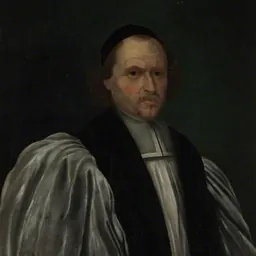
People in Christopher Hampton's life
Named in this biography and alive at the same time



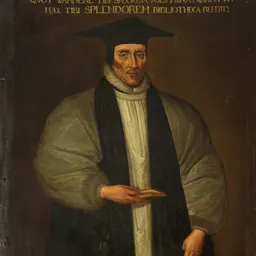
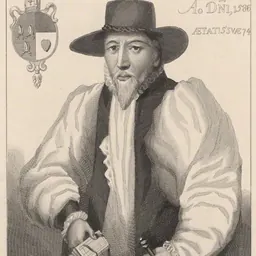
Related people
Same field, nearest in time

Contemporaries
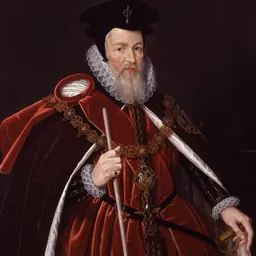
People whose lives overlapped Christopher Hampton's





Frequently asked questions
Who was Christopher Hampton?
Irish bishop
When was Christopher Hampton born?
Christopher Hampton was born in 1552 in Calais.
When did Christopher Hampton die?
Christopher Hampton died on 3 January 1625 in Drogheda.
What was Christopher Hampton's occupation?
Christopher Hampton was an anglican priest.
What nationality was Christopher Hampton?
Christopher Hampton was English.
Sources & further reading
· Wikipedia: Christopher Hampton
· DBpedia: Christopher Hampton (bishop)
Cite this page
APA: Biography.guide. (2026). Christopher Hampton. https://biography.guide/christopher-hampton/
MLA: "Christopher Hampton." Biography.guide, https://biography.guide/christopher-hampton/.
Chicago: "Christopher Hampton." Biography.guide. https://biography.guide/christopher-hampton/.
Data last updated: 2026-09-22 · Spot an error? Report a correction.
Portrait: Wikimedia Commons · author & licence
Page generated 2026-09-27 05:02 UTC