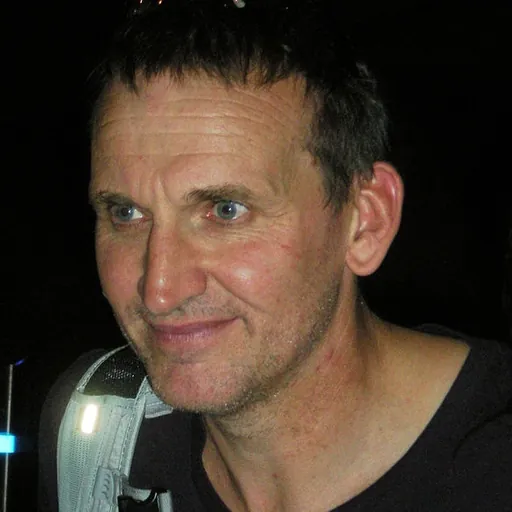
About Christopher Eccleston
Born 1964. Christopher Eccleston is a British actor, television actor, film actor, explorer, character actor and stage actor.
Christopher Eccleston (; born 16 February 1964) is an English actor. He is known for his work in various social realist television dramas, as well as for playing the ninth incarnation of the Doctor in the BBC science fiction series Doctor Who.
Born in Salford, Eccleston first rose to prominence for his portrayal of Derek Bentley in the biographical film Let Him Have It (1991), and gained widespread recognition in the UK for his television roles in Cracker (1993–1994) and Our Friends in the North (1996), the latter earning him a nomination for the British Academy Television Award for Best Actor. He received a second nomination for the drama serial The Second Coming (2003) and an International Emmy Award for Best Actor for his performance in the anthology series Accused (2010).
Eccleston earned two consecutive nominations for Best Supporting Actor in a Drama Series at the Critics' Choice Television Awards for his role as Matt Jamison in the HBO series The Leftovers (2014–2017). He also portrayed Maurice Scott in the drama series The A Word (2016–2020) and Fagin in the family series Dodger (2022–present). Since 2021, Eccleston has reprised his Doctor Who role in licensed audio dramas produced by Big Finish Productions.
Eccleston appeared in the British films Shallow Grave (1994), Jude (1996), 24 Hour Party People, 28 Days Later (both 2002) and Legend (2015), as well as the Hollywood blockbusters Gone in 60 Seconds (2000), G.I. Joe: The Rise of Cobra (2009) and Thor: The Dark World (2013). On stage, he has played the title roles in Shakespeare's Hamlet (2002) and Macbeth (2018), and appeared in productions of Strindberg's Miss Julie (2000), Ibsen's A Doll's House (2009) and the Greek tragedy Antigone (2012).
Early life and education Christopher Eccleston was born on 16 February 1964 into a working-class family in Langworthy, Salford, then part of Lancashire. His identical twin brothers, Alan and Keith, were born eight years earlier. and his mother Elsie worked as a cleaner at a launderette. The family moved to a council estate in Little Hulton when Eccleston was seven months old. He attended Bridgewater County Primary School, then Joseph Eastham High School, where he became head boy.
Eccleston left school in 1979 to resit O-Levels at Eccles Sixth Form College. The school's drama teacher invited him to perform in a production of Lock Up Your Daughters, which inspired him to become an actor. Eccleston spent the next six months working in a warehouse, before completing a two-year Performance Foundation Course at Salford Tech, and going on to train at the Central School of Speech and Drama from 1983 to 1986. Whilst studying there he worked as an usher at the National Theatre.
Eccleston was influenced in his early years by kitchen sink drama films such as Saturday Night and Sunday Morning (1960) and Kes (1969), and social realist television dramas such as Boys from the Blackstuff (1982) and Play for Today: The Spongers (1978). In 1989, he joined the stage crew of the Royal Exchange Theatre, Manchester. He was offered a job doing theatre-in-education for a team which needed a driver, but because he couldn't drive, he received half-wages (£70 a week) plus an Equity card. As soon as Eccleston was a member of Equity, theatre director Phyllida Lloyd, who had seen him at Central, offered him the part of Pablo Gonzalez in the Bristol Old Vic's April–May 1989 production of A Streetcar Named Desire. This was his professional stage debut. thumb
Breakout (1991–1996) Eccleston's breakout role was as teenage convict Derek Bentley in the 1991 biographical drama film Let Him Have It, his film debut. He had a guest appearance in the 1991 Inspector Morse episode "Second Time Around". The following year, he portrayed Sean Maddox in the BBC miniseries Friday on My Mind, and appeared in the Poirot episode "One, Two, Buckle My Shoe". Despite an initial desire to be a theatre actor, Eccleston subsequently "became a film and television actor by default". When Eccleston decided to quit the series, he asked writer Jimmy McGovern to give Bilborough a memorable and violent death scene. He was considered for the role of Francis Begbie in Boyle's 1996 film Trainspotting. Eccleston became involved with the BBC Two television drama Our Friends in the North (1996), which Boyle was originally set to direct. He was initially offered the part of Geordie Peacock (ultimately played by Daniel Craig), but Eccleston instead chose to take the part of left-wing activist Nicky Hutchinson. For his performance, Eccleston was nominated for the 1997 British Academy Television Award for Best Actor, and won Best Actor at the 1997 Broadcasting Press Guild Awards.
Following a role in McGovern's television series Hearts and Minds (1995), Eccleston starred in McGovern's 1996 television film Hillsborough, portraying Trevor Hicks, who lost his two daughters in the 1989 Hillsborough disaster. He met with Hicks to discuss the project, and the two men remained close; when Hicks remarried in 2009, Eccleston was his best man.
Established actor (1996–2004) Eccleston subsequently appeared in a wide variety of British and American films. He played the title role in Michael Winterbottom's period drama Jude (1996), based on Thomas Hardy's book Jude the Obscure. He played Thomas Howard, 4th Duke of Norfolk, in Shekhar Kapur's historical film Elizabeth (1998). Eccleston turned down a role in Saving Private Ryan and unsuccessfully auditioned for The Thin Red Line, both 1998 war films. He also turned down a role in Billy Elliot (2000), believing it to be an "offensive" depiction of northern English life. After a small part in David Cronenberg's science fiction horror film eXistenZ (1999), he made his Hollywood debut in the action heist film Gone in 60 Seconds (2000). but he criticised the film and his performance as "terrible". In 2001, he played the husband to Nicole Kidman's character in the horror film The Others In 2002, Eccleston appeared in Winterbottom's 24 Hour Party People and collaborated again with Danny Boyle on the post-apocalyptic film 28 Days Later. He took the lead role in Revengers Tragedy (2002), adapted from Thomas Middleton's play The Revenger's Tragedy. thumb Eccleston viewed his involvement in Hollywood cinema as "a strategic move", stating "the money allowed me to come back and do some really interesting British television", such as Clocking Off (2000) and Linda Green (2001). He played Ben Jago (Iago) in the ITV television film Othello (2001), an adaptation of Shakespeare's play performed in modern English and set in a contemporary police force. He appeared in Strumpet (2001), a television film directed by Danny Boyle. For his role in Flesh and Blood (2002), he won Best Actor at the 2003 Royal Television Society Programme Awards. He had a small part in the comedy series The League of Gentlemen (2002). Writing for Variety, Matt Wolf praised Eccleston as "a real presence on stage", which illustrated "Strindberg’s savage, wounded psyche". Eccleston played the lead role in Hamlet at the West Yorkshire Playhouse in 2002. In April 2004, Eccleston returned to the venue to appear in Murray Gold's play Electricity. On his rare stage appearances (from 1989 to 2016, Eccleston had less than a dozen theatre credits), he stated "I'm not seen as a theatre actor, which is what I trained for, so don’t get offered the parts".
In 2005, The Guardian wrote that Eccleston had "cornered the market in troubled masculinity" with his "career in damaged males". In 2022, he stated "in my pursuit of the Oscar and BAFTAs and all that, I thought what I had to be was serious. And I took myself far, far too seriously. I thought that great acting was straight acting." He had emailed Davies, the series' lead writer, in late 2003 to express interest in auditioning for the role. Eccleston's casting was unexpected considering his association with gritty northern dramas, and lent credibility to a series considered light entertainment. He cited the quality of the scripts as a reason for joining the cast, stating in a BBC Breakfast interview that he was "excited" about working with Davies. In contrast to his predecessors who typically spoke with an RP accent, Eccleston used his natural Northern accent in the role. His aim was to challenge the correlation between the Doctor's intellect and his accent.
Doctor Who filming began in July 2004. By January 2005 he had decided to leave the series, and had arranged with the BBC to make a joint statement in future. Doctor Who 's first series debuted on 26 March 2005. On 30 March, in a response to press questions, the BBC stated that Eccleston was leaving the role due to the series' gruelling schedule and to avoid becoming typecast. On 4 April, producer Jane Tranter publicly apologised to Eccleston on behalf of the BBC, admitting that the statement was falsely attributed and released without his consent. Following his departure, Eccleston was succeeded by David Tennant as the Tenth Doctor. as well as for his chemistry with co-star Billie Piper. He was nominated for a Broadcasting Press Guild Award and a BAFTA Cymru Award for Best Actor. He also won Most Popular Actor at the 2005 National Television Awards. In a 2006 Doctor Who Magazine poll, Eccleston's portrayal of the Doctor was voted the third best behind Tom Baker and David Tennant. In April 2011, IGN opined that Eccleston's "tough-as-nails Doctor damaged by war and guilt" still possesses "the same spark of fun and adventure as his previous selves" and credited Eccleston for introducing a new generation to Doctor Who. Gavin Fuller of The Daily Telegraph noted that, as a primarily dramatic actor, Eccleston's "attempts at a lighter style could seem a tad forced", though this was "offset by his showdowns against the Daleks". A 2012 poll conducted by Entertainment Weekly voted Eccleston as the fourth most popular Doctor.
In the years since leaving the role, Eccleston has elaborated on his experience filming the series. He criticised the environment and culture that the cast and crew worked in He said in July 2017, "It's always been a policy of the Conservative government and party to destroy working class identity. If you prevent them from having a cultural voice, which is what's happening, they achieve that. They hate us, they want to destroy us, so we're being ruled out of having a voice."
In 2016, Eccleston described Brexit as "a huge step backwards", stating it "was an absolute disaster, and I am deeply ashamed of my country." He endorsed Labour Party incumbent Andy Burnham in the 2021 Greater Manchester mayoral election. Eccleston is also a British republican who supports the abolition of the British monarchy.
Religious beliefs On his religious upbringing, Eccleston said in 2015: "My dad's family were Catholic. My mum was very Church of England – still is – but it doesn't work for me."
Awards and nominations BAFTA Awards
Don’t just read it —
keep it.
Full-length biographies made to live with: read them, listen on the way to work, watch them tonight.
- E-book
- Audio
- Video
Instant download · yours to keep · every purchase keeps this site free
Important facts
People in Christopher Eccleston's life
Named in this biography and alive at the same time



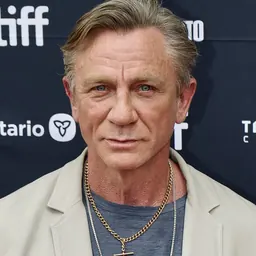
Related people
Same field, nearest in time

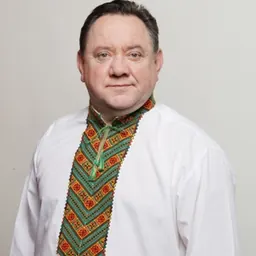
Contemporaries
People whose lives overlapped Christopher Eccleston's

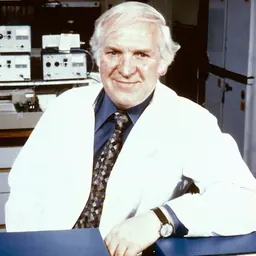
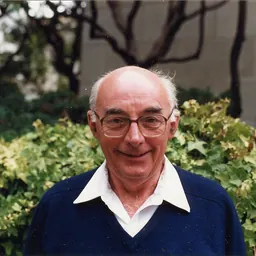
Frequently asked questions
Who is Christopher Eccleston?
English actor (born 1964)
When was Christopher Eccleston born?
Christopher Eccleston was born on 16 February 1964 in Langworthy.
What is Christopher Eccleston's occupation?
Christopher Eccleston is an actor, television actor, film actor, explorer, character actor and stage actor.
What nationality is Christopher Eccleston?
Christopher Eccleston is British.
Sources & further reading
· Wikipedia: Christopher Eccleston
· DBpedia: Christopher Eccleston
Cite this page
APA: Biography.guide. (2026). Christopher Eccleston. https://biography.guide/christopher-eccleston/
MLA: "Christopher Eccleston." Biography.guide, https://biography.guide/christopher-eccleston/.
Chicago: "Christopher Eccleston." Biography.guide. https://biography.guide/christopher-eccleston/.
Data last updated: 2026-09-21 · Spot an error? Report a correction.
Portrait: Wikimedia Commons · author & licence
Page generated 2026-09-27 04:59 UTC