
About Christoph Luxenberg
Born 2000. Christoph Luxenberg is a German non-fiction writer.
Christoph Luxenberg is the pseudonym of the anonymous author of the 2000 book The Syro-Aramaic Reading of the Koran and several articles about philology, textual criticism and exegesis in the study of the Quran and early Islam. The real identity of the person behind the pseudonym remains unknown. The most widely circulated version claims that he is a German scholar of Semitic languages.
Luxenberg claims to have chosen a pseudonym "upon the counsel of Arab friends, after these became familiar with my work theses," Asked if he feared a fatwa such as was issued against Salman Rushdie, Luxenberg replied "I am not a Muslim, so I don’t run that risk. Besides, I haven’t offended against the Koran". Nevertheless he elected to use a pseudonym as "some enthusiastic fundamentalist [might] act of his own initiative".
Biography Luxenberg has worked as a scholar, researcher, teacher and translator in Germany, including at German universities. His work focused on Semitic philology, classical Arabic, Syriac and other dialects. Luxenberg's doctoral thesis was on a Syriac manuscript of the 8th and 9th century that discussed homilies such as those of Jacob of Serugh from the 5th and 6th centuries that were often originally in Greek. Through comparison, Luxenberg realised that the translation from Greek into Syriac was often very literal and thus difficult to comprehend and reconstruct. The original Greek of one such reconstructed text, of which the original could not be found, was attributed by Luxenberg to Severus of Antioch. A Jesuit scholar from Rome later discovered a manuscript in Damascus that confirmed Luxenberg's conjecure. These experiences informed Luxenberg's theory about the language of the Quran.
Ibn Warraq spent several months working with Christoph Luxenberg.
Speculation on identity The pseudonym "Christoph Luxenberg" may be a play upon the name of Georg Christoph Lichtenberg, the "destroyer of myths," since Lux (Latin) translates as Licht (German), 'light'. :17
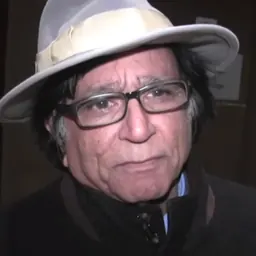
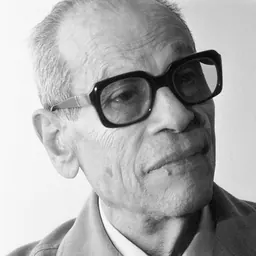
François de Blois (2003) criticizes the The New York Times attempt to compare Luxenberg with Salman Rushdie, Naguib Mahfouz and Suliman Bashear, because De Blois claims to have information that Luxenberg is not German but rather a Lebanese Christian. There is thus no reason "to avoid the death threats of rabid Muslim extremists" and Luxenberg has no right "to conceal his (or her) identity". De Blois also posits that Luxenberg has an articulate knowledge of dialectal Arabic, passable (though flawed) command of classical Arabic, and "knows enough Syriac so as to be able to consult a dictionary" and that it is impossible that Luxenburg is a professional scholar.
Federico Corriente (2004) in a review critical of Luxenberg's book, qualifies him as: "a very knowledgeable scholar endowed with an active and provocative mind, who has devoted considerable time and effort in an interesting attempt to cast light on an abstruse subject, surrounded by scientific and other perils. As stated above, he appears to have hit the mark at times, although his personal convictions and professional preferences have not contributed to keep him in the middle of the road or let him avail himself of all the extant data, even those which he probably knows well but has preferred to discard." :314
Books
The Syro-Aramaic Reading of the Koran (2000) In the 2000 book The Syro-Aramaic Reading of the Koran: A Contribution to the Decoding of the Language of the Koran Luxenberg proposes a new theory and method to interpret the Quran's text which is expanded on in later articles. Luxenberg argues that the Quran's language is a hybrid of Arabic and Syriac and that the Quran was originally a lectionary that borrowed for its content from Syriac Christianity.
Articles The articles by Luxenberg build on the same basic approach established in the 2000 book. :377 :165
Christmas and the Eucharist in the Qur'an (2003)
In the 2003 article "Weihnachten im Koran", published in English in 2013, Luxenberg argues that several Quranic suras relate to Christmas and the Eucharist and have their origin in pre-Islamic Syriac Christian strophic hymns.
In the traditional account Sura 97 (Al-Qadr) verse 1 refers to the night the entire Quran was sent down. But Luxenberg argues the vocabulary used "is strongly reminiscent of the Biblical description of the birth of Christ" and refers rather to the coming down of the Word of God as Christ. Furthermore, the word “shahr” in verse 3 is better read "sahr", corresponding to Syriac "shahra" meaning "night vigil". This verse thus reads: "Christmas night is better than a thousand night vigils" :17 Sura 96 (Al-Alaq) is reinterpreted not as the first revelation to the Prophet but as a liturgical preface calling the faithful to prayer and to the Eucharist — reading the final word iqtarib not as "draw near" (to God) but as deriving from the Syriac ܐܬûøܒ (eṯqarraḇ) "to receive Communion". In Surah 108, the traditionally enigmatic term al-Kawthar is reinterpreted not as a river of paradise but as referring to perseverance in prayer, with connections drawn to 1 Peter 5:8-9. :768 Furthermore, Dye supports the way Luxenberg reinterpreted Suras 97 and links it to a Christian hymn. Ibn Warraq (2014) summarises this as follows:"[Dye] builds on Luxenberg’s insights on Sura 97, submitting it, with patience and analytical brilliance, to the most thorough examination imaginable, suggesting every possible objection to Luxenberg’s thesis, and then answering those objections. Dye thereby strengthens Luxenberg’s position. Finally, he clinches the argument by proposing a Syriac text as the direct inspiration for Surah 97, namely Hymns on the Nativity by Ephrem the Syrian." :125 The Dome contains one of the earliest epigraphic mentions of the prophet Muhammed with the phrase “Muhammad is the servant of God and His messenger”. The rasm MHMD underlying “Muhammad” is understood by Luxenberg not as a proper name but reinterpreted in the sense of “praised be”. The inscription thus reads “Praised be the servant of God and His messenger” which fits in the surrounding context as a Christian anti-Trinitarian statement referring to Jesus, thus observing strict monotheism. :173 This reading also conforms to Quran Sura 19:30 in which infant Jesus begins his discourse with the phrase inni ʿabdu llāhi (I am the servant of God). :198
Jan van Reeth (2012) agrees with Luxenberg that "the name Muḥammad may very well be a title, given to the Prophet by his already ḥanafī family, pointing to a prophetic function, similar to that of the “first” Paraclete Jesus, without saying however that the Prophet Muḥammad would be an entirely fictitious, invented personality . . . In other words: Muḥammad has been in the strict sense (according to Gil’s understanding of the term) a ḥanīf, that is to say one of the electi and so he has been entrusted with the fullness of the divine message, as possessing the entire prophetical Spirit, the ‘Spirit Paraclete’ as Aphrahat would have said". :451-2
Van Reeth furthermore laments that Luxenberg "has been led astray" by speculations such as those of K.H. Ohlig, into believing that Muhammad is not an actual living, historical person. However, Ibn Warraq states that this does not accurately reflect Luxenberg's position: "Though he does hint that Muhammad, the Prophet of Islam, may only be a symbolic figure, Luxenberg is far from being dogmatic on this issue, pointing out that the historicity of Muhammad is 'a task for the historians.' Luxenberg does not claim to be a historian, and he is very careful in his choice of words". :579 Through philological analysis Luxenberg identifies four groups of letters from the Syriac and Arabic alphabets that were misread or mistranscribed for appearing similar.
Syriac Liturgy and the “Mysterious Letters” in the Qur’ān (2008)
(2017) considers Luxenberg's interpretation of the so-called mysterious letters "a sensible hypothesis" and suggests that they might also represent traces of bilingual "alterance (shift from one language to the other)".
No Mecca (Makka) or Bakkah in the Quran: On Suras 48:24 and 3:96 (2012) In the article "Kein ‘Mekka’ (Makka) und kein ‘Bakka’ im Koran: Zu Sure 48:24 und 3:96: Eine philologische Analyse" published in two parts in 2012, Luxenberg argues that the two references in the Quran to Mecca (alternatively in the form of Bakkah) are erroneous interpretations.
In Sura 48:24, he rejects the traditional reading of "fī baṭni Makka" as “in the valley of Mecca”. Luxenberg reads this contextually and philologically with baṭn interpreted as “in the midst” and with Makka interpreted via the Syriac root m'ak meaning “to press, struggle”. The verse then says God restrained both sides “in the midst of a clash”.
Other
Seal of the prophets The passage in sura al-Ahzab (33:40) that has usually been translated as "seal of the prophets" means (according to Luxenberg) "witness". By this reading, Muhammad is not the last of the prophets, but a witness to those prophets who came before him.
Crucifixion of Christ
Luxenberg suggests that the Quran affirms the crucifixion of Christ, contrary to the traditional reading. Thus Sura 4:157 which is traditionally rendered as "And they did not kill him, nor did they crucify him — but it only seemed so to them" should instead, according to a correct understanding of the grammar, be read as "but they did not kill him [in a way that ended his life], and they did not crucify him [unto death]. It only seemed to them [that the crucifixion killed him]." Luxenberg furthermore contents that early Muslims commemorated the crucifixion through the Friday prayer - just as it is celebrated by Christians on Good Friday.
Don’t just read it —
keep it.
Full-length biographies made to live with: read them, listen on the way to work, watch them tonight.
- E-book
- Audio
- Video
Instant download · yours to keep · every purchase keeps this site free
Important facts
People in Christoph Luxenberg's life
Named in this biography and alive at the same time


Related people
Same field, nearest in time






Contemporaries
People whose lives overlapped Christoph Luxenberg's


Frequently asked questions
Who is Christoph Luxenberg?
Islamic studies scholar
When was Christoph Luxenberg born?
Christoph Luxenberg was born in 2000.
What is Christoph Luxenberg's occupation?
Christoph Luxenberg is a non-fiction writer.
What nationality is Christoph Luxenberg?
Christoph Luxenberg is German.
Sources & further reading
· Wikipedia: Christoph Luxenberg
· DBpedia: Christoph Luxenberg
Cite this page
APA: Biography.guide. (2026). Christoph Luxenberg. https://biography.guide/christoph-luxenberg/
MLA: "Christoph Luxenberg." Biography.guide, https://biography.guide/christoph-luxenberg/.
Chicago: "Christoph Luxenberg." Biography.guide. https://biography.guide/christoph-luxenberg/.
Data last updated: 2026-09-20 · Spot an error? Report a correction.
Page generated 2026-09-27 05:08 UTC