
About Christian Kluttig
Born 1943. Christian Kluttig is a German conductor, university teacher and musician.
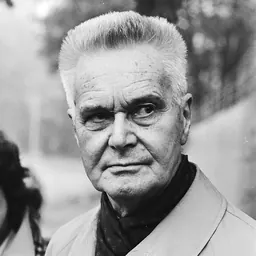
Christian Kluttig (born 17 August 1943) is a German conductor, pianist and Hochschullehrer. From 1979 to 1990, he was chief conductor of the . Appointed General Music Director in 1983, he worked as such at the theatres in Halle (Saale) and Theater Koblenz. The Handel interpreter rendered special services to the implementation of Historically informed performance in the Saale city, which made him one of the most important protagonists in this field in the GDR. He also devoted himself to Neue Musik, premiering Reiner Bredemeyer's opera Candide.
Life Kluttig was born in Dresden as a son of the cantor and subsequent Kirchenmusikdirektor Gottfried Kluttig (1913-2004). Kluttig had accordingly grown up with the music of Johann Sebastian Bach. In his hometown, he attended the Kreuzschule. Furthermore, he took part in conducting courses given by Arvīds Jansons and Igor Markevitch in Weimar as well as Hans Swarowsky and Witold Rowicki in Vienna.
After he had also undergone piano training in Dresden with Ingeborg Finke-Siegmund, There, he was active as an opera conductor for the first time with Le postillon de Lonjumeau by Adolphe Adam, Der Freischütz by Carl Maria von Weber and Die Zauberflöte by Mozart. In Dresden, he learned a lot from guest conductors such as Rudolf Kempe and Igor Markevitch during orchestral work. In a later interview (1985), he stated that his Wagner work so far had proved to be "a great happiness" for him. In 1975, he rose to the position of Musical Director. In addition, he devoted himself in Chemnitz to the symphonic work of Dmitri Shostakovich and Gustav Mahler. He also became chief conductor of the and took over all George Frideric Handel productions in Halle from 1979 to 1990. Thus he directed Ezio (1979), Agrippina (1980), Poro (1981), Alessandro (1983), Floridante (1984), Il pastor fido and Terpsichore (1985), Partenope (1985), Rinaldo (1987), Oreste (1988) and Tamerlano (1990). Kluttig received support regarding performance practice from the musicologist Bernd Baselt. Kluttig had to cope with "an immense workload and encrusted structures" in connection with the , according to opera director Andreas Baumann. Kluttig helped several singers socialised in Leipzig to get engagements in the Saale city, mainly on the recommendation of the singing teacher Helga Forner. Among the new recruits were Annette Markert, Juliane Claus, Hendrikje Wangemann, Jürgen Trekel and Tomas Möwes. For musicologist Karin Zauft, Kluttig was one of the pioneers of historical performance practice in the GDR The opera ensemble made guest appearances both in the so-called Eastern Bloc (Czechoslovakia, Poland, Hungary) as well as in the Federal Republic of Germany, Austria and Switzerland. and at the Dresden Music Festivals, guest appearances took him to the Kissinger Sommer even before the fall of the Wall. und zu den Innsbruck Festival of Early Music. In 1984, Der Preis by Karl Ottomar Treibmann was staged and in 1986 Candide by Reiner Bredemeyer was premiered. On the occasion of the Hallische Musiktage, he repeatedly premiered works by foreign composers with the Handel Festival Orchestra, such as in 1980 Avet Terterian's As Gilbert Stöck noted, Kluttig was also open to works by Gerd Domhardt. whose Symphony II was premiered. The declining attendance figures at the Landestheater Halle in the course of the Peaceful Revolution probably ultimately led to the resignation of the Kluttig and Baumann team.
After a guest appearance, in succession to James Lockhart Chief Conductor of the Staatsorchester Rheinische Philharmonie and, as it were, Musical Director of the Theater Koblenz. There, he cultivated both the operatic and the concert repertoire With the orchestra, he was responsible for the world premiere of Róbert Wittinger's
Kluttig once named Claudio Abbado as his artistic role model. For the music critic Wolf-Eberhard von Lewinski, he is "a sovereignly controlling and unpretentiously shaping conductor". The musicologist Peter Gülke attested to Kluttig's combination of "modesty [...] with the authority of the highly competent". for example, he brought the 1972 Piano Concerto by Manfred Weiss, a work commissioned by the Staatskapelle Dresden (soloist: ), and in 1983 at the New Gewandhaus together with the Leipzig Radio Symphony Orchestra Christfried Schmidt's "Munch music" premiered. Guest conducting engagements took him to the Staatsoper Unter den Linden and Dresden Rector Gustav Schmahl brought him to teach conducting at the University of Music and Theatre Leipzig. He additionally took over the university symphony orchestra (HSO) there at the end of the 1980s He also became the full-time director of the Leipzig HSO this time. He also conducted several courses of the at the Deutscher Musikrat (Koblenz 1993, 1996 and 1998, Hilchenbach 2001, Recklinghausen 2011). Until 2015 he was still a lecturer for conducting in Dresden. His students include among others Titus Engel, Stefan Sanderling and Ines Schreiner.
But then Kluttig suffered an irreversible hearing disorder, which forced him to end his conducting career in 2002. and board member of the Friends Society of the Dresden Academy of Music. He is married 1971: Mendelssohn Scholarship 1971/72. 1981: Handel Prize. 1983:Conferment of the title Generalmusikdirektor. 1998: Honorary Member of the Richard Wagner Association Koblenz.
Recordings Georg Friedrich Händel: Ode for St. Cecilia's Day (ETERNA, 1982 / Berlin Classics 1997) – Monika Frimmer, Eberhard Büchner, Chamber choir with members of the Halle State Theatre Choir, the Halle Choral Soloists and the Collegium vocale, Handel Festival Orchestra Halle Gerd Domhardt: 2. Sinfonie (NOVA, 1988) – Rundfunk-Sinfonie-Orchester Leipzig Christfried Schmidt: Munch-Musik (WERGO, 1994) – Rundfunksinfonieorchester Leipzig Engelbert Humperdinck: (Deutsche Schallplatten, 1996) – Nils Giesecke, Simone Kermes, Peter Edelmann, Lena Lootens, Staatsorchester Rheinische Philharmonie Róbert Wittinger: Sinfonia no. 5 (ANTES EDITION, 1998) – Staatsorchester Rheinische Philharmonie Louis Spohr: Konzertante Werke (Deutsche Schallplatten, 2003) – Staatsorchester Rheinische Philharmonie among others.
Don’t just read it —
keep it.
Full-length biographies made to live with: read them, listen on the way to work, watch them tonight.
- E-book
- Audio
- Video
Instant download · yours to keep · every purchase keeps this site free
Important facts
People in Christian Kluttig's life
Named in this biography and alive at the same time



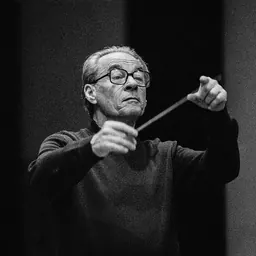
Related people
Same field, nearest in time


Contemporaries
People whose lives overlapped Christian Kluttig's



Frequently asked questions
Who is Christian Kluttig?
German conductor
When was Christian Kluttig born?
Christian Kluttig was born on 17 August 1943 in Dresden.
What is Christian Kluttig's occupation?
Christian Kluttig is a conductor, university teacher and musician.
What nationality is Christian Kluttig?
Christian Kluttig is German.
Sources & further reading
· Wikipedia: Christian Kluttig
Cite this page
APA: Biography.guide. (2026). Christian Kluttig. https://biography.guide/christian-kluttig/
MLA: "Christian Kluttig." Biography.guide, https://biography.guide/christian-kluttig/.
Chicago: "Christian Kluttig." Biography.guide. https://biography.guide/christian-kluttig/.
Data last updated: 2026-09-20 · Spot an error? Report a correction.
Page generated 2026-09-27 05:20 UTC