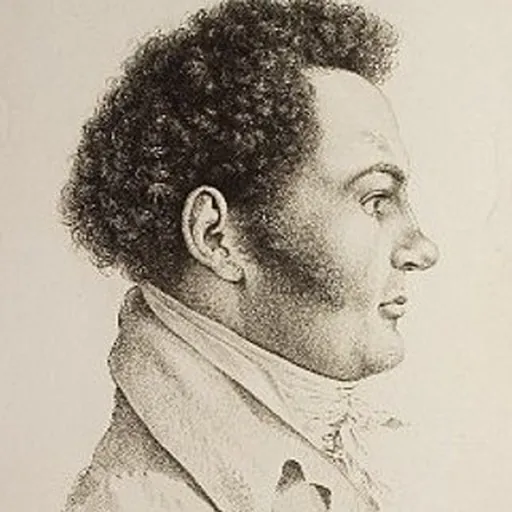
Christian Heinrich Pander
Baltic German zoologist and palaeontologist
About Christian Heinrich Pander
Lived 1794 – 1865 (aged 71). Christian Heinrich Pander was a Russian explorer, paleontologist, zoologist, geologist and botanist.
Christian Heinrich von Pander (; – ) was a Russian biologist and embryologist of Baltic German origin. He was among the first to identify distinct germ layers involved in the development of the embryo, coining the term "blastoderm". He has been considered as a "father of embryology" but he also worked on comparative anatomy, studying the skeletons of vertebrates, as well as fossils and geology.
Biography
Pander was born in Riga of prosperous German parents. His father Johann Martin was a banker married to Ursula. Pander had three brothers and four sisters. He went to a German gymnasium in Riga and went to the University of Dorpat in 1812, where he was influenced by Karl Friedrich Burdach. He then went to Berlin in 1814, Göttingen in 1816 and in 1817 he received his medical degree from the University of Würzburg, studying the development of chick embryos. From 1818 to 1829 he travelled to European museums, examining specimens, particularly of animal skeletons along with Eduard d’Alton (1772-1840). He spent several years (1827–1842), performing scientific research from his estate in Carnikava on the banks of the Gauja River near Riga. In 1820 he worked as an adjunct in zoology at the St. Petersburg Academy of Sciences and took part in a scientific expedition to Bokhara as a naturalist. In 1826 he became a member of the Saint Petersburg Academy of Sciences. From 1833 he lived on his family estate at Zarnikau. Pander was supported by his father until 1842 when his father died leaving him without an inheritance. After this Pander had to take up work, and was employed by the department of mining in St. Petersburg. It was during this time that he examined fossils, including those of conodonts which he found in his own estate.
Pander married Amalie von Scherer in 1825, and they had three sons and four daughters. In 1824 he suggested that there was a continuous change of metamorphism in plants and animals which would be cited by Darwin as a fore-runner of his own ideas.
Pander performed important studies in the field of paleontology, being known for his extensive research on fossils found in the Devonian and Silurian geological strata of the Baltic regions. His study of trilobites from this age led to the adjective 'Panderian', first used by the Canadian palaeontologist, Elkanah Billings. Pander is credited as the first scientist to describe primitive creatures known as conodonts.
Today the Pander Society is an international association of palaeontologists and stratigraphers with a common interest in the study of conodonts.
During travels in Turkestan in 1923 he contracted malaria and suffered subsequently. He died in Saint Petersburg following a surgery for kidney stones. His grave in the Smolenska Lutheran Cemetery is lost.
Eponyms
Pander is remembered in Pander's islands or blood islands Selected writings Beiträge zur Entwickelungsgeschichte des Hühnchens im Eye, (Contributions to the embryology involving the chick egg), (1817). Beiträge zur Naturkunde aus den Ostseeprovinzen Rußlands, (Contributions on the natural history of the Baltic regions) Dorpat, (1820). Vergleichende Osteologie (Comparative osteology) seven volumes, with Eduard Joseph d'Alton, Bonn: Weber, (1821–1828). Beiträge zur geognosie des russischen reiches, (Contributions to the geology of the Russian Empire), 1830. Monographie der Fossilen Fische des silurischen Systems der Russisch-Baltischen Gouvernements (Monograph of fossil fish from the Silurian stratum of the Baltic regions), St. Petersburg, (1856). Ueber die Placodermen des devonischen Systems, (On placoderms of the Devonian system), 1857. Über die ctenodopterinen des devonischen systems, 1858 Über die saurodipterinen, dendrodonten, glyptolepiden und cheirolepiden des devonischen systems, 1860.
Don’t just read it —
keep it.
Full-length biographies made to live with: read them, listen on the way to work, watch them tonight.
- E-book
- Audio
- Video
Instant download · yours to keep · every purchase keeps this site free
Important facts
People in Christian Heinrich Pander's life
Named in this biography and alive at the same time
Related people
Same field, nearest in time


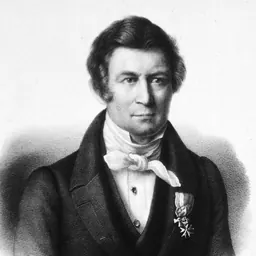
Contemporaries
People whose lives overlapped Christian Heinrich Pander's
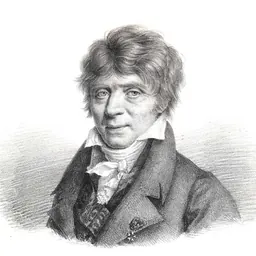




Frequently asked questions
Who was Christian Heinrich Pander?
Baltic German zoologist and palaeontologist (1794-1865)
When was Christian Heinrich Pander born?
Christian Heinrich Pander was born on 12 July 1794 in Riga.
When did Christian Heinrich Pander die?
Christian Heinrich Pander died on 10 September 1865 in Saint Petersburg.
What was Christian Heinrich Pander's occupation?
Christian Heinrich Pander was an explorer, paleontologist, zoologist, geologist and botanist.
What nationality was Christian Heinrich Pander?
Christian Heinrich Pander was Russian.
Sources & further reading
· Wikipedia: Christian Heinrich Pander
· DBpedia: Christian Heinrich Pander
Cite this page
APA: Biography.guide. (2026). Christian Heinrich Pander. https://biography.guide/christian-heinrich-pander/
MLA: "Christian Heinrich Pander." Biography.guide, https://biography.guide/christian-heinrich-pander/.
Chicago: "Christian Heinrich Pander." Biography.guide. https://biography.guide/christian-heinrich-pander/.
Data last updated: 2026-09-23 · Spot an error? Report a correction.
Portrait: Wikimedia Commons · author & licence
Page generated 2026-09-27 05:08 UTC