
About Choon-Soo Ryu
Born 1946. Choon-Soo Ryu is a South Korean architect.
Ryu Choon-soo (; born November 18, 1946) is a prominent South Korean architect, educator, and artist. He worked under Kim Swoo-Geun who was a pioneer of Korean modern architecture. He designed many projects both in South Korea and abroad, including the Seoul World Cup Stadium and the 868 Towers Apartments in Haikou. Currently, he is the CEO at Beyond Space architect associates.
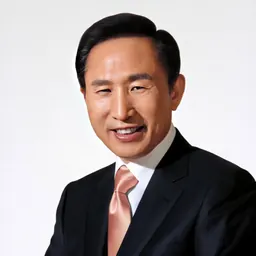
Biography Ryu Choon-su was born on November 18, 1946, in Bonghwa in North Gyeongsang province, South Korea. He graduated from Daegu High School in 1964 and majored in architecture in Hanyang University in 1970. After he graduated, he worked at General Architect Associates and Chonghap Architect Associates until 1974, and worked as the director of Space Group of Korea, which was established by Kim Swoo-geun. While working and learning under Kim Swoo-Geun, he also worked as a lecturer in the Architecture department of Hanyang University. Until 1986, he studied landscape architecture for a master's degree at the graduate school of environmental studies at Seoul National University. In 1986, he was one of the members who established Beyond Space Group, for which currently he is CEO. In 1990, he was appointed a board member of the Korean Institute of Architects, and in 1994, he was appointed as a National plan-check Committee Member in the Ministry of Construction of South Korea. In 2005, he became an expert advisor to the Cultural Properties Committee, and from 2008 to 2010, he served as member of the Presidential Commission on Architecture Policy under the regime of President Lee Myung-bak, the 10th president of South Korea.
Major works Han-Gae-Ryung service area building, 1982 This service area is located within one of the most famous national parks in South Korea, Seoraksan National Park. This work shows more active approach of integration of tradition and modern through use of wooden material and traditional architectural factors. This work was awarded Korean Institute of Architects award of BEST-7 in 1983.
Olympic Gymnastic Stadium, 1986 Olympic Gymnastic Stadium was built for gymnastic games of 1988 Seoul Olympics. Choon-Soo Ryu used cable tension structure for the roof structure of the stadium for the very first time in the world with Dr. Owen Geiger who was the expert of membrane structure. After they applied cable tension structure technique in this project, a lot of projects around the world started to implement this technique.
868 Towers, 1992 868 Towers is located in Hainan, China. This structure consists of two towers which have different height and functions. He tried to express the harmony of negative and positive which is oriental idea. A tower with 86 stories is for hotel and office, and expresses lightness and simplicity. Another one with 68 stories is residential tower, and expresses roughness and movement. Additionally, two towers are connected with the bridge. 868 Towers is significant because Choon-Soo Ryu intended to offer oriental paradigm, alternative to western concept of skyscrapers.
Seoul World Cup Stadium, 1997 Seoul World Cup Stadium is the great example of Choon-Soo Ryu's work which realizes Korean beauty, modernism and rationality. Some formative concepts which were reflected in this stadium were octagonal base which represents richness and roof's membrane structure which was abstracted by Korean traditional Bangpae Kite. the stadium expresses regionality and symbolism as main stadium during 2002 World Cup and gives structural efficiency and functional rationality which is required for major sports stadium.
Other works Wonju Chi-Ak gym, Wonju, South Korea, 1979 Busan Sajik baseball stadium, Busan, South Korea, 1980 Sarawak Stadium, Kuching, Malaysia, 1986 Sam-Ha-Ri residential houses, 1986 Ritz-Carlton Hotel, Seoul, South Korea, 1989 National Busan traditional music hall, Busan, South Korea, 2003 Departement of art and culture building of Kunkook University, Seoul, South Korea, 2004 Hainan 2020 Town, Hainan, China, 2006 Tongyeong maritime sports center, Tongyeong, South Korea, 2009
Awards Gold Medal "Quaternario 88" International Award / 88 Seoul Olympic Gymnastics Stadium, 1988 '95 Korean Architecture Awards / The Ritz-Carlton Hotel Seoul, 1995 The Duke Edinburgh Fellowship award, 2000 Seoul architect a gold prize / Seoul World Cup Stadium, 2000 IOC/IAKS award, 2007 AIA Honorary Fellowship, 2008 Okgwan Order of Culture Merit, 2011
Don’t just read it —
keep it.
Full-length biographies made to live with: read them, listen on the way to work, watch them tonight.
- E-book
- Audio
- Video
Instant download · yours to keep · every purchase keeps this site free
Important facts
People in Choon-Soo Ryu's life
Named in this biography and alive at the same time

Related people
Same field, nearest in time




Contemporaries
People whose lives overlapped Choon-Soo Ryu's

Frequently asked questions
Who is Choon-Soo Ryu?
South Korean architect
When was Choon-Soo Ryu born?
Choon-Soo Ryu was born on 18 November 1946.
What is Choon-Soo Ryu's occupation?
Choon-Soo Ryu is an architect.
What nationality is Choon-Soo Ryu?
Choon-Soo Ryu is South Korean.
Sources & further reading
Cite this page
APA: Biography.guide. (2026). Choon-Soo Ryu. https://biography.guide/choon-soo-ryu/
MLA: "Choon-Soo Ryu." Biography.guide, https://biography.guide/choon-soo-ryu/.
Chicago: "Choon-Soo Ryu." Biography.guide. https://biography.guide/choon-soo-ryu/.
Data last updated: 2026-09-20 · Spot an error? Report a correction.
Page generated 2026-09-27 05:33 UTC