
About Chirayathumadom Venkatachalier Subramanian
Lived 1924 – 2016 (aged 91). Chirayathumadom Venkatachalier Subramanian was an Indian botanist and lichenologist, known for Fungi imperfecti.
Chirayathumadom Venkatachalier Subramanian (11 August 1924 – 5 February 2016), popularly known as CVS, was an Indian mycologist, taxonomist and plant pathologist, known for his work on the classification of Fungi imperfecti, a group of fungi classified separately due to lack of specific taxonomic characteristics. He authored one monograph, Hyphomycetes: An Account of Indian Species, Except Cercosporae and three books, Hyphomycetes, taxonomy and biology, Moulds, Mushrooms and Men and Soil microfungi of Israel, besides several articles published in peer-reviewed journals. He was a recipient of many honours including the Rafi Ahmed Kidwai Award of the Indian Council of Agricultural Research, the Janaki Ammal National Award of the Government of India and seven species of fungi have been named after him. The Council of Scientific and Industrial Research, the apex agency of the Government of India for scientific research, awarded him the Shanti Swarup Bhatnagar Prize for Science and Technology, one of the highest Indian science awards, in 1965, for his contributions to biological sciences.
Biography C. V. Subramanian was born on 11 August 1924 at Kochi in Ernakulam district, the commercial capital of the south Indian state of Kerala, to T. D. Parvathi Ammal and C. M. Venkatachalier, a lawyer. He did his schooling at Sree Rama Varma High School, a government-run school in the city and did his early college studies at Maharaja's College after which he joined the Presidency College, Chennai from where he graduated (BSc Hons) with first rank in 1941. It was during this period he had the opportunity to meet M. O. P. Iyengar, the renowned algologist, who was known to have fostered Subramanian's interest in phycology. Before completing his master's degree (MA) in mycology in 1944, he prepared his first dissertation on Acanthus ilicifolius, a halophyte found in the saline waters of western coastal India. Subsequently, he joined Toppur Seethapathy SadasivanRefn|group=note|Toppur Seethapathy Sadasivan was the first recipient of the Shanti Swarup Bhatnagar Prize for Bialogical Sciences. During this period, he continued his researches and his published work, Floristic and taxonomic studies on Fungi Imperfecti, earned him the degree of DSc in 1957 from the University of Madras. A year later, the Indian Agricultural Research Institute created a new Chair in Plant Pathology and invited Subramanian to hold the position which he did till his move to the University of Rajasthan in 1960. There, he established the Department of Botany and headed the department as its founder professor till his return to Madras University in 1964 as a professor of Botany. In 1973, he succeeded his mentor, T. S. Sadasivan as the head of the Centre for Advanced Study in Botany, a position he held till his superannuation in 1985. He served as a member of the Indian National Science Academy, International Union of Biological Sciences, Royal Academies for Science and the Arts of Belgium and British Mycological Society. He was the president of the International Mycological Association in 1977 and presided over its annual congress held in Tokyo in 1983. The society has since grown to be a national organisation with 400 members and interest in studies related to taxonomy, ecology, pathology, genetics, molecular biology and physiology. The society also publishes a journal, Kavaka and he was its founder editor, holding the position till 1998. He was also a member of the University Grants Commission from 1977 to 1982. Major focus of his research was on Fungi imperfecti. He was known to have conducted extensive research on Hyphomycetes and his work has been detailed in a monograph, Hyphomycetes: An Account of Indian Species, Except Cercosporae, published in 1971 Dwayabeeja, Kutilakesa, Nalalanthamala, and Tharoopama are some of them. He worked on the re-assessment of Dematiaceous hyphomycetes and his work assisted in reclassifying the genus by attempting to disprove that Sporidesmium had a different ancestral species (monophyletic). He received the Shanti Swarup Bhatnagar Prize, one of the highest Indian science awards, from the Council of Scientific and Industrial Research in 1965. The Mycological Society of America selected him as their honorary member in 1983 and the Government of India awarded him the E. K. Janaki Ammal National Award for Taxonomy in 2000. The scientific community honoured Subramanian for his work; Subramaniula, Subramanianospora, Subramaniomyces, Subramania, Ceeveesubramaniomyces, Civisubramaniana and Ascosubramania are seven genera of fungi named after him.
Selected bibliography
Don’t just read it —
keep it.
Full-length biographies made to live with: read them, listen on the way to work, watch them tonight.
- E-book
- Audio
- Video
Instant download · yours to keep · every purchase keeps this site free
Important facts
People in Chirayathumadom Venkatachalier Subramanian's life
Named in this biography and alive at the same time
Related people
Same field, nearest in time

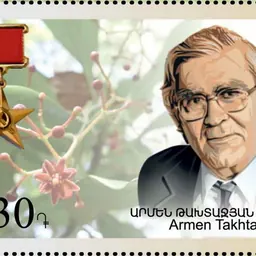
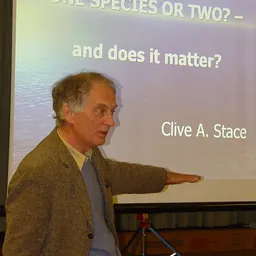

Contemporaries
People whose lives overlapped Chirayathumadom Venkatachalier Subramanian's
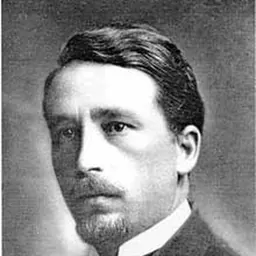

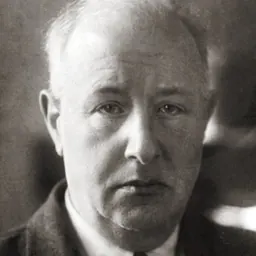

Frequently asked questions
Who was Chirayathumadom Venkatachalier Subramanian?
botanist (1924-2016)
When was Chirayathumadom Venkatachalier Subramanian born?
Chirayathumadom Venkatachalier Subramanian was born on 11 August 1924 in Ernakulam.
When did Chirayathumadom Venkatachalier Subramanian die?
Chirayathumadom Venkatachalier Subramanian died on 5 February 2016 in Bangkok.
What was Chirayathumadom Venkatachalier Subramanian's occupation?
Chirayathumadom Venkatachalier Subramanian was a botanist and lichenologist.
What was Chirayathumadom Venkatachalier Subramanian known for?
Chirayathumadom Venkatachalier Subramanian was known for Fungi imperfecti.
What nationality was Chirayathumadom Venkatachalier Subramanian?
Chirayathumadom Venkatachalier Subramanian was Indian.
Sources & further reading
· Wikipedia: Chirayathumadom Venkatachalier Subramanian
Cite this page
APA: Biography.guide. (2026). Chirayathumadom Venkatachalier Subramanian. https://biography.guide/chirayathumadom-venkatachalier-subramanian/
MLA: "Chirayathumadom Venkatachalier Subramanian." Biography.guide, https://biography.guide/chirayathumadom-venkatachalier-subramanian/.
Chicago: "Chirayathumadom Venkatachalier Subramanian." Biography.guide. https://biography.guide/chirayathumadom-venkatachalier-subramanian/.
Data last updated: 2026-09-20 · Spot an error? Report a correction.
Page generated 2026-09-27 04:58 UTC