
About Chick Strand
Lived 1931 – 2009 (aged 77). Chick Strand was an American collagist, filmmaker, film director, university teacher, film producer and director.
Mildred "Chick" Strand (December 3, 1931 – July 11, 2009) was an American experimental filmmaker and ethnographer based in California and Mexico. Chick Strand's filmmaking approach combined anthropological methods with experimental filmmaking techniques, and incorporated personal elements from her own life experiences with societal forces and realities. Strand contributed to the movement of women's experimental cinema in the early 1960s–1970's as "a pioneer in blending avant-garde techniques with documentary"
Biography Born Mildred D. Totman in Northern California she was given the nickname "Chick" by her father. Her father, Russel Totman, was a bank teller in the Bay Area. Her mother, Eleanor Totman, was a homemaker in Berkeley, CA. Strand described her family as "working people" who had lived in California for hundreds of years. She married her first husband, Paul Anderson Strand, in 1957, and they had one son, film editor Eric Strand, best known for his work on Donnie Darko.
Chick Strand studied anthropology at the University of California, Berkeley, and was interested in photography and collages due to taking a photography course early on in life before becoming involved in filmmaking. Strand met her second husband, Neon Park, an artist, in the early 1960s in Berkeley. They were collaborators in art and life for over 30 years, dividing their time between Los Angeles and San Miguel de Allende, a small town in Mexico. Neon Park died from ALS (Lou Gehrig's disease) in 1993.
Though Chick Strand often incorporated female characters and narratives in her film, she denies being a part of the Women's Movement. The films that she produced during the 1960s and 1970s reflected the cultural and political atmosphere of the United States during that time, resulting in the films expressing liberal and radical overtones evidenced in the exploratory nature of her films. Strand used images in film to project her belief of cultural relativity and the importance of context. Strand said most filmmakers involved "considered Canyon Cinema and the Cinematheque as sort of one thing but doing different things," Chick Strand made her first film at age 34.
Mosori Monika (1969) is a documentary about colonialism in Venezuela, told from the points of view of an elderly Warao woman, a Franciscan nun and the filmmaker herself. Other films on Latin America include Cosas de mi Vida (1976), Guacamole (1976) and Mujer de Milfuegos (Woman of a Thousand Fires) (1976). Soft Fiction (1979) is a short film that includes various personal narratives, told from the points of view of five women, mostly about their sexual and sensual experiences.
Style and themes Chick Strand is best known for her unique use of camera and film editing techniques to portray metaphorical meaning through image. Strand often used camera techniques such as image overlapping and superimposed images in her films. Sound and image are relied upon to convey meaning through Strand's films.
Strand used film as an ethnographic method for investigating the lived experiences of various communities. She believed that traditional anthropological research methods of ethnography could be fused with art through filmmaking. and the Tate. An early promotional film for Sears, made with Pat O'Neill and Neon Park, is held along with her complete body of work in the collection of the Academy of Motion Picture Arts and Sciences. The Academy Film Archive has preserved a number of Strand's films, including Cartoon Le Mousse, Eric and the Monsters, and Fever Dream. In 1996, Strand won the Maya Deren Award from the American Film Institute to honor independent avant-garde and experimental filmmaking. In 2011, Fake Fruit Factory was selected to the U.S. National Film Registry.
Legacy Chick Strand's aesthetic style, editing techniques and ethnographic approach to films about women are of interest to film scholars and are considered to have been "ahead of the time" Strand was working in. Her work has been reappraised by film scholars and continues to be studied for its influence in women's experimental cinema.
In 2023, a profile of Strand was featured in the New York Times Overlooked section, celebrating the impact of historical figures whose deaths went previously unreported by the newspaper.
Filmography Year Title 1964 Eric and the Monsters 1966 Angel Blue Sweet Wings 1967 Anselmo 1967 Waterfall 1970 Mosori Monika 1976 Cosas de mi Vida 1976 Elasticity 1976 Guacamole 1976 Mujer de Milfuegos (Woman of a Thousand Fires) 1979 Cartoon le Mousse 1979 Fever Dream 1979 Kristallnacht 1979 Loose Ends 1979 Soft Fiction 1986 Anselmo and the Women 1986 Artificial Paradise 1986 By the Lake 1986 Coming up for Air 1986 Fake Fruit Factory 1995/2011 Señora con Flores / Woman with Flowers
Don’t just read it —
keep it.
Full-length biographies made to live with: read them, listen on the way to work, watch them tonight.
- E-book
- Audio
- Video
Instant download · yours to keep · every purchase keeps this site free
Important facts
People in Chick Strand's life
Named in this biography and alive at the same time

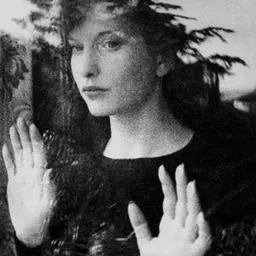


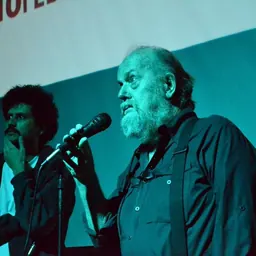


Related people
Same field, nearest in time
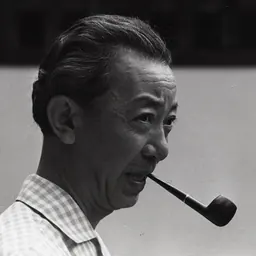

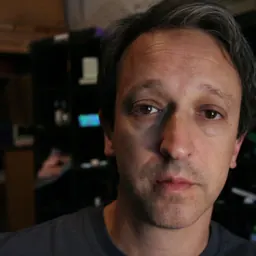

Contemporaries
People whose lives overlapped Chick Strand's

Frequently asked questions
Who was Chick Strand?
American filmmaker
When was Chick Strand born?
Chick Strand was born on 3 December 1931 in San Francisco.
When did Chick Strand die?
Chick Strand died on 11 July 2009.
What was Chick Strand's occupation?
Chick Strand was a collagist, filmmaker, film director, university teacher, film producer and director.
What nationality was Chick Strand?
Chick Strand was American.
Sources & further reading
Cite this page
APA: Biography.guide. (2026). Chick Strand. https://biography.guide/chick-strand/
MLA: "Chick Strand." Biography.guide, https://biography.guide/chick-strand/.
Chicago: "Chick Strand." Biography.guide. https://biography.guide/chick-strand/.
Data last updated: 2026-09-20 · Spot an error? Report a correction.
Page generated 2026-09-27 05:01 UTC