
About Chiba Takusaburō
Lived 1852 – 1883 (aged 31). Chiba Takusaburō was a Japanese samurai.
—also known as Chiba Takuron—lived as an obscure liberal political activist and schoolteacher in the late Tokugawa, early Meiji period. In his younger years, Takusaburō studied Confucian, Buddhist, Christian and Methodist thought. In his later years, Takusaburō devoted his life in disseminating the importance of liberty and rights for the people. His numerous texts include the draft constitution in 1880 (influenced by texts regarding English, German and American models of governmental structure), The Institutional Maxims of Chiba Takusaburō, Treatise on the Kingly Way, and On the Futility of Book Learning. Takusaburō died in late 1883 after a long battle with tuberculosis. Chiba Takusaburō attempted to bring forth a "grass roots" society, driven by the people. Chiba is emblematic of how the revolutionary spirit, more frequently attributed to men like Itagaki Taisuke, Ōkuma Shigenobu and Fukuzawa Yukichi, was existent in even low ranking samurai during the Freedom and People's Rights Movement or Jiyū Minken Undō.
Background After the fall of the Tokugawa shogunate in 1868, the Meiji era began. Though acting in the name of imperial interests, the Meiji Restoration consolidated all power to an oligarchy, composed of the old samurai elite. By the 1870s, political protest against the new Meiji government emerged. Formerly a leader of the Restoration, Itagaki Taisuke urged the public to end the tyranny of the inner elite dominating the government. This Freedom and People's Rights Movement petitioned for a national assembly elected by the people. When the government rejected the petition in 1874, the People's Rights Movement increasingly mobilized the agitated urban public. The voices of revolution and modern consciousness soon reached even remote mountain villages. thumb
Early life
On 17 June 1852, Chiba Takusaburō was born into a rural samurai family in the Shirahata village of Kurihara county. Separated from his biological mother at the age of three, Takusaburō was raised by his foster mother Sada along with his older brother Rihachi. At the age of 12, Takusaburō became a student of Confucian scholar Ōtsuki Bankei and began his formal education. However, his education at the Sendai domain school was cut short by the Boshin War. Answering the fervent cries of Sendai Domain troops to support the ruling Tokugawa government, Takusaburō left Ōtsuki to Shirakawaguchi where he engaged in combat twice against the new government army. When returning home, Takusaburō found his old teacher arrested and imprisoned for his role in resisting Satchōdo forces.
Sendai troops against Meiji government forces in April, 1868
"Wanderer Seeking Truth" After Bankei's arrest and the establishment of the Meiji government, Takusaburō began studying medicine under Ishikawa Ōsho. A progressive minded doctor near Sendai, Ōsho began his own studies under Itō Genboku and several Dutch doctors in Nagasaki in the late Tokugawa era. Greatly revered by Ōtsuki's students, Ōsho appealed to Takusaburō with his pioneering intellectual views. Facing a similar fate as Ōtsuki himself, Ōsho was arrested and imprisoned by the new Meiji government for "aiding and abetting the shōgun".
In 1868, Takusaburō began his studies of National Learning, known as kokugaku, under Nabeshima Ichirō in Kesennuma. In Nabeshima, an eccentric teacher educating students in both arithmetic and classical Japanese literature, Takusaburō hoped to discover the ideology of the Meiji government. Kokugaku studies encapsulated the philosophy behind the sonnō jōi movement "Revere the Emperor," and contributed to the dissent against the Tokugawa shogunate. Unlike Takusaburō's previous teachers, Nabeshima emphasized the importance of the return of the Emperor's rule and the divine spirit of the imperial ancestors. Four years later, in 1872, Takusaburō began his studies under a Pure Land Buddhist monk known as Sakurai Kyohaku. However, as Christian thought reached northeastern Japan, Takusaburō left his Buddhist studies after five months and turned to the tutelage of Father Nikolai.
Born as Ivan Dimitriyevich Kasatkin in 1836, Father Nikolai dreamed of traveling to Japan after reading Captain Vasily Golovnin's, Memoirs of a Captivity in Japan in St. Petersburg. When ordained in 1860, Father Nikolai received permission to reside in Hokkaidō as the new Russian consulate. Though he could not propagate Christian beliefs publicly, as anti-Christian bans were still imposed by Japanese government, Father Nikolai devoted seven years to the study of Japanese language, history, and Confucian and Buddhist thought. After he baptized his first Japanese converts in 1868, word reached the Pure Land Buddhist follower Takusaburō. Because Father Nikolai's new spiritual ideals assimilated traditional conservative beliefs, Russian Orthodoxy became increasingly popular among the "ruined samurai" class which included Takusaburō. When returning to Sendai, the newly Peter Chiba (Takusaburō) was arrested because of his religious preaching and disputes with the Buddhists and Shintoists in his community. After completing his hundred-day prison sentence, Takusaburō returned to Father Nikolai's seminary in Ochanomizu, Tokyo.
In 1872, the Japanese government confronted Father Nikolai, with accusations that Father Nikolai disparaged the Meiji Emperor in his sermons. In response, Father Nikolai's beliefs stressed the submission to the Emperor and state authority as true faithfulness to God. Consequently, Takusaburō grew increasingly detached to Father Nikolai's mission. Kumoi's poem would later inspire and rouse the interests of the Freedom and People's Rights Movement supporters, which would include Takusaburō.
After Yasui Sokken's death ten months after Takusaburō's admission, Takusaburō left to study under French Catholic priest Father François Paulin Vigroux, a member of the Paris Foreign Missions Society who had traveled to Japan in 1873. Coined as a "walking priest", Vigroux traveled a Catholic circuit through Japan's major cities every month. While Takusaburō accompanied Vigroux on these tours, Takusaburō first became acquainted with the residents of Itsukaichi, where he would eventually end his years of wandering. Under this provision, the Kannō School was opened as an elementary school in Itsukaichi in 1876, headed by Naganuma Orinojō. After hearing of the many Sendai men already appointed, Takusaburō joined the school in 1880. The new Learning and Debating Society became the ground for local activists to improve debating and oratory skills and increase the level of political discussion. An active member of the group, Takusaburō soon grasped the essence of the natural rights theory. That same year, Takusaburō began privately lashing out against the Meiji government who "deprived" the Japanese of their "most precious freedoms". Though the new government had seemingly maintained order behind their reformist policies, Takusaburō believed that unbeknownst to the Japanese, it came at an enormous cost of "our brothers' blood, sweat, and toil".
In that same month, Takusaburō was approached by a regional Freedom and People's Rights meeting known as the Musashi Friendship Society or Bushū konshin kai convening the directors of the organization. A month later, Takusaburō received a copy of the Ōmei Society draft constitution, which guided his own ideas. In his research, Takusaburō came across collections of John Stuart Mill's Considerations on Representative Government, A. Chambers' A Constitutional History of England, Francis Lieber's On Civil Liberty and Self-Government, and Bernhard Windscheid's Introduction to German Civil Law among many others. Using these texts, Takusaburō hoped to adopt European and American ideas to model a democratic future for Japan as well.
On 6 July 1881, an edict passed by the Kanagawa prefectural governor prohibited elementary school teachers from personally engaging in any political activity. Takusaburō resigned his position at the Kannō Elementary School in response to this edict which coincided with disputes with the school principal Naganuma, and left for Sayama. Later that year, Nagunuma resigned from his position after nine years at the Kannō School. Months later, Takusaburō wrote the Treatise on the Kingly Way, a guide to administer the "Kingly Way" or the "Great Way of Governance". In his text, Takusaburō emphasizes that while people's rights and freedom must be protected, limits on their power must also be exercised—likewise, restraints must also be placed on the Imperial rule. By keeping both these forces into balance, the society can exist in "Great Harmony".
Western philosophers such as John Stuart Mills aroused "the spirit of enterprise" among the public with doctrines on the natural and inherent rights of man. Political protest was essential to the independent spirit. As freedom propagandist Ueki Emori argued in 1879, "[Nature] endows men with freedom. If people do not take this natural endowment, it is both a great sin against nature and a great disgrace to themselves." Chiba Takusaburō, along with powerful figures such as Itagaki Taisuke, is emblematic of the "grass roots" philosophy. Chiba's vision of a free Japan deconstructed the traditions of the lower class, and became the driving force of the Freedom and People's Rights Movement.
Don’t just read it —
keep it.
Full-length biographies made to live with: read them, listen on the way to work, watch them tonight.
- E-book
- Audio
- Video
Instant download · yours to keep · every purchase keeps this site free
Important facts
People in Chiba Takusaburō's life
Named in this biography and alive at the same time
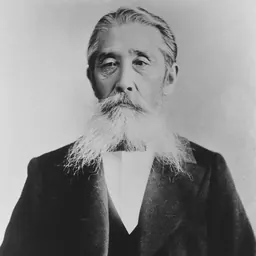

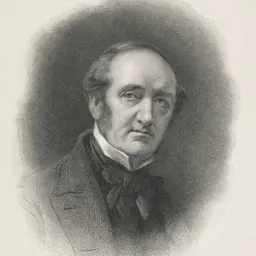
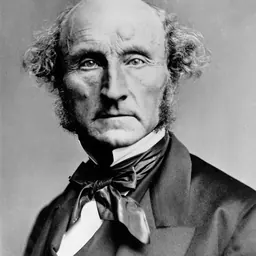

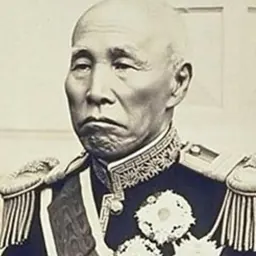

Related people
Same field, nearest in time




Contemporaries
People whose lives overlapped Chiba Takusaburō's


Frequently asked questions
Who was Chiba Takusaburō?
Japanese politician
When was Chiba Takusaburō born?
Chiba Takusaburō was born on 17 June 1852.
When did Chiba Takusaburō die?
Chiba Takusaburō died on 12 November 1883.
What was Chiba Takusaburō's occupation?
Chiba Takusaburō was a samurai.
What nationality was Chiba Takusaburō?
Chiba Takusaburō was Japanese.
Sources & further reading
Cite this page
APA: Biography.guide. (2026). Chiba Takusaburō. https://biography.guide/chiba-takusaburo/
MLA: "Chiba Takusaburō." Biography.guide, https://biography.guide/chiba-takusaburo/.
Chicago: "Chiba Takusaburō." Biography.guide. https://biography.guide/chiba-takusaburo/.
Data last updated: 2026-09-20 · Spot an error? Report a correction.
Page generated 2026-09-27 05:17 UTC