
Chetana Nagavajara
Thai academic administrator and professor of German language
About Chetana Nagavajara
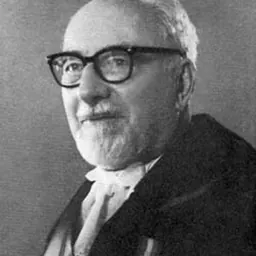
Born 1937. Chetana Nagavajara is an academic administrator, university teacher and germanist.
Chetana Nagavajara ( ; born 19 July 1937) is a Thai scholar and Professor Emeritus of German language at Silpakorn University. He has made contributions to academia, literary criticism, and higher education policy in Thailand.
At Silpakorn University, Nagavajara served as Dean of the Faculty of Arts from 1976 to 1979 and as Vice President from 1979 to 1981. Outside the university system, he participated in formulating national higher education policies by holding series of government-appointed roles.
His field of study includes comparative literature, German literature, and literary criticism. Writing in Thai, English, and German, he has made a significant quantity of work accessible to scholars as well as to the general reading public. His work has been recognized with awards including the Goethe Medal, the Humboldt Research Award, and the Narathip Award, as well as honorary doctorates from five Thai universities and the University of Tübingen in Germany.
Through his scholarly contributions and public engagements, Nagavajara is a leading figure in advancing the study and practice of arts criticism in Thailand. His academic exchanges in the United States and Germany, supported by various grants, have contributed to connecting Western and Thai intellectual traditions. Nagavajara commuted daily along Phaya Thai road on his bicycle, and showed enthusiasm for music and sports, which attached him to the community.
Nagavajara cycled every day as a child to Phaya Thai Road. His early life was marked by an enthusiasm for music, learning, and sports as a kid. His love for music was promoted by his father, his English proficiency was developed by his mother, and his oral literature knowledge was provided by his grandmother. He also participated in singing contests at temple fairs, demonstrating his passion for music and performance since childhood. They together have three children: Tasana, a violinist and faculty member of the faculty of music, Silpakorn University; a daughter who holds an executive position at an American research corporation; and another daughter who owns a restaurant in Mexico.
Nagavajara continued his higher education studies at the Faculty of Arts, Chulalongkorn University.His academic performance earned him a Thai Government Scholarship to pursue further education in the United Kingdom. He spent three years in Manchester, studying German and Latin language and literature in addition to his main coursework.
He later attended Cambridge University, where he completed a Bachelor of Arts with Honours in Modern Languages. In 1961, he ventured to Germany to study comparative literature under Kurt Wais, culminating in the award of a Dr.phil. (magna cum laude) in Comparative Literature from the University of Tübingen in 1965.
Ministry of education and Silpakorn University n 1968, Chetana Nagavajara began his career in Ministry of Education. Later that year, he joined the newly established Sanam Chandra Palace campus of Silpakorn University in Nakhon Pathom, beginning his long association with the institution.
As one of the founding faculty members at the campus, Nagavajara played a central role in establishing the German Department. laying the foundation for the department's academic pursuits and contributions. His academic work extended beyond Silpakorn University through his appointment as deputy director of the Southeast Asian Ministers of Education Secretariat (SEAMEO Secretariat) under the Southeast Asian Ministers of Education Organization (SEAMEO) Secretariat, where he served for four years. During his tenure, he was awarded the Goethe Medal in 1972. In his final two years at SEMEO, he served as a deputy director of SEMEO's secretariat office.
Returning to Silpakorn University in 1976, Nagavajara became the Dean of the , a position he held until 1979. During his time as Vice President, he supported the establishment of the social studies division within the faculty. In 1983, he was promoted to full professor in recognition of his academic contributions.
Nagavajara's academic pursuits transcended internationally. He was a visiting scholar at the University of Michigan-Ann Arbor in 1985 and 1992, and served as a Fulbright Visiting Professor at the University of California, Berkeley during the 1989-1990 academic year. His research activities in Germany were supported by the Deutscher Akademischer Austauschdienst (DAAD), and he received the Humboldt Research Award (Humboldt-Forschungspreis) from the Alexander von Humboldt Foundation.
Retirement On 30 September 1997, Chetana Nagavajara retired from public service as a senior professor (level 11), the highest attainable rank for a civil servant in Thailand (, ). In a 1998 interview with the Bangkok Post, he stated that his decision to remain a civil servant was motivated not by personal preference, but by deep sense of gratitude toward the Thai government for the scholarship that had supported his education in Europe.
Despite his official retirement from full-time public service, Nagavajara remained active in academia, participating in government commissions, university councils, and leading research projects. Throughout this period, he continued to receive honorary doctorates and other awards recognizing his contributions to education and scholarship. This project helped catalyze a number of Thai arts and criticism initiatives in subsequent years.
Nagavajara's doctoral dissertation, completed in 1965, examined August Wilhelm Schlegel's role in French literary criticism from 1807 to 1835. It was published as his first book in German by in 1966. he monograph was praised for its balanced mediation between French and German literary traditions, and was later cited by Roger Paulin alongside other sources, in the biography of Schlegel. His subsequent publications include "Brecht and France," (1993), released by Peter Lang in English,
In addition to his original scholarship, Nagavajara translated over 50 poems from German into Thai. Notable examples include "Geschrieben" by Werner Lutz, "Ein Tag für Impressionisten" by and "Der Aufruf" by Friederike Mayröcker.
Reviewers highlighted Nagavajara's incorporation of Thai cultural theory, particularly his use of the "Tritsadi Ranat Thum" (, directly translated as "bass xylophone theory"). After the conclusion of initial Thailand Research Fund grants (1999–2001 and 2002–2005), the projects continued under new leadership, with Nagavajara remaining involved as a senior advisor until the final TRF-funded project ended in 2020. And later projects were supported by Kasikornbank (, ) during 2021-2022.
Subjects of criticism included leading Thai writers such as Chart Korbjitti, Angkarn Kalayanapong, Sri Burapha, Atsiri Thammachot, , , Thailand Philharmonic Orchestra. Visiting foreign orchestras and soloists were also reviewed. In addition, Nagavajara and his team analyzed translated stage productions, including Bertolt Brecht's Der gute Mensch von Sezuan (The Good Person of Szechwan) and Jean Anouilh's Antigone (อันตราคนี or Antrakani in Thai). Some of these criticism works in this area are published on the Thailand Research Fund Criticism Project .
Nagavajara's significant notions in arts and criticism include: "One art lights the way for another" , an idea originally from Wetzel, a comparative literature scholar. Nagavajara applied this concept to Thai society and the arts, emphasizing that different branches of art support and inspire one another. "The role of amateurs in advancing the arts," highlighting the importance of audience participation and amateur artists in sustaining the arts. He argued that the boundary between professional artists, amateurs, and audiences is thin and fluid. "Technology and product manufacturing deplete the value of art," criticizing how rising fees for star performers strain larger ensembles financially, and how high-fidelity (Hi-Fi) technology promotes unrealistic standards of perfection, influencing composers to prioritize technological demands over artistic integrity.
Humanities education and Thai higher education Nagavajara writes extensively about humanities education and higher education in Thailand. His first book on a humanities theme "For survival of the humanities" was published in 1989 and sequels to the first, "Humanities in crisis: a Thai case study" and "Standpoint of humanities" and "Cultural Consciousness: the Foundation of Thai Higher Education" (2016) given at the workshops "Deans for Change" were published as books by the Knowledge Network Institute of Thailand (KNIT) and were later included in two of his other books. Prince of Songkla University (2008–2012) and Mahidol University (2008–2016). He was a member of the Governing Board of Ministry of State University Affairs (, ) for more than a decade (1987–1990, 1992–2002). As Thai higher education making a transition into autonomous universities, the board was changed into Civil Servant Commission in Higher Education Institutions (, ) and he continued to serve as a member (2005–2009). These appointments to high-profile public positions were royally endorsed by the King and published in the Government Gazette of Thailand.
Alongside his mentors Kurt Wais and , Nagavajara played a pivotal role in realizing the collegiate system's educational ideal, conceived by ML Pin Malakul, former Minister of Education and former President of Silpakorn University, alongside his young colleagues. Released in 2011, the manual provides details and clarity for the interpretation of the Thai Ministry of Education rules for academic promotion of tertiary instructors which were nationally standardized and enacted for the first time in 2007.
Influences
Nagavajara was profoundly influenced by renowned figures in the arts and literary criticism domain, including Charles Baudelaire, Bertolt Brecht, Albert Camus, Neville Cardus, Reinhold Grimm, Alexander von Humboldt, F. R. Leavis, Ekavidya Nathalang, Ronald Peacock, , Friedrich Schiller, , René Wellek. Throughout his career, Nagavajara had also created impacts and influenced others in his fields too.
Well-known notions Nagavajara introduced the term "culture of criticizing", which has been used as a reference among students, scholars, and others. Societies that are aware of problems and issues would create a "Culture of criticizing", which means that the members of that society support sharing opinions openly and rationally. In the sense that culture is a way of life, a culture of criticizing is the way of life of people who are willing to give and take criticism to make things better. Nagavajara has wide experience being inside the art and literature criticizing circle for multiple decades since 1998. Bangkok Post mentioned Chetana as "...The criticizer who writes sharply, his opinions could make screen writers review their works again despite being in the middle of the show and selling like hot cakes. And visual artists also pay good attention to what he comments..."
Recognition from art and academic society
The life and works of Nagavajara were studied in the research project "Thai thinker-researcher: Chetana Nakavajara", which was supported by the Thailand Research Funds in 1998. According to the project, Nagavajara's ideology is built upon a foundation of humanism combined with free-democracy, and fuses ideas from western and eastern culture. His publications, written in both German and English, have been recognized by international academic scholars, including academics from other disciplines. For instance, Professor Wanchai De-Eknamkul who was awarded Humboldt-Forschungspreis said: "Professor Nagavajara's dedication resembles that of a general in the field of Humanities and Social Sciences, able to stand firm against the scientific field with great honor. Currently, I greatly appreciate the valuable knowledge imparted by him." Academics and artists who have been influenced by Chetana Nagavajara include Korakoch Attaviriyanupap, , Sodchuen Chaiprasathna, Kanya Charoensupkul, Duangmon Chitchamnong, Parichart Chuengwiwattanaporn, Khumron Khunadilok, Suntariya Muanpawong, Pradit Prasartthong, Ratsami Chusongdet, Siraporn Na Klang, and Sukanya Sompaiboon.
Children's Novel
Nagavajara's role in the series of TRF-funded criticism projects inspired an award-winning children novel Khun Pu Waen Ta To ( , 2001) by , a 2014 national artist of Thailand in literature. The grandfather in the story was modeled after him and the children in the story represented team members of the research project. The sequel to the novel Khun Pu Waen Ta Taek ( ,2011) by the same author also featured him as the main character with a new batch of primary level students. The adventures of a grandfather and children in field trips to Wat Pho, National Gallery, Bang Lamphu, Amphawa and Spirit Cave at Pang Mapha and attempts to instill appreciation of the arts and their native roots were the main themes in the two books. Frequent reference to Siam Devadhiraj by the grandfather to express his frustration and various remarks on grandfather's connections to Germany in the two books were inspired by unique characters of Nagavajara.
Arguments and controversies
In August 1998, during the last seminar in the series for this TRF-funded project, poets took an exception to what he presented as "representative Thai poetry" which include lyrics from modern pop songs by Seksan Sukpimai, or commonly known as Sek Loso, but not highly-regarded modern classics. In his interview with the Bangkok Post, he explained that "The protest by the poets at last August's seminar was brief, and had to do with a misunderstanding concerning the concept of value in poetry." Chulalongkorn University in 2004, Mae Fah Luang University in 2005, Chiang Mai University in 2006 and University of Tübingen in 2009. Granting a second doctorate to the same person in this way was unprecedented at the University of Tübingen and his case has set precedent. 1999–2002: Vice President of International Federation for Modern Languages and Literatures 1982–1988 Member of the Literary Theory Committee of the International Comparative Literature Association (ICLA) 2017: 2009: Award for Distinguished Authority on the Thai Language, Ministry of Culture, Thailand 1995: Inaugural TRF Senior Research Scholar 1984, 1992: Fulbright Visiting Scholar at University of Michigan-Ann Arbor (twice)
Decorations Thailand
Germany
Humanities and Higher education For survival of the humanities (1989) Old school VS New school: Thai Humanities in Correlation to Change (2005) From (Selfless) Giving to Commodification: The Dilemma of Higher Education (2013) Cultural Consciousness: the Foundation of Thai Higher Education (2016)
Don’t just read it —
keep it.
Full-length biographies made to live with: read them, listen on the way to work, watch them tonight.
- E-book
- Audio
- Video
Instant download · yours to keep · every purchase keeps this site free
Important facts
People in Chetana Nagavajara's life
Named in this biography and alive at the same time




Related people
Same field, nearest in time



Contemporaries
People whose lives overlapped Chetana Nagavajara's



Frequently asked questions
Who is Chetana Nagavajara?
Thai academic administrator and professor of German language
When was Chetana Nagavajara born?
Chetana Nagavajara was born on 19 July 1937.
What is Chetana Nagavajara's occupation?
Chetana Nagavajara is an academic administrator, university teacher and germanist.
Sources & further reading
· Wikipedia: Chetana Nagavajara
Cite this page
APA: Biography.guide. (2026). Chetana Nagavajara. https://biography.guide/chetana-nagavajara/
MLA: "Chetana Nagavajara." Biography.guide, https://biography.guide/chetana-nagavajara/.
Chicago: "Chetana Nagavajara." Biography.guide. https://biography.guide/chetana-nagavajara/.
Data last updated: 2026-09-20 · Spot an error? Report a correction.
Page generated 2026-09-27 05:16 UTC