
Cherry Kinoshita
Japanese American activist
About Cherry Kinoshita
Lived 1923 – 2008 (aged 84). Cherry Kinoshita was an American.
Cherry Tanaka Kinoshita (, October 13, 1923 – July 29, 2008) was a Japanese American activist and leader in the Japanese American Citizens League (JACL). She helped found the Seattle Evacuation Redress Committee and fought for financial compensation for Japanese Americans who had been incarcerated during World War II.
Early life Cherry Kinoshita was born in Seattle, Washington, on October 13, 1923, to Eiichi and Yo Tanaka. She grew up in the Green Lake neighborhood and graduated from Lincoln High School in 1941. Her parents owned a local dry-cleaning business. The FBI surveilled and interrogated Japanese Americans prior to and during WWII and conducted raids on Japanese American homes. Kinoshita's father was questioned by the FBI for owning a shortwave radio.
On February 19, 1942, President Franklin D. Roosevelt signed Executive Order 9066. The Order authorized the incarceration of all Japanese Americans (both those born in the U.S. and those born in Japan). Around 110,000 Japanese Americans were removed from their homes on the West Coast and relocated to internment camps. Executive Order 9066 also allowed John L. DeWitt, the Lieutenant General of the Western Defense Command and a strong supporter of internment, to place a curfew on Japanese Americans. This curfew was imposed throughout the West Coast, and included citizens like Kinoshita who were living in Seattle. In an interview, Kinoshita recalled that the curfew instilled a sense of fear in her community and that the FBI would pick up people who disobeyed the restrictions. Accompanying these orders to systematically remove and relocate Japanese Americans were "Instructions to All Persons of Japanese Ancestry". Kinoshita and her family were instructed to report to Union Station before further transfers. In addition to information about where and when "all persons of Japanese ancestry, both alien and non-alien",
In addition to selling their goods and property below value, many Japanese Americans had their homes looted. When FBI agents and police officers performed interrogations, they broke into homes and made it easy for criminals to enter. After the Japanese American families left their homes for internment camps, an estimated 80% of their belongings that were stored by private companies were stolen. Residents, like Kinoshita, came from the Seattle area as well as from Tacoma and the state of Alaska. Puyallup was in use from April 28, 1942, to September 12, 1942. The Center was active from August 10, 1942, to October 28, 1945. The residents were from the states of Washington, Oregon, and Alaska. At Minidoka, the internees published a weekly newspaper that was printed for the residents. The publication, The Minidoka Irrigator, ran from September 10, 1942, to July 28, 1945. Kinoshita "was a reporter and editor for the newspaper, with a column in the newspaper called "Feminidoka", where she wrote about topics such as fashion and hairstyles. In an interview with The Seattle Times, Kinoshita acknowledged that it was challenging to write about meaningless subjects while they were interned. She maintained that while the newspaper writers were not directly rebellious, some of the columns and articles clearly questioned the justification of the Center and of their imprisonment.
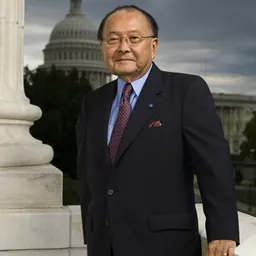
After World War II (1945-) After WWII, Kinoshita moved back to Seattle with her husband. She joined the Seattle chapter of the Japanese American Citizens League (JACL). The Seattle JACL is the oldest Asian American civil rights organization in the United States. Before Kinoshita joined, the JACL was active during WWII and won the right for Japanese Americans to serve in the U.S. Armed Forces. Kinoshita worked with individuals like Henry Miyatake in the Seattle JACL Chapter to discuss the idea of individual compensation for internment. In 1977, Kinoshita was elected president of the Seattle Chapter of the JACL, the second woman to hold the position since the organization's founding in 1929. She worked with members of her chapter to send out an "Appeal for Action" to JACL Chapters across the nation, urging them to come together to fight for monetary compensation for internment. Japanese American congressmen worked to pass the Commission on Wartime Relocation and Internment of Civilians Act, sponsored by Senator Daniel Inouye of Hawaii.
When the Commission on Wartime Relocation and Internment of Civilians (CWRIC) was established in 1980, Kinoshita helped prepare community members to attend hearings and to provide testimonies. The CWRIC was a bipartisan effort established by Congress to understand the impact of Executive Order 9066 on Japanese American citizens. The CWRIC hearings were led by a committee of nine federally appointed investigators. The investigators heard from approximately 750 participants in hearings that took place in Washington, D.C., Los Angeles, San Franicsco, Seattle, Chicago, New York City, and Cambridge, Massachusetts between July and December 1981. in July 1981. The hearings and the report also led to the passage of the Civil Liberties Act of 1988, which provided monetary reparations of $20,000 to individuals who had been placed in internment camps. Signed into law by President Ronald Reagan, the Act also provided a public apology and an education fund to those who were interned. Kinoshita had been instrumental in having a provision removed from the draft legislation which would have denied payment to the estates of eligible persons who died during the payment process.
In addition to fighting for redress on a national level, Kinoshita fought for financial compensation for internees in her home state of Washington. In 1983, Kinoshita and other members of the Seattle JACL successfully lobbied Washington Governor John Spellman to sign a redress bill compensating thirty-eight Japanese American state employees who had been fired because of Executive Order 9066. In Seattle, Kinoshita worked to and was able to secure financial compensation for 27 Nikkei employees in the Seattle school district, all women, who had been forced to resign in 1942 in response to the attack on Pearl Harbor.
Personal life Kinoshita met her husband, Masao Kinoshita, at the Minidoka Internment Camp and they married in 1948. For two years during WWII, her husband served in the U.S. Military Intelligence Service in Japan. When the couple moved back to Seattle after the war, they started their family in the Mount Baker neighborhood before moving to the south part of Beacon Hill. Kinoshita helped run the family business, Capitol Hill Automotive. In 1953, Kinoshita gave birth to their son, Kyle.
At age 60, Kinoshita attended the University of Washington where she received a bachelor's degree in sociology. She graduated in 1984 with honors.
On July 29, 2008, Cherry Kinoshita died at Swedish Hospital in Seattle, Washington, two weeks before the twentieth anniversary of the Civil Liberties Act of 1988.
Awards and honors In 2004, Governor Mike Lowry nominated Kinoshita for the Washington State Jefferson Award for her work fighting for Japanese redress and promoting the Civil Liberties Act of 1988.
Don’t just read it —
keep it.
Full-length biographies made to live with: read them, listen on the way to work, watch them tonight.
- E-book
- Audio
- Video
Instant download · yours to keep · every purchase keeps this site free
Important facts
People in Cherry Kinoshita's life
Named in this biography and alive at the same time






Contemporaries
People whose lives overlapped Cherry Kinoshita's


Frequently asked questions
Who was Cherry Kinoshita?
Japanese American activist
When was Cherry Kinoshita born?
Cherry Kinoshita was born on 13 October 1923 in Seattle.
When did Cherry Kinoshita die?
Cherry Kinoshita died on 29 July 2008.
What nationality was Cherry Kinoshita?
Cherry Kinoshita was American.
Sources & further reading
Cite this page
APA: Biography.guide. (2026). Cherry Kinoshita. https://biography.guide/cherry-kinoshita/
MLA: "Cherry Kinoshita." Biography.guide, https://biography.guide/cherry-kinoshita/.
Chicago: "Cherry Kinoshita." Biography.guide. https://biography.guide/cherry-kinoshita/.
Data last updated: 2026-09-20 · Spot an error? Report a correction.
Page generated 2026-09-27 05:19 UTC