
About Charlotte Perriand
Lived 1903 – 1999 (aged 96). Charlotte Perriand was a French architect, designer, interior architect, exhibition curator, photographer and art theorist.
Charlotte Perriand (; 24 October 1903 – 27 October 1999) was a French architect and designer. Her work aimed to create functional living spaces in the belief that better design helps in creating a better society. In her article "L'Art de Vivre" from 1981 she states "The extension of the art of dwelling is the art of living — living in harmony with man's deepest drives and with his adopted or fabricated environment." Charlotte liked to take her time in a space before starting the design process. In Perriand's Autobiography, "Charlotte Perriand: A Life of Creation", she states: "I like being alone when I visit a country or historic site. I like being bathed in its atmosphere, feeling in direct contact with the place without the intrusion of a third party." Her approach to design includes taking in the site and appreciating it for what it is. Perriand felt she connected with any site she was working with or just visiting she enjoyed the living things and would reminisce on a site that was presumed dead.
Early life Perriand was born in Paris, France, to a tailor and a seamstress. Her high school art teacher noticed her drawing abilities early on, and her mother eventually encouraged her to enrol in the Central Union of Decorative Arts school in 1920 to study furniture design until 1925. One of her noted teachers during this period was Art Deco interior designer Henri Rapin. Perriand continued her education through attending department store classes that provided design workshops. She also went to lectures by Maurice Dufrêne, the studio director of workshop 'La Maîtrise'. In 1925, her projects from schoolwork were selected to be a part of the Exposition Internationale des Arts Décoratifs et Industriels Modernes. Dufrêne also put her wall-hanging designs on display at the Galeries Lafayette around this time.
Career
Two years after graduating Perriand renovated her apartment into a room with a built-in wall bar made of aluminium, glass and chrome and a card table with built-in pool-pocket drink holders. She recreated this design as the Bar sous le Toit (Bar under the roof or Bar in the attic) at the 1927 Salon d'Automne. Her design featured an abundance of light-reflecting aluminium and nickel-plated surfaces, as well as leather cushions and glass shelves. Her design received wide praise from the press and established Perriand as a talent to watch. The Bar sous le Toit showed her preference for designs that represented the machine age, a departure from the preference of the time for finely handcrafted objects made of rare woods. Perriand took advantage of the use of steel as a medium in this project, which formerly was used primarily by men. Despite the success of the Bar sous le Toit in getting her name known, Perriand described the work as being highly collaborative between Le Corbusier, Pierre Jeanneret (his cousin) and herself; they were "three fingers on one hand."
In 1928 she designed three chairs from Corbusier's principles that the chair was a "machine for sitting," and that each of the three would accommodate different positions for different tasks. At Corbusier's request, a chair was made for conversation: the B301 sling back chair; another for relaxation: the LC2 Grand Confort chair; and the last for sleeping: the B306 chaise longue. The chairs had tubular steel frames. In the prototype models, the steel was painted; in production the steel tubes were nickel- or chromium-plated.
In the 1930s Perriand's focus became more egalitarian and populist. Along with designing furniture and living spaces she was also involved with many leftist organizations, such as the Association des Écrivains et Artistes Révolutionnaires and Maison de la Culture. She also collaborated with the "Jeunes" in 1937 and helped to found the "Union des Artistes Modernes". Many of her designs from this period were inspired from the vernacular furniture of Savoie, where her paternal grandparents lived — a place she visited often as a child.
After working with Le Corbusier for a decade she "stepped out of his shadow into a successful career of her own."
Japan and Vietnam 1940–1946 After finishing her work with Le Corbusier she worked with Jean Prouvé. She designed metal objects, like screens and stair railings. The war turned their focus to designing military barracks and furnishings for temporary housing. In 1940 France surrendered, and they parted ways until 1951. Perriand left France to go to Japan when the Germans arrived to occupy Paris in 1940.
Return to Paris 1946–1966 Charlotte Perriand's work was in high demand and she worked on many projects from ski resorts to student housing. She often refused to furnish buildings designed by other architects. However, she was eager to work with Jean Prouvé again, who collaborated with her on and produced several of her designs from 1951 to 1953. Perriand herself was a passionate skier and took on the Les Arcs project following her work on the Méribel ski resort. The Les Arcs resort was designed for middle class guests. Built in several stages, the resort now has 28,000 units. The developer of the resort was Michel Rocard, other designers and architects who worked on the Les Arcs resort include Gaston Regairaz, Guy Rey-Millet, Robert Rebutato, Bernard Taillefer, Alain Taves, and Pierre Faucheux. In 1969 the first apartment buildings had been completed. A further three apartment blocks were completed between 1969 and 1976.
Since guests would spend most of their time outdoors, Perriand designed minimal rooms, the minimal cell style being a hallmark of her design. Instead the buildings have great spaces that are open to the nature and the elements. Importantly standardization of the wet units (bathrooms and kitchens) increased efficiency and allowed them to build 500 inhabitable studios very quickly.
She died three days after her 96th birthday in 1999.
Timeline 1927 Is interviewed by Le Corbusier on an October afternoon. After a brief glance at her drawings she is rejected and Le Corbusier bids her farewell with the dry comment "We don't embroider cushions here." She leaves her card with him regardless, and later that year invites Le Corbusier to see her installation at the Bar sous le Toit filled with tubular steel furniture at the Salon d'Automne. Her creation, Nuage Bookshelf, impresses him resulting in an invitation by Le Corbusier to join his studio at 35, rue de Sèvres to design furniture and interiors for him. 1928 Designs three chairs with Le Corbusier and Pierre Jeanneret (the LC2 Grand Confort armchair, the B301 reclining chair and the B306 chaise longue) for the studio's architectural projects. 1929 Creates a model modern apartment in glass and tubular steel to be exhibited as Équipement d'Habitation (=Living Equipment) at the Salon d'Automne. 1930 Travels to Moscow for a Congrès International d'Architecture Moderne (CIAM) conference and designs fixtures for the Pavilion Suisse at the Cité Universitaire in Paris. 1932 Starts work on the Salvation Army headquarters project in Paris. 1933 Travels to Moscow again and also Athens to participate in CIAM conferences. 1934 Designs the furniture and interior fixtures for Le Corbusier's new apartment on the Rue Nungesser-et-Coli. 1937 Leaves Le Corbusier's studio to collaborate with the cubist painter Fernand Léger on a pavilion for the 1937 Paris Exhibition and to work on a ski resort in Savoie. 1939 When the Second World War begins, she leaves the Savoie region to return to Paris and to design prefabricated buildings with Jean Prouvé and Pierre Jeanneret. 1940 Sails for Japan, where she had been appointed as an advisor on industrial design to the Ministry of Trade and Industry. 1942 Forced to leave Japan as an "undesirable alien", but is trapped by the naval blockade and spends the rest of the war in Vietnam, where she marries her second husband, Jacques Martin, and gives birth to a daughter, Pernette, in 1944. 1946 Returns to France and revives her career as an independent designer and her collaboration with Jean Prouvé. 1947 Works with Fernand Léger on the design of Hôpital Saint-Lo. 1950 Designs a prototype kitchen for Le Corbusier's Unité d'Habitation apartment building in Marseille. 1951 Organised the French section of the Triennale di Milano in Milan. 1953 Collaborates on design of the Hotel de France in Conakry, Guinea. 1957 Designs the League of Nations building for the United Nations in Geneva. 1959 Works with Le Corbusier and the Brazilian architect Lucio Costa on the interior of their Maison du Brésil at the Cité Universitaire in Paris. 1960 Collaborates with Ernő Goldfinger on the design of the French Tourist Office on London's Piccadilly. 1962 Begins a long-running project to design a series of ski resorts in Savoie. 1978 Commissioned to design unique furniture pieces for architect Pierre Debeaux's in Lavaur, France. These pieces were sold at Sotheby's in 2020. 1985 Retrospective of her work at the Musée des Arts Décoratifs in Paris. 1998 Publication of her autobiography, Une Vie de Création, and presentation of a retrospective at the Design Museum in London. 1999 Dies in Paris at age 96. 2021 Exhibited in the Design Museum, London, as "Charlotte Perriand: The Modern Life" 2022 Charlotte Perriand award is founded by The Créateurs Design Association & Awards. This is the first time her family has allowed her name to be used beyond her own work.
Gallery
Don’t just read it —
keep it.
Full-length biographies made to live with: read them, listen on the way to work, watch them tonight.
- E-book
- Audio
- Video
Instant download · yours to keep · every purchase keeps this site free
Important facts
People in Charlotte Perriand's life
Named in this biography and alive at the same time


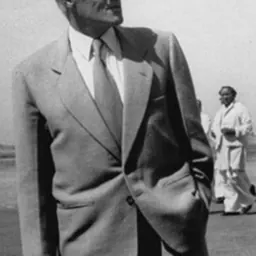
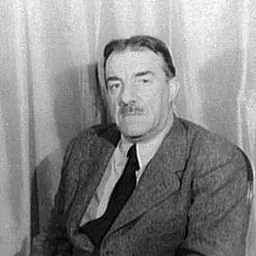


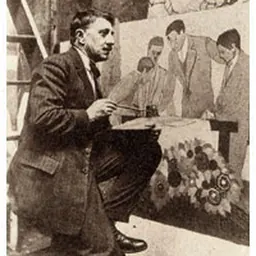

Related people
Same field, nearest in time
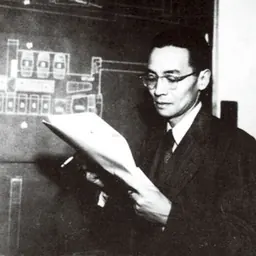
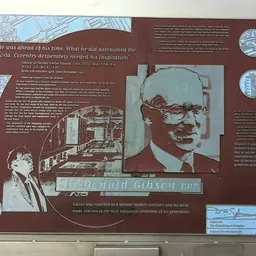
Contemporaries
People whose lives overlapped Charlotte Perriand's
Frequently asked questions
Who was Charlotte Perriand?
French architect and designer (1903-1999)
When was Charlotte Perriand born?
Charlotte Perriand was born on 24 October 1903 in 1st arrondissement of Paris.
When did Charlotte Perriand die?
Charlotte Perriand died on 27 October 1999 in 7th arrondissement of Paris.
What was Charlotte Perriand's occupation?
Charlotte Perriand was an architect, designer, interior architect, exhibition curator, photographer and art theorist.
What nationality was Charlotte Perriand?
Charlotte Perriand was French.
Sources & further reading
· Wikipedia: Charlotte Perriand
Cite this page
APA: Biography.guide. (2026). Charlotte Perriand. https://biography.guide/charlotte-perriand/
MLA: "Charlotte Perriand." Biography.guide, https://biography.guide/charlotte-perriand/.
Chicago: "Charlotte Perriand." Biography.guide. https://biography.guide/charlotte-perriand/.
Data last updated: 2026-09-20 · Spot an error? Report a correction.
Page generated 2026-09-27 05:25 UTC