
About Charlotte E. Ray
Lived 1850 – 1911 (aged 60). Charlotte E. Ray was an American lawyer, teacher, suffragist and attorney at law.
Charlotte E. Ray (January 13, 1850 – January 4, 1911) was an African-American lawyer. She was the first black American woman to become a lawyer in the United States. Ray graduated from Howard University School of Law in 1872. She was also the first female admitted to the District of Columbia Bar, and the first woman admitted to practice before the Supreme Court of the District of Columbia. Her admission was used as a precedent by women in other states who sought admission to the bar. However, she practiced law for only a few years because prejudice against African Americans and women made her business unsustainable.
Early life Charlotte Ray was born in New York City to Charlotte Augusta Burroughs and Reverend Charles Bennett Ray. Reverend Ray was an important figure in the abolitionist movement and edited a newspaper called The Colored American. Charlotte had six siblings, including two sisters, Henrietta Cordelia and Florence. Education was important to her father, who made sure each of his girls went to college. Charlotte attended a school called the Institution for the Education of Colored Youth (now known as University of the District of Columbia) in Washington, D.C., graduating in 1869. It was one of a few places where a black woman could gain proper education.
After this Ray became a teacher at Howard University in the Normal and Preparatory Department, which was the University's Prep School. While teaching at Howard, she registered in the Law Department, as C. E. Ray. but Howard University did not receive its Phi Beta Kappa chapter until 1953.
While in law school she is believed to have specialized in corporate law. She has been identified as the woman referred to by General O. O. Howard, the founder and first president of Howard University, as having "read us a thesis on corporations, not copied from the books but from her brain, a clear incisive analysis of one of the most delicate legal questions." Others suggest that Mary Ann Shadd Cary was the person in question.
Admission controversy She was admitted to the Howard School of Law in the District of Columbia in 1872 because she applied under the name "C. E. Ray" and that Ray used an alternate name to disguise her gender so that her admission would not be instantly revoked. According to others, her use of initials is not proven, and it would not have been needed, because Howard University at this time had a clearly articulated policy of acceptance of both Black men and women. Her appointment was noted in the Woman's Journal and gained her inclusion as one of the Women of the Century. Ray began her independent practice of commercial law in 1872, advertising in newspapers such as the New National Era and Citizen, owned by Frederick Douglass.
Charlotte Ray was said to be eloquent, authoritative, and "one of the best lawyers on corporations in the country." Yet despite her Howard connections and advertisements, she was unable to maintain a steady client flow, sufficient to support herself. Regardless of her legal knowledge and corporate law expertise, not enough people were willing to trust a black woman with their cases. Instead she returned to teaching, working in the Brooklyn school system.
Ray attended the National Woman Suffrage Association's New York convention in 1876. After 1895 Ray seems to have been active in the National Association of Colored Women.
Don’t just read it —
keep it.
Full-length biographies made to live with: read them, listen on the way to work, watch them tonight.
- E-book
- Audio
- Video
Instant download · yours to keep · every purchase keeps this site free
Important facts
Family & relationships
People in Charlotte E. Ray's life
Named in this biography and alive at the same time

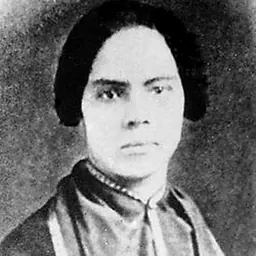

Related people
Same field, nearest in time
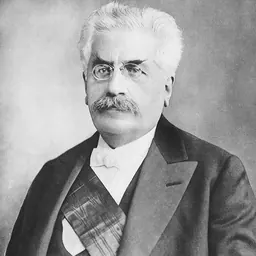
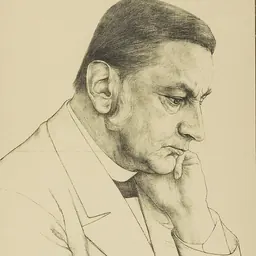


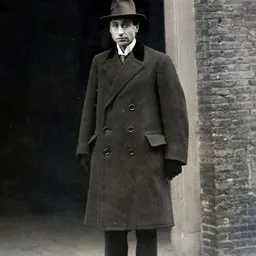
Contemporaries
People whose lives overlapped Charlotte E. Ray's





Frequently asked questions
Who was Charlotte E. Ray?
American lawyer
When was Charlotte E. Ray born?
Charlotte E. Ray was born on 13 January 1850 in New York City.
When did Charlotte E. Ray die?
Charlotte E. Ray died on 4 January 1911 in Woodside.
What was Charlotte E. Ray's occupation?
Charlotte E. Ray was a lawyer, teacher, suffragist and attorney at law.
What nationality was Charlotte E. Ray?
Charlotte E. Ray was American.
Sources & further reading
Cite this page
APA: Biography.guide. (2026). Charlotte E. Ray. https://biography.guide/charlotte-e-ray/
MLA: "Charlotte E. Ray." Biography.guide, https://biography.guide/charlotte-e-ray/.
Chicago: "Charlotte E. Ray." Biography.guide. https://biography.guide/charlotte-e-ray/.
Data last updated: 2026-09-25 · Spot an error? Report a correction.
Page generated 2026-09-27 05:11 UTC