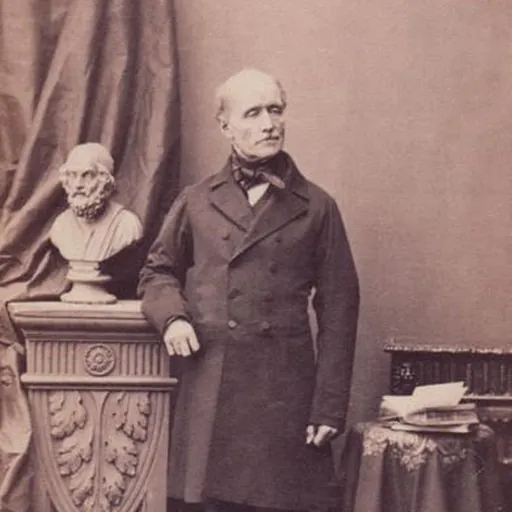
About Charles Yorke
Lived 1790 – 1880 (aged 89). Charles Yorke was a military officer.
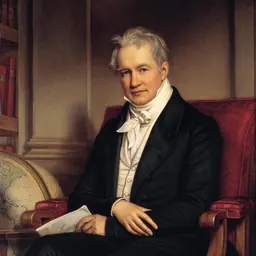
Field Marshal Sir Charles Yorke GCB (7 December 1790 – 20 November 1880) was a senior British Army officer. He fought in many of the battles of the Peninsular War and of the Hundred Days, seeing action as an extra aide-de-camp to Major-General Frederick Adam, commander of the 3rd Light Brigade, at the Battle of Waterloo. After that he became Deputy Commander of the British forces in South Africa during the latter stages of the Eighth Xhosa War. He went on to be Military Secretary, ultimately earning promotion to field marshal for his competence in that role.
Military career Born the son of Colonel John Yorke and Juliana Yorke (née Dodd), Yorke was commissioned as an ensign in the 35th Regiment of Foot on 22 January 1808. Promoted to lieutenant on 18 February 1808, he transferred to the 52nd Light Infantry and served with that Regiment in the Peninsular War. he also fought at the Battle of Orthez in February 1814, where he was again wounded.
Yorke transferred to the 13th Regiment of Foot on 7 August 1817 and exchanged back to the 52nd Light Infantry on 2 July 1818. Promoted to major in an unattached company on 9 June 1825, he became Inspecting Officer of Militia with the rank of lieutenant colonel on 30 November 1826.
Yorke became Military Secretary in May 1854 (initially to Viscount Hardinge and then to the Duke of Cambridge) and, having been appointed Knight Commander of the Order of the Bath on 5 February 1856 and promoted to lieutenant general on 13 February 1859, he retired from active service in June 1860. He was advanced to Knight Grand Cross of the Order of the Bath on 29 June 1860 and appointed to a Royal Commission established in March 1863 to examine whether there had been any departures from the measures put in place to reorganise the Indian Army and merge it with the British Army following the Indian Mutiny. Promoted to full general on 5 September 1865, he was appointed Constable of the Tower in April 1875, a post he took up in July 1875, before being promoted to field marshal on 2 June 1877.
Yorke was Colonel of the Duke of Wellington's Regiment (1855–1863) and then of the 2nd Battalion, the Rifle Brigade (Prince Consort's Own). He died at South Street in Mayfair on 20 November 1880 and was buried at Kensal Green Cemetery.
Family Yorke never married and never had any children.
Don’t just read it —
keep it.
Full-length biographies made to live with: read them, listen on the way to work, watch them tonight.
- E-book
- Audio
- Video
Instant download · yours to keep · every purchase keeps this site free
Important facts
People in Charles Yorke's life
Named in this biography and alive at the same time
Related people
Same field, nearest in time
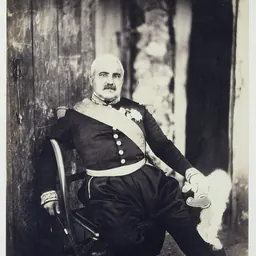
Contemporaries
People whose lives overlapped Charles Yorke's


Frequently asked questions
Who was Charles Yorke?
British field marshal (1790-1880)
When was Charles Yorke born?
Charles Yorke was born on 7 December 1790.
When did Charles Yorke die?
Charles Yorke died on 20 November 1880 in Mayfair.
What was Charles Yorke's occupation?
Charles Yorke was a military officer.
Sources & further reading
· DBpedia: Charles Yorke (British Army officer)
Cite this page
APA: Biography.guide. (2026). Charles Yorke. https://biography.guide/charles-yorke-military-officer/
MLA: "Charles Yorke." Biography.guide, https://biography.guide/charles-yorke-military-officer/.
Chicago: "Charles Yorke." Biography.guide. https://biography.guide/charles-yorke-military-officer/.
Data last updated: 2026-09-26 · Spot an error? Report a correction.
Portrait: Wikimedia Commons · author & licence
Page generated 2026-10-04 11:14 UTC