
About Charles Wellington Furse
Lived 1868 – 1904 (aged 36). Charles Wellington Furse was a British painter.
Charles Wellington Furse (13 January 1868 – 16 October 1904) was an English painter.
He was born at Staines, the son of Jane Diana (Monsell) and the Rev. C. W. Furse, archdeacon of Westminster, and rector of St John's, Smith Square and descended collaterally from Sir Joshua Reynolds; and in his short span of life demonstrated such skill as a portrait and figure painter that he forms an important link in the chain of British portraiture which extends from the time when Van Dyck was called to the court of Charles I into the 20th century.
His talent was precocious; at the age of seven he gave indications of it in a number of drawings illustrating the novels of Sir Walter Scott. He attended public school at Haileybury College. He entered the Slade School in 1884, winning the Slade scholarship in the following year, and completed his education at Julian's atelier in Paris. Hard worker as he was, his activity was frequently interrupted by spells of illness, for he had developed signs of consumption whilst still attending the Slade School. An important canvas called Cain was his first contribution (1888) to the Royal Academy, to the associateship of which he was elected in the year of his death. For some years before he had been a staunch supporter of the New English Art Club, to the exhibitions of which he was a regular contributor. Peter Reynolds Furse (in 1901), a Royal Navy Cartographer, and John Paul Wellington Furse (in 1904), later a Rear Admiral, painter and later plant hunter.
His fondness for sport and of an open-air life found expression in his art and introduced a new, fresh and vigorous note into portraiture. There is never a suggestion of the studio or of the fatiguing pose in his portraits. The sitters appear unconscious of being painted, and are generally seen in the pursuit of their favourite outdoor sport or pastime, in the full enjoyment of life. Such are the Diana of the Uplands (1903–04), the Lord Roberts (1893) and The Return from the Ride (1902) at the Tate Gallery; the four children in the Cubbing with the York and Ainsty, The Lilac Gown, Mr. and Mrs. Oliver Fishing and the portraits of Lord Charles Beresford
Don’t just read it —
keep it.
Full-length biographies made to live with: read them, listen on the way to work, watch them tonight.
- E-book
- Audio
- Video
Instant download · yours to keep · every purchase keeps this site free
Important facts
People in Charles Wellington Furse's life
Named in this biography and alive at the same time


Related people
Same field, nearest in time
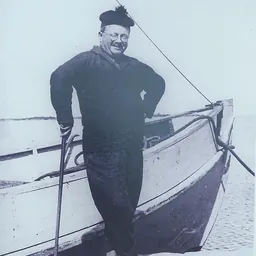

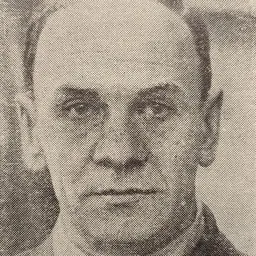
Contemporaries
People whose lives overlapped Charles Wellington Furse's

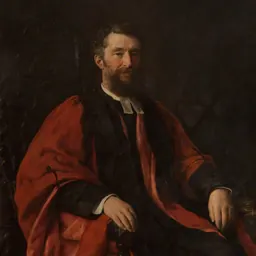

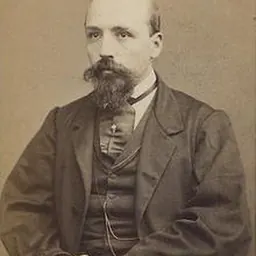

Frequently asked questions
Who was Charles Wellington Furse?
English painter (1868-1904)
When was Charles Wellington Furse born?
Charles Wellington Furse was born on 13 January 1868 in Surrey.
When did Charles Wellington Furse die?
Charles Wellington Furse died on 16 October 1904.
What was Charles Wellington Furse's occupation?
Charles Wellington Furse was a painter.
What nationality was Charles Wellington Furse?
Charles Wellington Furse was British.
Sources & further reading
· Wikipedia: Charles Wellington Furse
· DBpedia: Charles Wellington Furse
Cite this page
APA: Biography.guide. (2026). Charles Wellington Furse. https://biography.guide/charles-wellington-furse/
MLA: "Charles Wellington Furse." Biography.guide, https://biography.guide/charles-wellington-furse/.
Chicago: "Charles Wellington Furse." Biography.guide. https://biography.guide/charles-wellington-furse/.
Data last updated: 2026-09-20 · Spot an error? Report a correction.
Page generated 2026-09-27 05:05 UTC