
About Charles W. Stage
Lived 1868 – 1946 (aged 77). Charles W. Stage was an American athlete and politician.
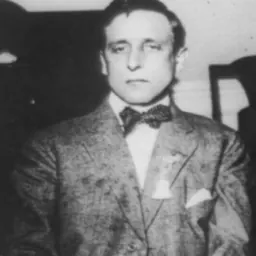
Charles Willard "Billy" Stage (November 26, 1868 – May 17, 1946) was an American attorney, politician, professional baseball umpire and amateur track athlete. A native of Painesville, Ohio, Stage attended Western Reserve University, where he tied an amateur world record in the 100-yard dash. After briefly becoming a National League baseball umpire in 1894, he finished law school and became a private practice attorney. Stage served in the Ohio House of Representatives in 1902–03 before returning to law practice.
In the early 20th century, Stage was an ally of Cleveland mayor Tom L. Johnson, and he held several local government posts. He was the Cuyahoga County Solicitor, ran the Municipal Traction Company, and served as Cleveland's public safety director and utilities director. His law practice largely consisted of representing railroad and real estate barons O. P. and M. J. Van Sweringen (known as the Van Sweringen brothers).
Stage was married to Miriam Kerruish, one of the first women to practice medicine in Cleveland. She died in the Cleveland Clinic fire of 1929. Stage retired after the Van Sweringen brothers lost their fortune in the Great Depression. He was sometimes known as Billy Stage, particularly in collegiate athletics and in baseball circles.
Early life Stage was born in Painesville, Ohio, the second of three sons of Stephen K. and Sarah Stage. His father was a butcher. Days later, he ran the 75-yard dash in 7.8 seconds, missing a world record by 0.2 seconds. Around this time, The New York Times advertised that it would award a gold medal for track excellence. When the paper's board of governors was unable to decide between Stage and a runner who had won two hurdling events, they cut the medal and presented half of it to each athlete. After his umpiring debut, The Pittsburgh Press noted that he offered "a relief from the usual lazy style of umpiring."
Umpires in that era, however, were often underappreciated; they faced threats of physical violence, and turnover was high. Cleveland Spiders manager Patsy Tebeau later described how players often ran after the umpire to attack him at the end of a game. He recalled that Stage's speed made him the most frustrating umpire to chase. "The whole team took after him time and again, but never once did he fail to get over the back fence ahead of us. We could never catch him. Finally I protested to President Young and Stage resigned," Tebeau said.
Stage dealt with unspecified illnesses several times that year, and whether or not Tebeau had a role in it, Stage cited poor health when he resigned in July 1894 after umpiring 45 games. Over the next year he returned to the field to umpire five times, all in Cleveland, but he did not umpire after 1895.
Law and public service Cleveland mayor Tom L. Johnson (pictured) steered Stage into politics and introduced him to the Van Sweringen brothers, who became Stage's most prominent law clients. After finishing law school in 1895, Stage opened a private law practice in Cleveland. The brothers established rail lines to the community and acquired other railroads in the process. it was approved by voters the following year, giving the Governor of Ohio the most extreme veto power in the United States.
After Stage left the Ohio House of Representatives, he served as general counsel, vice president and board member for the Cleveland Union Terminal (later known as Tower City Center). He was on the boards of directors for entities including the Vaness Company, Cleveland Interurban Railroad, and the Cleveland Traction Terminals Company.
Personal life In 1903, Stage married a physician, Miriam Gertrude Kerruish, and they had four children: Charles Jr, William, Miriam and Edward.
Miriam Kerruish was also active in civic organizations. She helped organize the Women’s Protective Association of Cleveland and was on the board of trustees of the Woman’s Hospital and the Maternity Hospital Council.
Later life A few years after his wife's death, Stage inherited a large tract of land from the Kerruish family in what is now known as Cleveland's Lee–Miles neighborhood. Stage donated the land to the city and Kerruish Park was established.
Stage retired when the Van Sweringen brothers lost their holdings during the Great Depression. He died in 1946, never having remarried.
Don’t just read it —
keep it.
Full-length biographies made to live with: read them, listen on the way to work, watch them tonight.
- E-book
- Audio
- Video
Instant download · yours to keep · every purchase keeps this site free
Important facts
People in Charles W. Stage's life
Named in this biography and alive at the same time


Related people
Same field, nearest in time





Contemporaries
People whose lives overlapped Charles W. Stage's




Frequently asked questions
Who was Charles W. Stage?
American politician and baseball umpire
When was Charles W. Stage born?
Charles W. Stage was born on 26 November 1868 in Painesville.
When did Charles W. Stage die?
Charles W. Stage died on 17 May 1946 in Cleveland.
What was Charles W. Stage's occupation?
Charles W. Stage was an athlete and politician.
What nationality was Charles W. Stage?
Charles W. Stage was American.
Sources & further reading
Cite this page
APA: Biography.guide. (2026). Charles W. Stage. https://biography.guide/charles-w-stage/
MLA: "Charles W. Stage." Biography.guide, https://biography.guide/charles-w-stage/.
Chicago: "Charles W. Stage." Biography.guide. https://biography.guide/charles-w-stage/.
Data last updated: 2026-09-20 · Spot an error? Report a correction.
Page generated 2026-09-27 04:59 UTC